Easy Newborn Care Tips for Calm, Confident Parenting
Welcoming a newborn into your life is one of the most beautiful experiences — but it can also feel overwhelming, especially if you’re a first-time parent. Every new sound, movement, and moment brings questions and emotions. The good news? Newborn care doesn’t have to be stressful. With simple routines, gentle techniques, and a calm approach, you can care for your baby with confidence and ease.
This guide shares easy newborn care tips that help you stay relaxed and support your baby’s comfort, safety, and happiness.
1. Learn Your Baby’s Cues

Newborns may not speak, but they communicate in subtle ways. Understanding their cues helps you respond quickly and calmly.
Common newborn cues include:
- Hunger: rooting, sucking fingers, lip smacking
- Sleepiness: yawning, staring off, rubbing eyes
- Discomfort: fussiness, arching back
- Overstimulation: turning away, crying suddenly
- Contentment: soft coos, relaxed hands, calm eyes
The more you observe, the easier caregiving becomes.
2. Create a Gentle Feeding Routine

Newborns feed frequently, and feeding patterns vary from baby to baby. Whether breastfeeding or formula feeding, a calm feeding environment makes a big difference.
Tips that help:
- Feed on demand in the early weeks
- Keep the baby close and supported
- Burp your baby halfway and after the feeding
- Look for signs of fullness (turning head away, relaxed hands)
- Keep feeding time peaceful and distraction-free
With time, your baby naturally settles into a predictable rhythm.
3. Prioritize Safe, Comfortable Sleep

Newborns sleep a lot, but in short stretches. A safe sleep environment supports better rest for everyone.
Helpful tips:
- Always place the baby on their back to sleep
- Use a firm mattress with a fitted sheet
- Keep the crib free of pillows, toys, and blankets
- Maintain a calm sleep routine (dim lights, soft sound, gentle movements)
- Keep the baby’s room cool and comfortable
Simple habits like these create a familiar pattern that helps babies relax at bedtime.
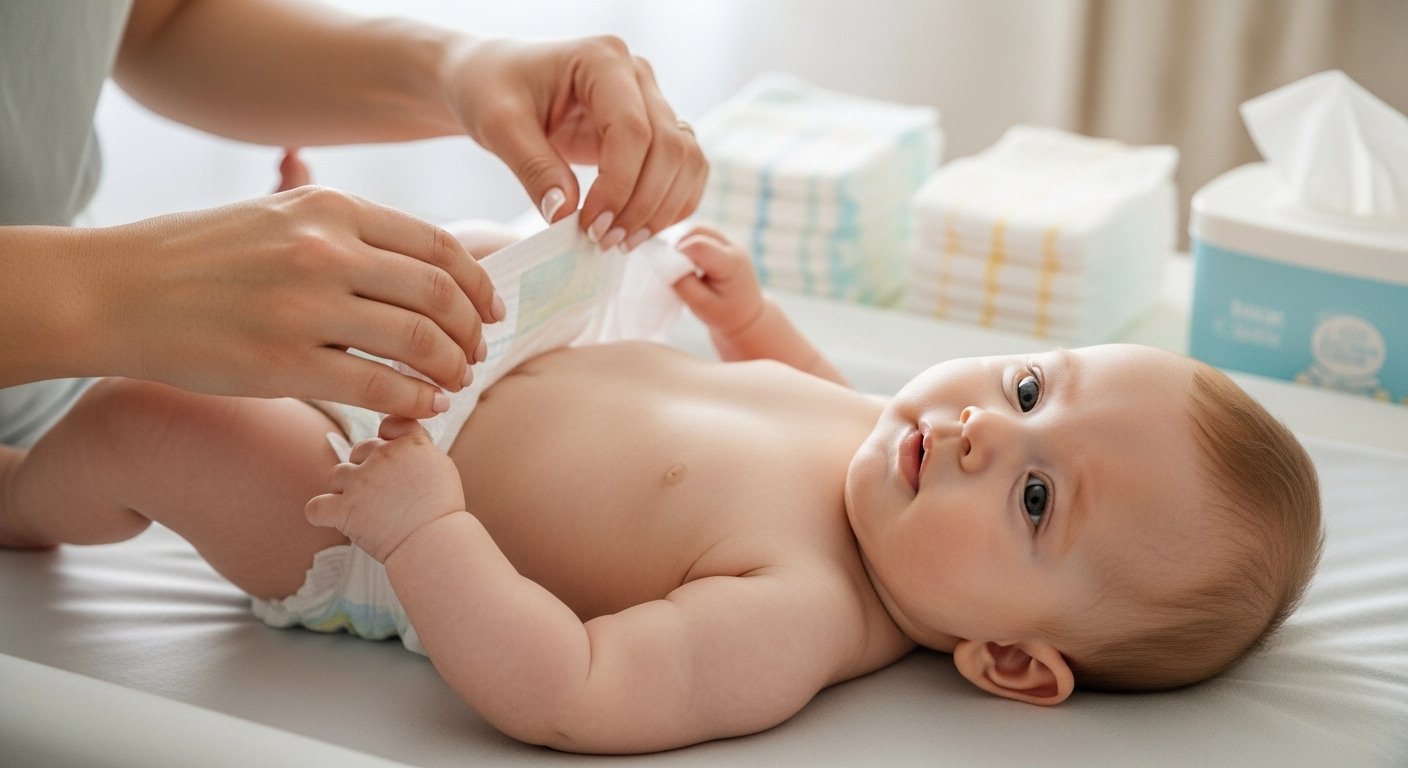
4. Keep Diapering Stress-Free

Diaper changes are frequent in the newborn stage, but they can be kept simple and gentle.
How to make diapering easier:
- Change diapers every 2–3 hours or as needed
- Clean gently from front to back
- Use warm water or soft wipes
- Apply a thin layer of diaper cream if the skin looks red
- Let the skin air-dry for a few moments
A comfortable baby is a calmer baby — and diaper comfort is a big part of that.
5. Practice Safe and Gentle Bathing

Newborns don’t need daily baths. Two to three times a week is enough in the beginning.
Tips for a soothing bath experience:
- Use lukewarm water
- Keep everything ready before starting
- Support the baby’s head and neck at all times
- Use mild baby soap
- Keep baths short and gentle
After the bath, wrap your baby in a soft towel to keep them warm.
6. Give Your Baby Skin-to-Skin Time

Skin-to-skin contact (holding your baby close against your chest) is one of the best ways to bond and soothe your newborn.
Benefits include:
- Better regulation of body temperature
- Calmer heartbeat and breathing
- Reduced crying
- Improved sleep
- Stronger emotional connection
Both parents can use this technique — it helps babies feel secure and loved.
7. Keep Baby Comfortably Dressed

Newborns regulate temperature differently, so clothing matters. A simple rule is: dress the baby in one more layer than you’re wearing.
Tips:
- Choose soft, breathable fabrics
- Avoid overheating
- Use mittens if needed to prevent face scratching
- Make swaddling part of calming routines (if your baby enjoys it)
Clothes should never be too tight, thick, or bothersome for the baby.
8. Create a Calm Environment

Newborns are sensitive to sound, light, and activity. A calm space helps them adjust and feel safe.
Try creating:
- Soft lighting in the room
- Low noise levels
- Gentle movements
- A predictable daily flow
Simple changes like these help reduce overstimulation and fussiness.
9. Practice Gentle Soothing Techniques

Every baby gets fussy sometimes. Gentle soothing helps them feel secure.
Effective soothing methods include:
- Rocking or swaying
- Soft singing or humming
- Using white noise
- Swaddling
- Offering a pacifier (if you choose)
- Soft rhythmic pats
Over time, you’ll learn which method your baby responds to best.
10. Take Care of Yourself Too

Calm parenting starts with caring for yourself. A tired, overwhelmed parent finds it harder to stay patient — and that’s completely normal.
Remember to:
- Rest whenever possible
- Ask for help when needed
- Eat and hydrate well
- Take short breaks
- Give yourself grace and kindness
A supported parent is a confident parent.
11. Build Routines Slowly, Not Strictly

Newborns thrive on gentle predictability — not rigid schedules. Instead of strict timings, focus on simple patterns:
- Feed → Play/awake time → Sleep
This natural rhythm makes daily care easier without forcing a strict routine too early.
12. Don’t Worry About “Perfect” Parenting

Every newborn is different. There is no single “right way” to parent. You’ll learn and adjust with time, and your baby will guide you more than you expect.
Trust yourself. Stay patient. Keep your heart open.
You’re doing better than you think.
Final Thoughts
Newborn care becomes much easier when you slow down, observe your baby’s cues, and build simple routines. With gentle feeding, safe sleep practices, skin-to-skin bonding, calm environments, and lots of love, you’ll feel more confident every single day. Parenting a newborn isn’t about perfection — it’s about connection, presence, and patience.
As you get to know your baby’s rhythms, caring for them becomes natural and deeply rewarding. Take it one moment at a time, and remember: calm parents create calm babies.