As parents, we all want to give our children the best start in life. We dream of them growing up to be curious, creative, and confident. One fantastic way to nurture these qualities, even from a very young age, is through STEM learning. STEM stands for Science, Technology, Engineering, and Mathematics, and it’s so much more than just school subjects. It’s about developing essential skills like problem-solving, critical thinking, and innovation.
You might think STEM sounds a bit daunting for little ones, but it’s truly about playful exploration. Early learning STEM kits are designed to make these concepts accessible and fun for toddlers and preschoolers. They help children explore the world around them in an engaging, hands-on way, often without even realizing they are ‘learning.’ This article will guide you through why STEM is so important, what to look for in a good kit, and our top recommendations for various age groups, helping you foster a lifelong love for discovery in your child.
What Exactly is STEM Anyway?
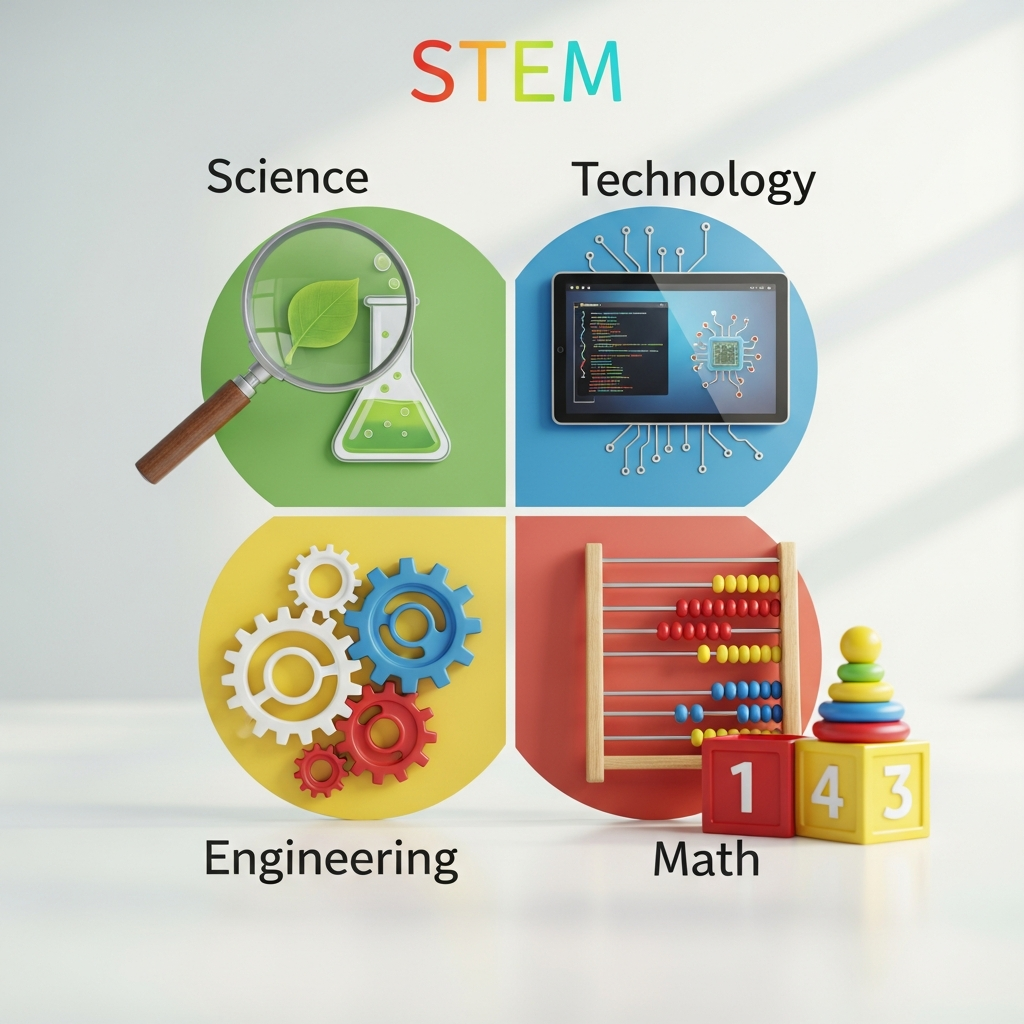
Before we dive into the best kits, let’s quickly clarify what we mean by STEM. It’s an acronym that represents four distinct but interconnected fields:
- Science: Understanding the natural world through observation and experimentation (e.g., why leaves change color, how plants grow).
- Technology: Using tools and inventions to solve problems and make life easier (e.g., simple machines, digital tools).
- Engineering: Designing and building structures or solutions to challenges (e.g., constructing a tower, designing a bridge).
- Mathematics: Recognizing patterns, numbers, shapes, and understanding quantities (e.g., counting, sorting, measuring).
The beauty of early STEM is that these areas often overlap seamlessly during play. A child building with blocks isn’t just engineering; they’re also using math for balance and problem-solving to make their structure stand.
Why Start Early with STEM?
Introducing STEM concepts early isn’t about creating future scientists or engineers, though it certainly might! It’s about nurturing essential life skills that benefit children in all areas of development. The early years are a critical time for brain development, and providing rich, stimulating experiences can have a profound impact.
- Fosters Curiosity: Children are naturally curious. STEM activities provide safe, engaging ways for them to explore ‘how’ and ‘why’ things work.
- Develops Problem-Solving Skills: When a tower falls, or a car doesn’t roll, children learn to identify the issue and try new solutions. This builds resilience and analytical thinking.
- Encourages Critical Thinking: STEM activities prompt children to observe, analyze, and make predictions, strengthening their ability to think logically.
- Boosts Creativity and Innovation: Designing, building, and experimenting encourages children to think outside the box and come up with new ideas.
- Enhances Fine Motor Skills: Many STEM kits involve manipulating small parts, stacking, pouring, and measuring, which are excellent for developing dexterity and hand-eye coordination.
- Builds Confidence: Successfully completing a challenge, no matter how small, gives children a wonderful sense of accomplishment and encourages them to try more.
- Prepares for Future Learning: While not about formal academics, early exposure to STEM concepts lays a strong foundation for future learning in school and beyond.
What to Look for in a STEM Kit for Young Kids

With so many options out there, choosing the right STEM kit can feel overwhelming. Here’s what we, as parents, should keep in mind to ensure we pick something truly beneficial and engaging for our little ones:
- Age-Appropriateness: This is key! A kit that’s too complex will frustrate them, and one that’s too simple won’t hold their interest. Always check the manufacturer’s recommended age range.
- Safety First: For younger children especially, ensure pieces are large enough not to be choking hazards. Look for non-toxic materials and durable construction that can withstand enthusiastic play.
- Open-Ended Play: The best kits allow for multiple ways to play and explore, rather than just a single, prescribed outcome. This fosters creativity and sustained engagement.
- Durability: Kids can be tough on toys! Choose kits made from sturdy materials that will last through countless hours of experimentation and building.
- Educational Value: Does the kit genuinely introduce STEM concepts in a clear, hands-on way? Does it encourage curiosity and problem-solving?
- Engagement Factor: Is it colorful, appealing, and does it spark your child’s imagination? If they’re not interested, they won’t learn.
- Parent Involvement (Optional but Recommended): Some kits are designed for independent play, while others encourage adult participation. Consider your availability and preferences.
- Easy to Clean and Store: Let’s be honest, as parents, convenience matters! Kits that are easy to clean up and store neatly are a big win.
Top Picks: Best STEM Kits for Toddlers (Ages 1-3)

For our littlest learners, STEM is all about sensory exploration, cause and effect, and developing basic motor skills. The kits here are simple, safe, and incredibly effective at sparking early curiosity.
Building Blocks & Construction Sets
You can’t go wrong with classic building blocks! Large, easy-to-handle blocks like LEGO Duplo or oversized magnetic tiles are perfect for tiny hands. They introduce basic engineering principles – what makes a tower stand? What happens if you add another block? They also help with color recognition, counting, and shape sorting.
These toys build foundational spatial reasoning and fine motor skills. As they grow, they can create more complex structures, making them a fantastic long-term investment. Encourage them to build tall, wide, or even create ‘houses’ for their animal figures.
Simple Science Discovery Kits (Sensory Play)
Sensory play is a cornerstone of early scientific exploration. Kits that include large magnifying glasses, simple pipettes, or even just containers for mixing are wonderful. Think about sensory bins filled with different textures like dried beans, rice, water beads, or sand. Children learn about properties of materials, cause and effect (what happens when I pour water?), and observation.
It’s about letting them safely touch, feel, pour, and explore. You can easily make your own ‘kit’ with household items like plastic cups, spoons, and water. Just be sure to supervise closely, especially with smaller items.
Shape Sorters & Puzzles
These classic toys are STEM powerhouses! Shape sorters help children understand geometry, spatial reasoning, and problem-solving (which hole does the square fit into?). Puzzles, especially chunky knob puzzles, enhance spatial awareness, fine motor skills, and logical thinking as they figure out where each piece belongs.
They teach children about trial and error and persistence. Celebrate their small victories when they finally get a shape into the correct slot – that’s a huge step in problem-solving!
Top Picks: Best STEM Kits for Preschoolers (Ages 3-5)

At this age, children are ready for a bit more complexity and can engage in more directed play. They’re asking ‘why’ constantly, and these kits help answer those questions in a hands-on way.
Coding Robots for Beginners
Don’t let the word ‘coding’ intimidate you! These robots are designed to introduce very basic programming concepts without screens. Toys like Botley the Coding Robot or Code-a-Pillar teach sequencing, cause and effect, and problem-solving. Children learn to give commands (forward, turn left, turn right) and see how their instructions make the robot move.
It’s a fantastic way to introduce logical thinking and decomposition (breaking down a big problem into smaller steps). Watching their programmed robot complete a task is incredibly rewarding for them!
Engineering & Construction Kits
Moving beyond basic blocks, preschoolers can tackle more intricate construction. Magnetic tiles like Magna-Tiles or PicassoTiles are hugely popular for a reason – they allow for endless creative building, from flat patterns to impressive 3D structures. Gear sets are another excellent choice, teaching about simple machines and how parts work together.
These kits encourage spatial reasoning, creativity, and understanding of balance and stability. They’ll spend hours designing, building, and rebuilding, each time refining their engineering skills.
Early Science Experiment Kits
This is where the ‘mad scientist’ in your child really comes out! Kits focused on mixing colors, exploring density with liquids, or even growing crystals are perfect. They provide safe, engaging ways to observe chemical reactions and physical changes. Look for kits that use household ingredients, making the science feel more accessible and less intimidating.
The joy of seeing something unexpected happen is invaluable for sparking scientific curiosity. Always ensure adult supervision and follow instructions carefully for any kit involving chemicals, even mild ones.
Math & Counting Games
Math for preschoolers is all about making it tangible and fun. Kits featuring counting bears, pattern blocks, or simple counting games introduce number recognition, one-to-one correspondence, sorting, and patterning. These activities build a strong foundation for more formal math later on.
Play is the best way to learn math at this age. Counting toys during clean-up, sorting laundry by color, or identifying shapes in the environment are all wonderful complements to these kits.
Top Picks: Best STEM Kits for Early Elementary (Ages 5-7)

As children enter early elementary, their cognitive abilities are rapidly expanding. They can follow multi-step instructions, engage in more abstract thinking, and enjoy more complex challenges. These kits cater to their growing curiosity and problem-solving skills.
Robotics & Circuitry Starters
For this age group, introducing basic robotics and circuits can be incredibly exciting. Kits like Snap Circuits allow children to build working electronic circuits by snapping together components without tools, making lights turn on or fans spin. More advanced coding robots like Ozobot or LEGO Boost offer a step up from preschool robots, introducing more complex programming logic.
These kits teach fundamental principles of electricity, engineering, and computational thinking in a tangible way. It’s a fantastic stepping stone into the world of technology.
Advanced Engineering Challenges
Children aged 5-7 are ready for more intricate building challenges. Kits like K’nex, Erector Sets (simpler versions), or more advanced LEGO sets (like Creator series) encourage them to build complex machines, vehicles, and structures. They learn about structural integrity, gears, levers, and mechanisms.
These kits often come with instructions for specific models but also encourage free-form building, fostering both instruction-following and creative design skills.
Nature & Outdoor Exploration Kits
Bringing STEM outdoors connects learning to the real world. Kits that include magnifying glasses, bug viewers, simple microscopes, binoculars, or even basic gardening tools are wonderful. Children can observe insects, plants, rocks, and the weather, fostering an appreciation for biology and environmental science.
These kits encourage observation, classification, and understanding of natural cycles. A simple nature journal can turn these observations into valuable scientific records.
Chemistry & Physics Discovery Sets
At this age, children can begin to grasp more abstract scientific principles. Kits that introduce basic chemistry (like making crystals, slime, or fizzing reactions) or physics (like exploring gravity with ramps and balls, or magnetism) are excellent.
They provide a safe way to conduct experiments and understand cause and effect on a deeper level. Always supervise these activities and prioritize safety by ensuring all instructions are followed.
Making the Most of Your STEM Kit: Tips for Parents

Bringing a STEM kit home is just the first step! How you engage with your child can significantly amplify its benefits. Here are some parent-friendly tips to make learning fun and impactful:
- Play Together: Join in the fun! Your enthusiasm is contagious. Playing alongside your child shows them that learning is enjoyable and allows you to model curiosity and problem-solving.
- Ask Open-Ended Questions: Instead of telling them what to do, ask questions like, ‘What do you think will happen if…?’ ‘How could we make this stronger?’ or ‘Why do you think that rolled faster?’ This encourages critical thinking.
- Embrace Mistakes: Don’t let frustration stop the play. Remind them that mistakes are how we learn. ‘Oops, that fell! What could we try differently next time?’ Frame challenges as opportunities to try new solutions.
- Connect to Real Life: Point out how the concepts they’re exploring in the kit apply to the world around them. ‘Look, our bridge at the park uses some of the same ideas as your building blocks!’ or ‘The oven works kind of like that science experiment, heating things up.’
- Let Them Lead: Allow your child to direct the play and experiment at their own pace. Even if their ideas seem a little unconventional, let them explore. Sometimes the most innovative solutions come from unexpected places.
- No Pressure: Remember, it’s about exploration and fun, not formal learning. Keep the atmosphere light and playful. If they’re not in the mood for a particular kit today, that’s perfectly fine; try again another time.
- Document Their Discoveries: Take photos, draw pictures, or simply chat about what they created or learned. This helps them reflect on their experiences and reinforces their accomplishments.
Beyond the Kit: Everyday STEM at Home

You don’t always need a specific kit to introduce STEM concepts. Many everyday activities around the house offer fantastic learning opportunities. It’s about seeing the STEM in the ordinary and embracing those moments of discovery.
- Cooking and Baking: Measuring ingredients (math), observing chemical reactions (science) as dough rises or eggs cook, and following instructions (logic/engineering) are all part of the kitchen fun.
- Gardening: Planting seeds, watching them grow (biology), understanding soil and water (science), and even planning a small garden patch (engineering/math) are wonderful outdoor STEM activities.
- Building Blanket Forts: This is pure engineering and physics! Children learn about stability, structural design, and spatial reasoning as they figure out how to keep their fort from collapsing.
- Observing Nature: A walk in the park or backyard can become a science lesson. Talk about clouds, leaves, birds, or puddles. Ask questions like ‘Why do you think the bird is building a nest there?’
- Simple Repairs or DIY Projects: Involving children in simple tasks like fixing a wobbly chair, changing a lightbulb (safely!), or assembling flat-pack furniture introduces them to tools, problem-solving, and practical engineering.
- Water Play: Pouring, scooping, and experimenting with floating and sinking objects in the bath or a water table teaches about volume, displacement, and properties of matter.
The key is to encourage observation and curiosity. Point things out, ask questions, and let them explore. You’ll be amazed at how many ‘aha!’ moments you can create together without any fancy equipment.
Remember, the goal isn’t to turn every moment into a formal lesson. It’s simply to foster a spirit of inquiry and exploration, showing them that learning about the world is an exciting, ongoing adventure.
These simple, everyday moments often become the most cherished memories and lay the strongest foundations for a child’s love of learning.
Conclusion

Choosing the best STEM kits for early learning is one of many ways we can support our children’s natural curiosity and development. From the earliest days of stacking blocks to more complex experiments, these tools offer wonderful opportunities for hands-on exploration, critical thinking, and creative problem-solving.
Remember that the true value isn’t just in the kit itself, but in the joyful moments of discovery you share with your child. By providing engaging resources and fostering an environment of curiosity and patience, you’re not just teaching them science or math; you’re nurturing a resilient, confident, and lifelong learner.
So go ahead, pick a kit that sparks your child’s interest, roll up your sleeves, and dive into the wonderful world of STEM together. The discoveries you’ll make, and the bond you’ll strengthen, will be truly priceless.