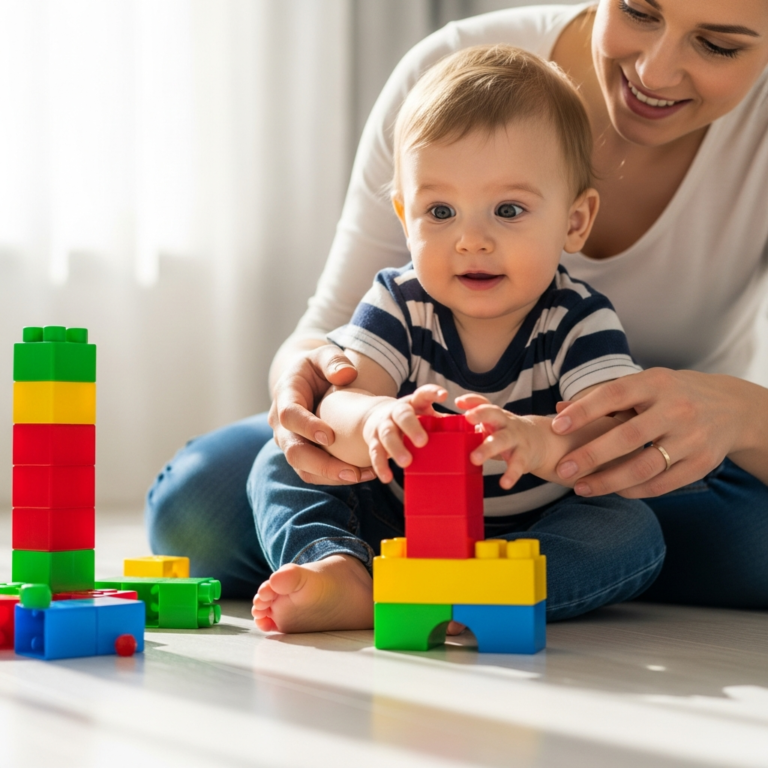
14 Creative Shared Bedroom Ideas Kids Will Love
Creating a shared bedroom that satisfies the needs and personalities of two or more children can be a challenging yet rewarding design task. The goal is to maximize limited square footage while ensuring each child feels they have a private sanctuary of their own. By focusing on smart furniture choices, clever storage solutions, and personalized decor, you can transform a cramped room into a functional and stylish space that encourages sibling bonding. This guide explores fourteen innovative strategies to help you navigate the complexities of shared living spaces for kids, ensuring comfort, organization, and a touch of magic for every inhabitant.
1. Optimize Vertical Space with Classic Bunk Beds
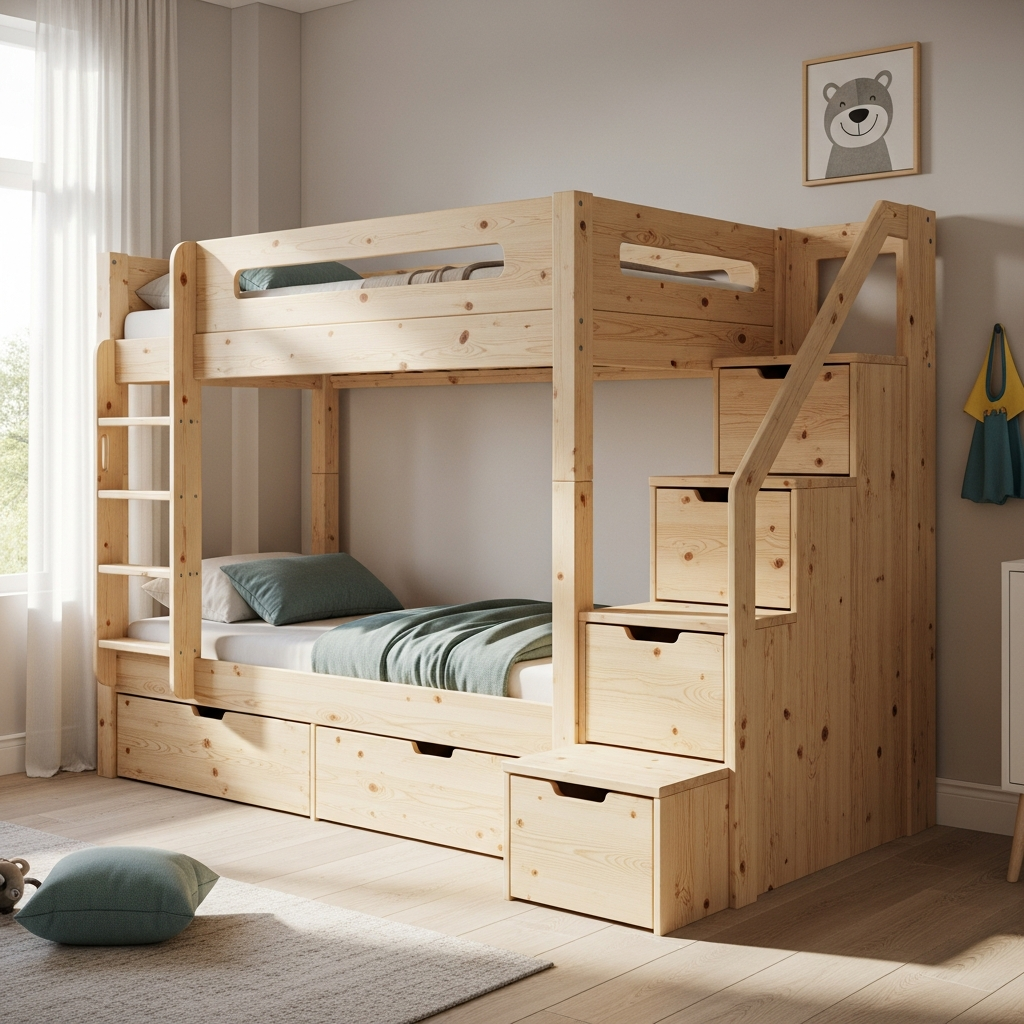
Bunk beds remain the gold standard for shared bedrooms because they utilize vertical space that would otherwise go to waste. Modern designs offer more than just two stacked mattresses; many now include integrated shelving, stairs with built-in drawers, and even desk attachments. When choosing bunk beds, prioritize safety rails and sturdy construction to ensure a secure sleeping environment for both children.
2. Create Symmetry with Mirrored Layouts
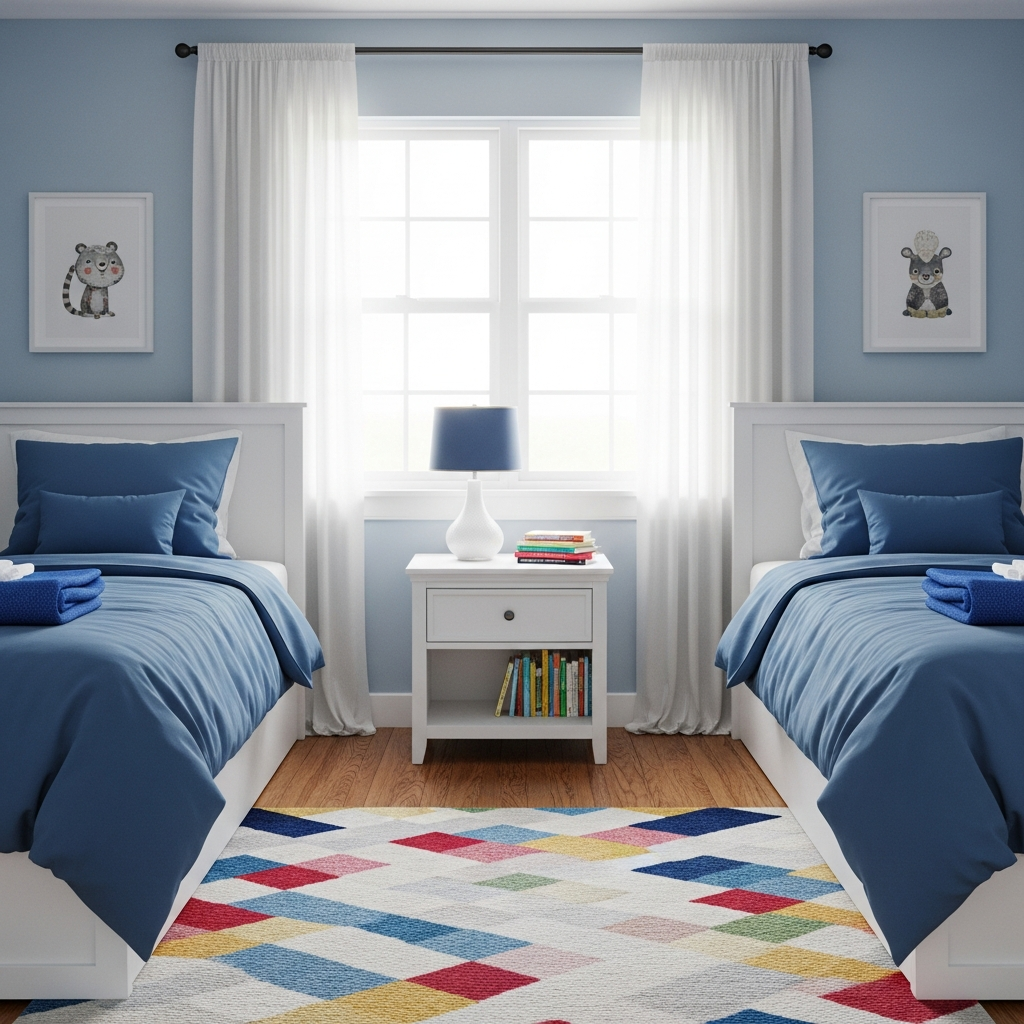
For larger rooms, a mirrored layout provides a sense of fairness and balance. By placing two identical beds on opposite sides of the room with matching nightstands and lamps, you create a visual boundary that gives each child their own distinct territory. This approach works particularly well for children who prefer their own independent space but enjoy the comfort of a shared room.
3. Utilize L-Shaped Bed Configurations
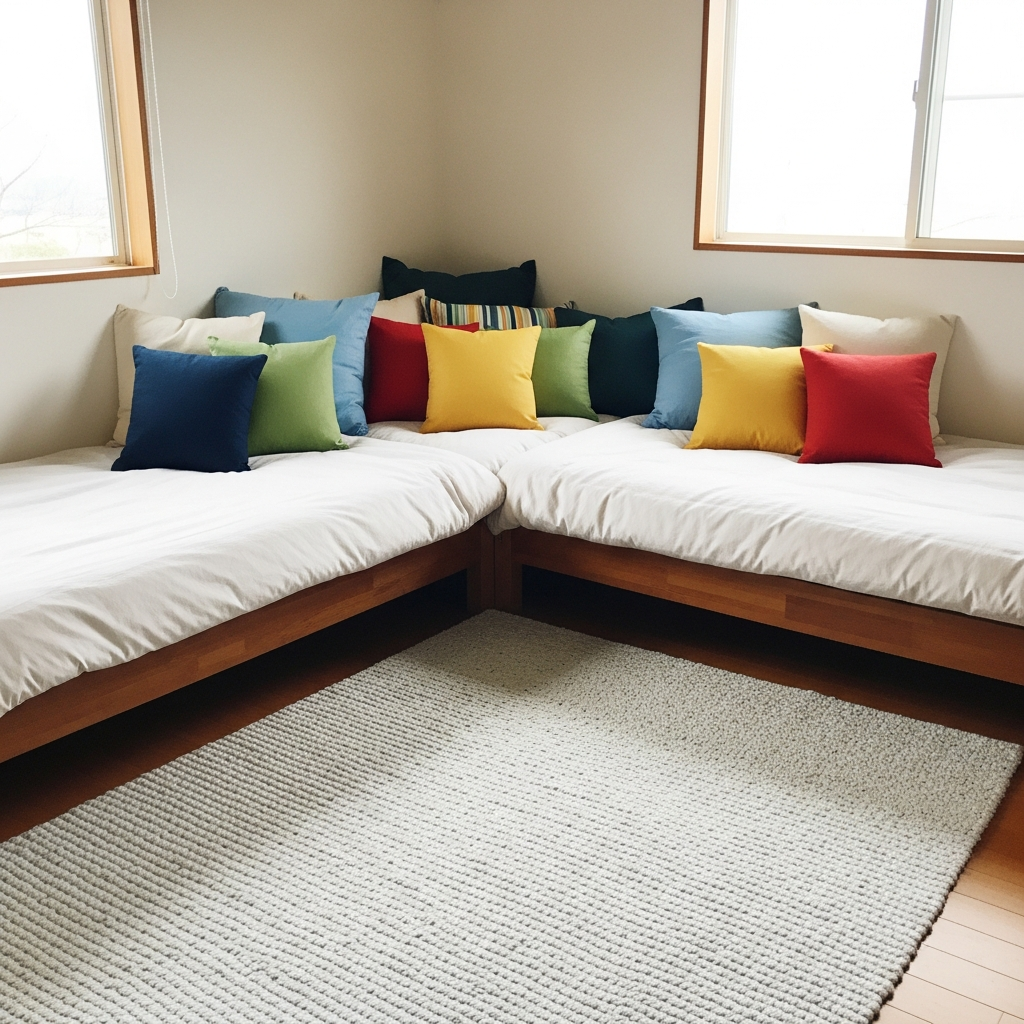
L-shaped bed setups are an excellent way to open up the center of the room for play. By tucking two beds into a corner, you create a cozy nook that maximizes floor space. This configuration is ideal for square-shaped rooms and can often accommodate extra storage or a small reading chair in the newly opened area.
4. Implement Color Coding for Organization
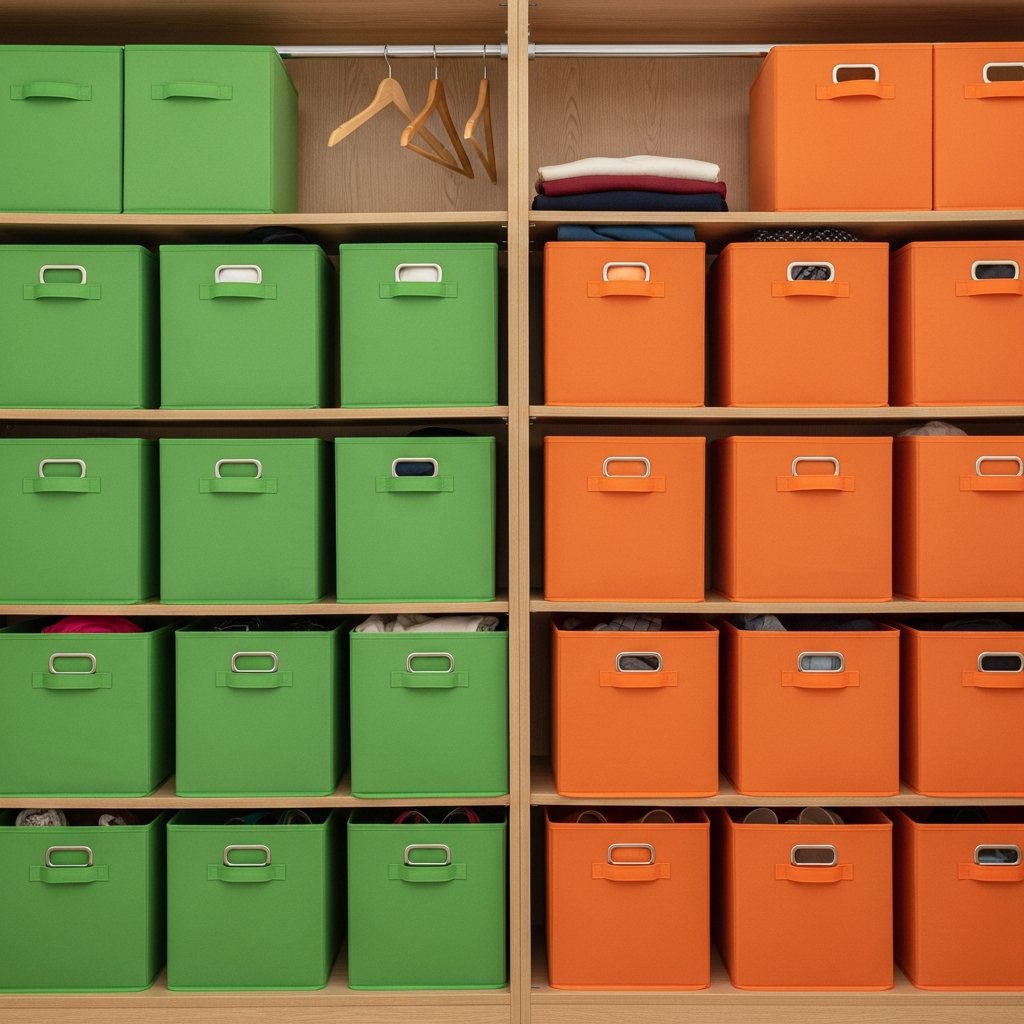
One of the easiest ways to prevent arguments over belongings is to implement a color-coded system. Assign each child a specific color for their bedding, storage bins, and towels. This visual cue helps children take ownership of their items and makes tidying up much faster, as it is immediately clear where every object belongs.
5. Install Privacy Curtains for Individual Retreats
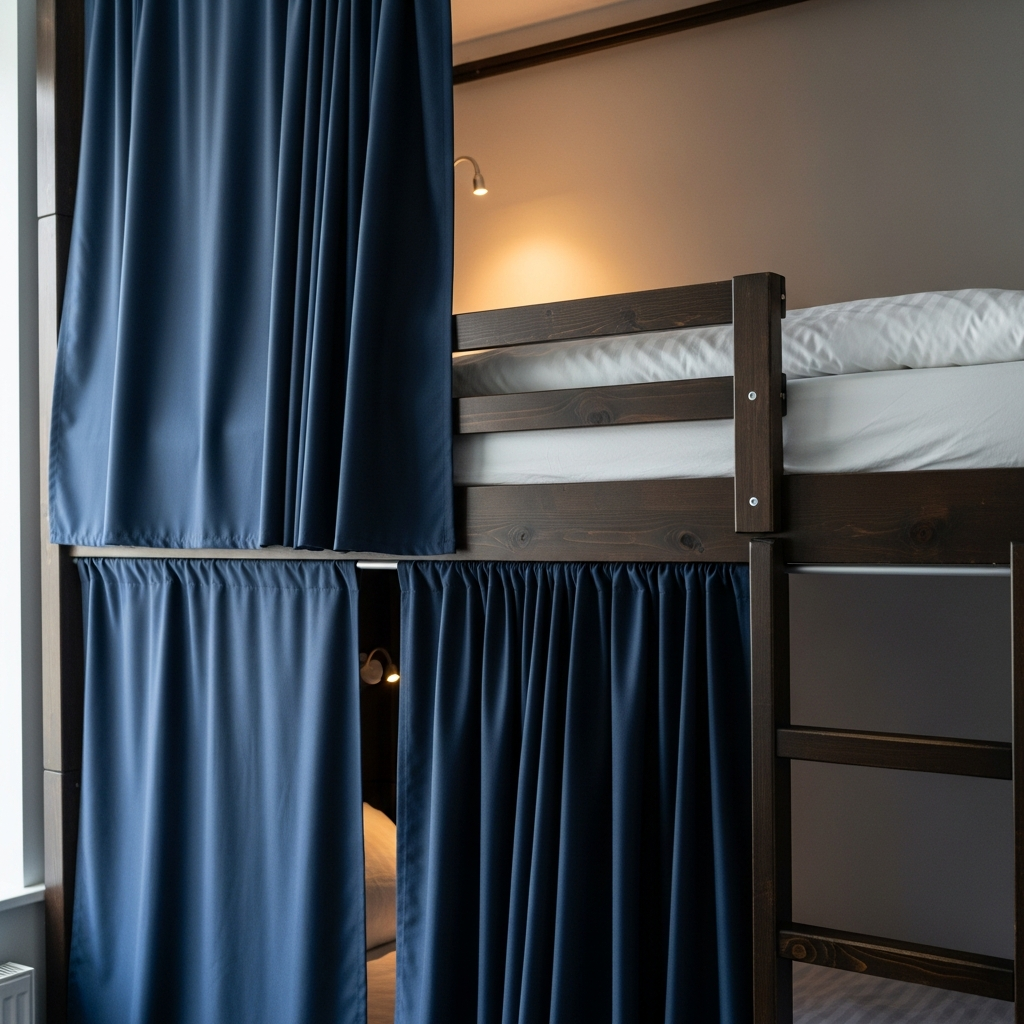
Shared rooms can sometimes feel overwhelming for children who need quiet time. Installing heavy curtains around individual bunks or beds allows each child to create a private cocoon whenever they need a break. This is a cost-effective way to provide psychological boundaries within a shared physical space.
6. Designate Individual Study Zones
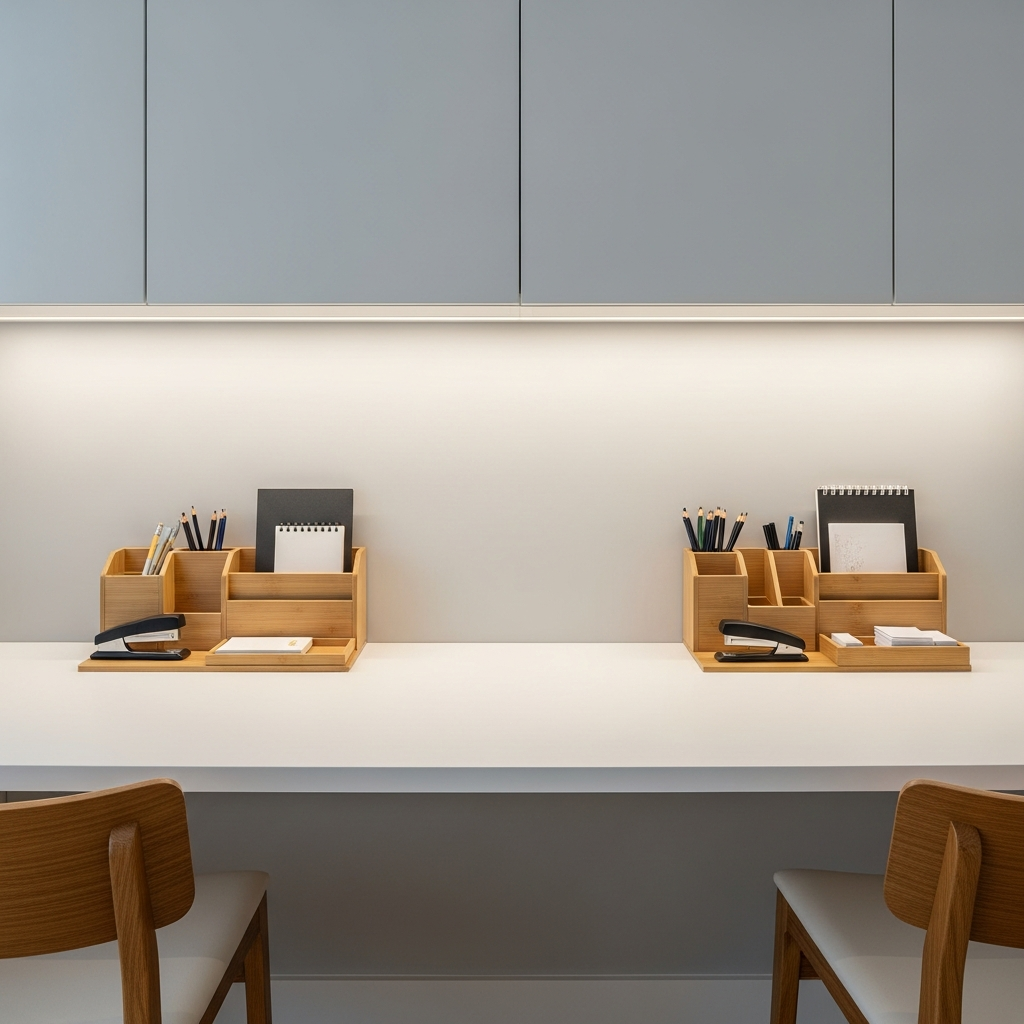
As children grow, the need for a quiet place to focus on schoolwork becomes essential. If space permits, provide two separate small desks. If space is tight, a long shared desk with a visual divider in the middle can work wonders. Ensuring each child has their own task lighting and school supply storage helps minimize distractions during homework time.
7. Incorporate Trundle Beds for Versatility
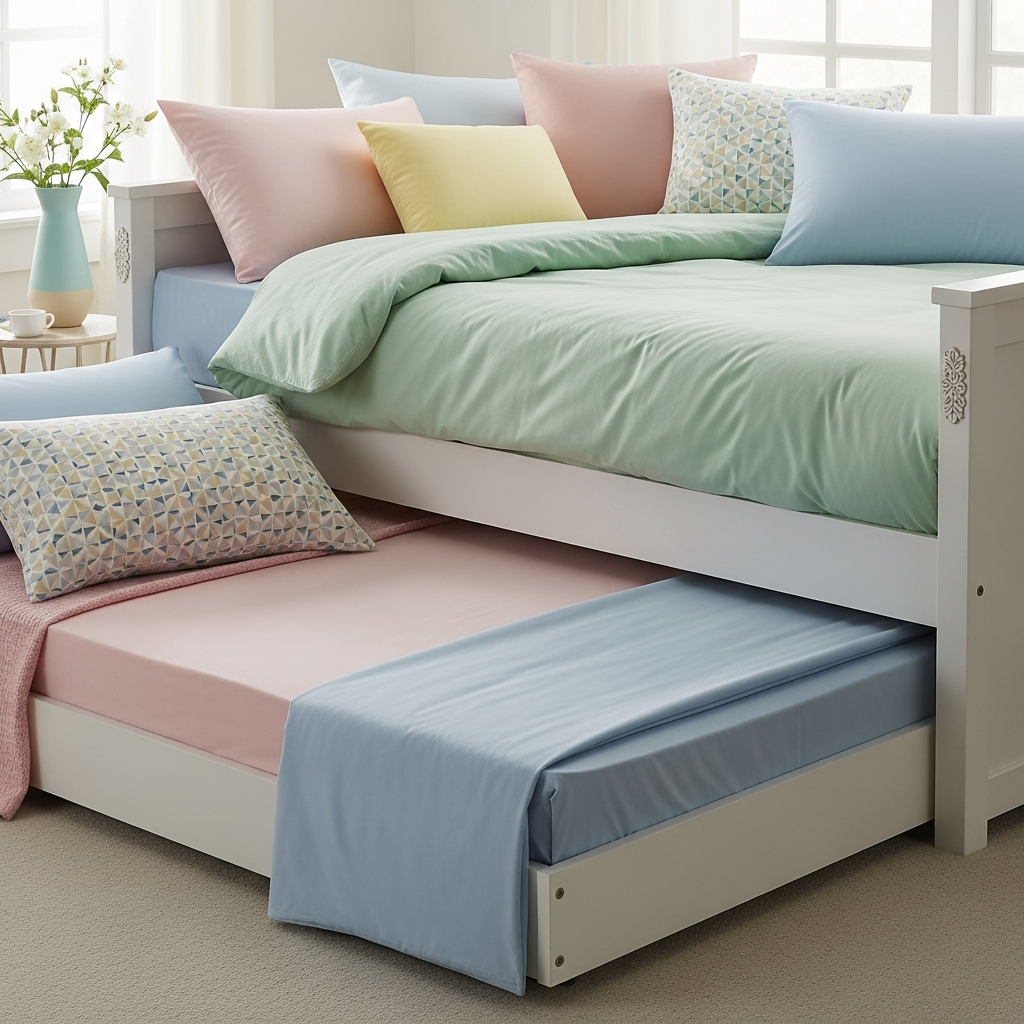
Trundle beds are perfect for rooms that need to accommodate siblings on a daily basis while leaving room for occasional guests. A trundle bed slides neatly under a standard bed frame during the day, freeing up floor space for play, and can be pulled out easily at night. This is a great solution for smaller rooms where a permanent second bed would feel too crowded.
8. Use Room Dividers to Define Territories
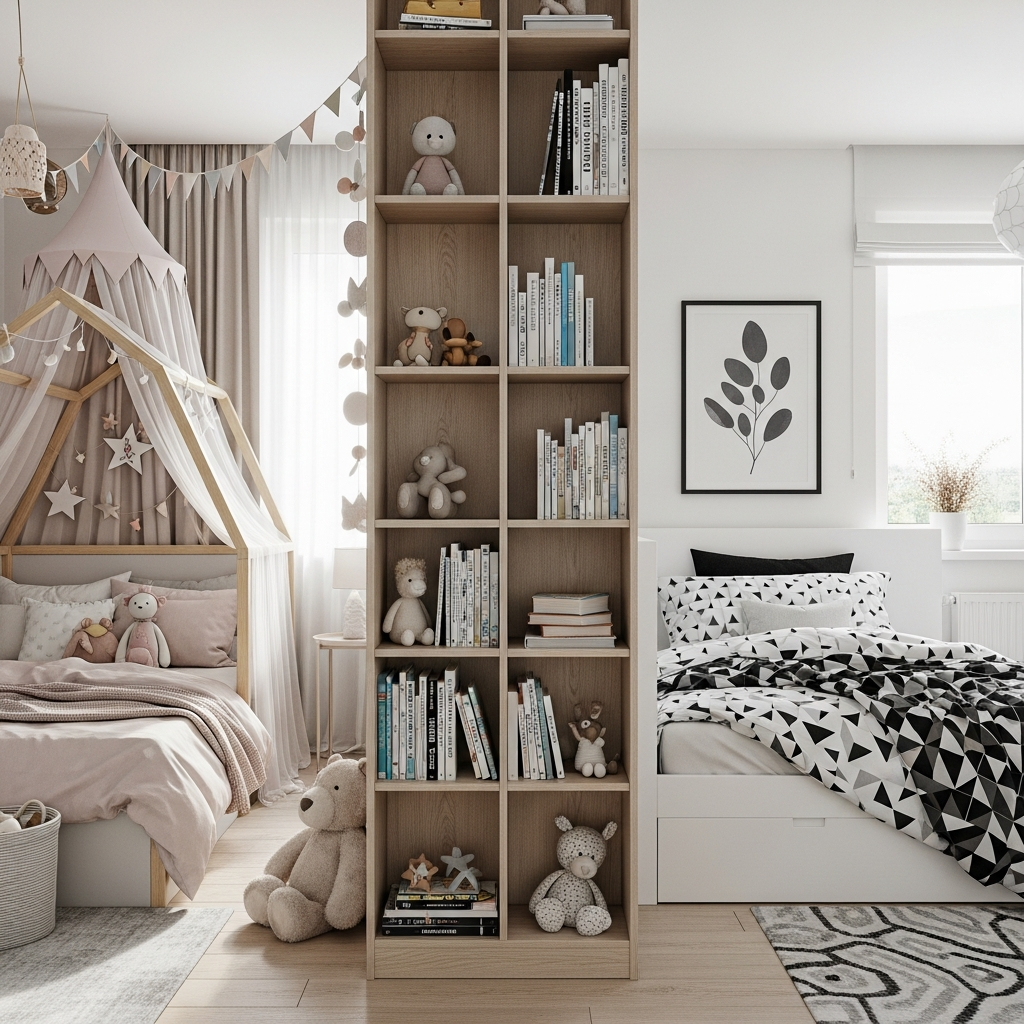
If the age gap between siblings is significant, a physical room divider can provide much-needed independence. Bookshelves that are accessible from both sides serve as both a storage solution and a semi-permanent wall. Alternatively, a folding screen or a hanging fabric divider can offer flexible privacy that can be adjusted as needed.
9. Maximize Storage with Under-Bed Drawers
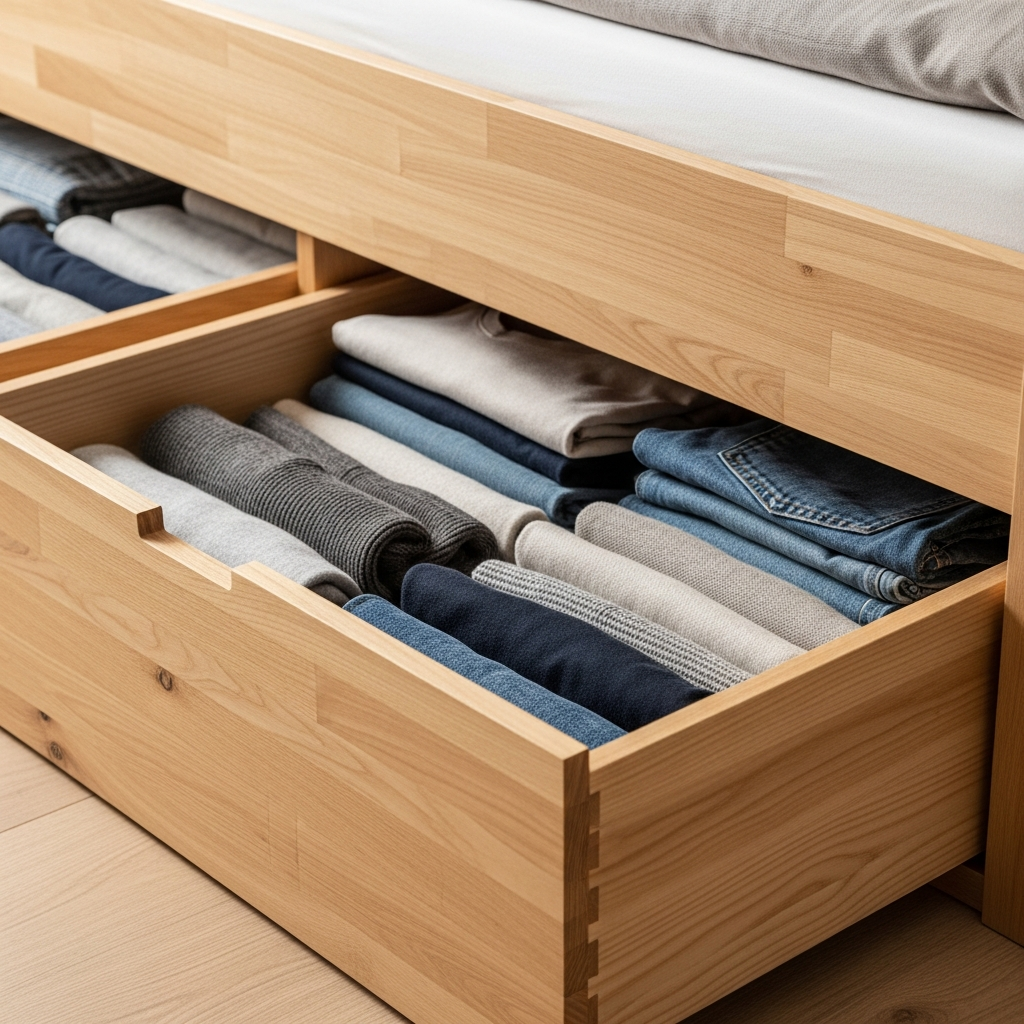
In a shared room, storage is often at a premium. Choosing bed frames with built-in drawers underneath allows you to store clothing, toys, or seasonal gear without occupying extra floor space. This keeps the room looking organized and reduces the need for bulky dressers that can make a shared room feel cramped.
10. Personalized Wall Decals and Art
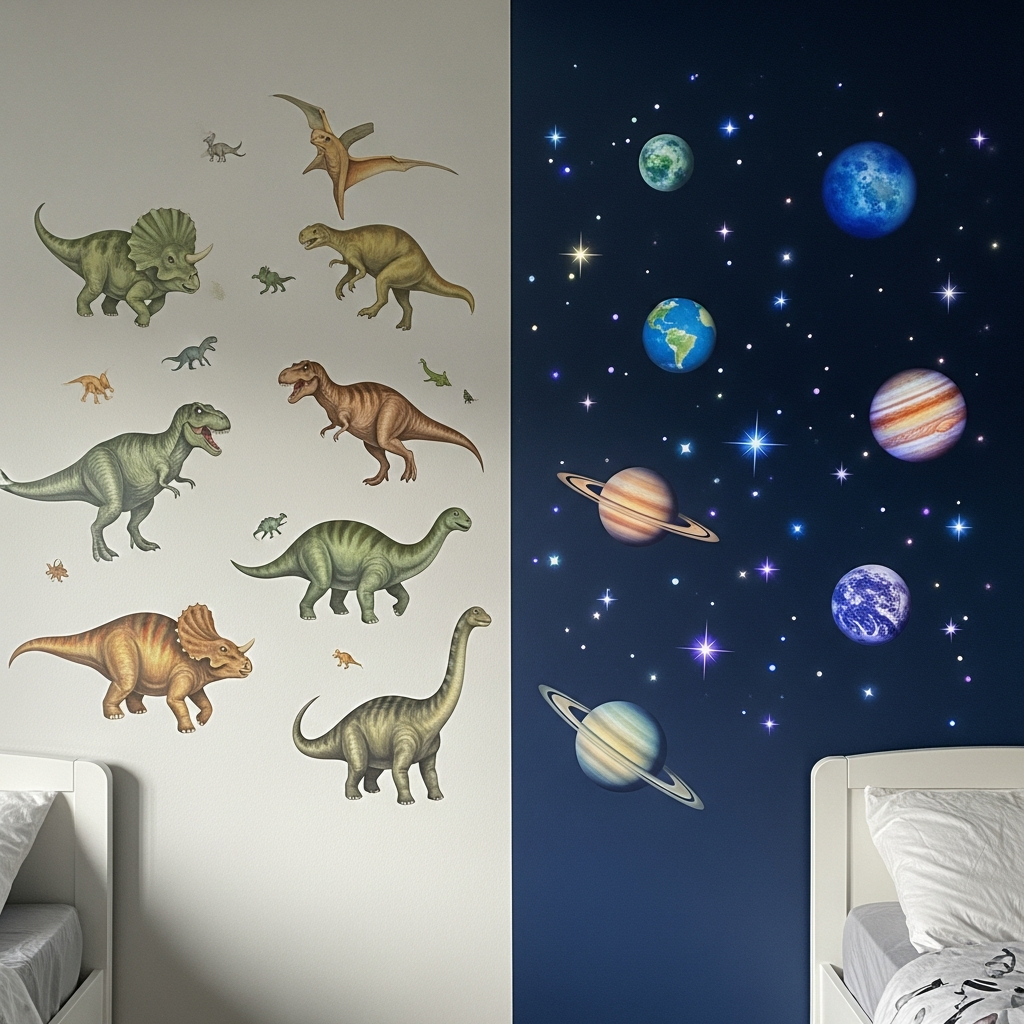
Allowing each child to decorate the wall space next to their bed helps them feel a sense of identity. Whether it is their name in wooden letters, a specific theme like outer space or nature, or a gallery of their own artwork, these personal touches define their individual area within the shared room without requiring major renovations.
11. Opt for Loft Beds with Integrated Play Areas
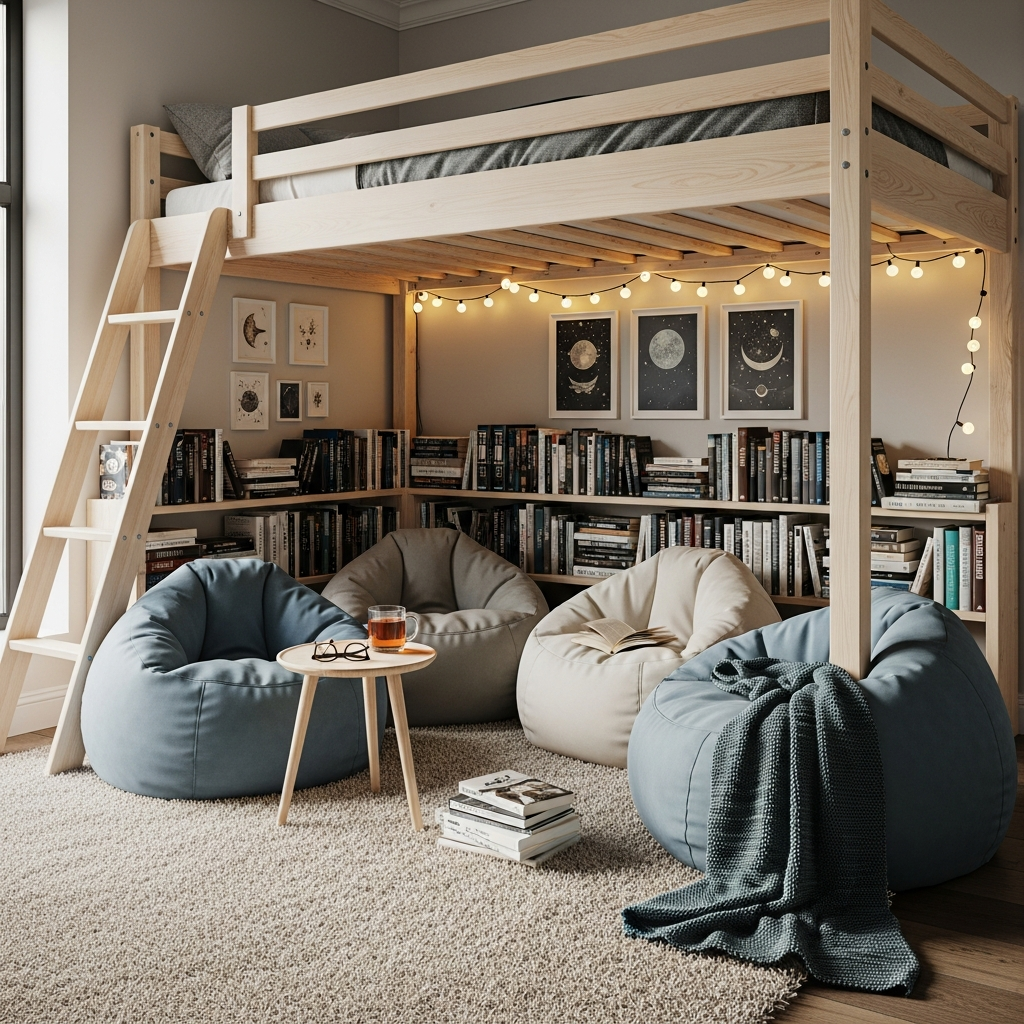
Loft beds elevate the sleeping surface to create a functional area underneath. This lower space can be turned into a reading nook, a playhouse, or even a walk-in closet. For shared rooms, one child could have a loft bed while the other has a standard bed, creating a dynamic multi-level environment that feels larger than it actually is.
12. Install Floating Shelves for Personal Belongings
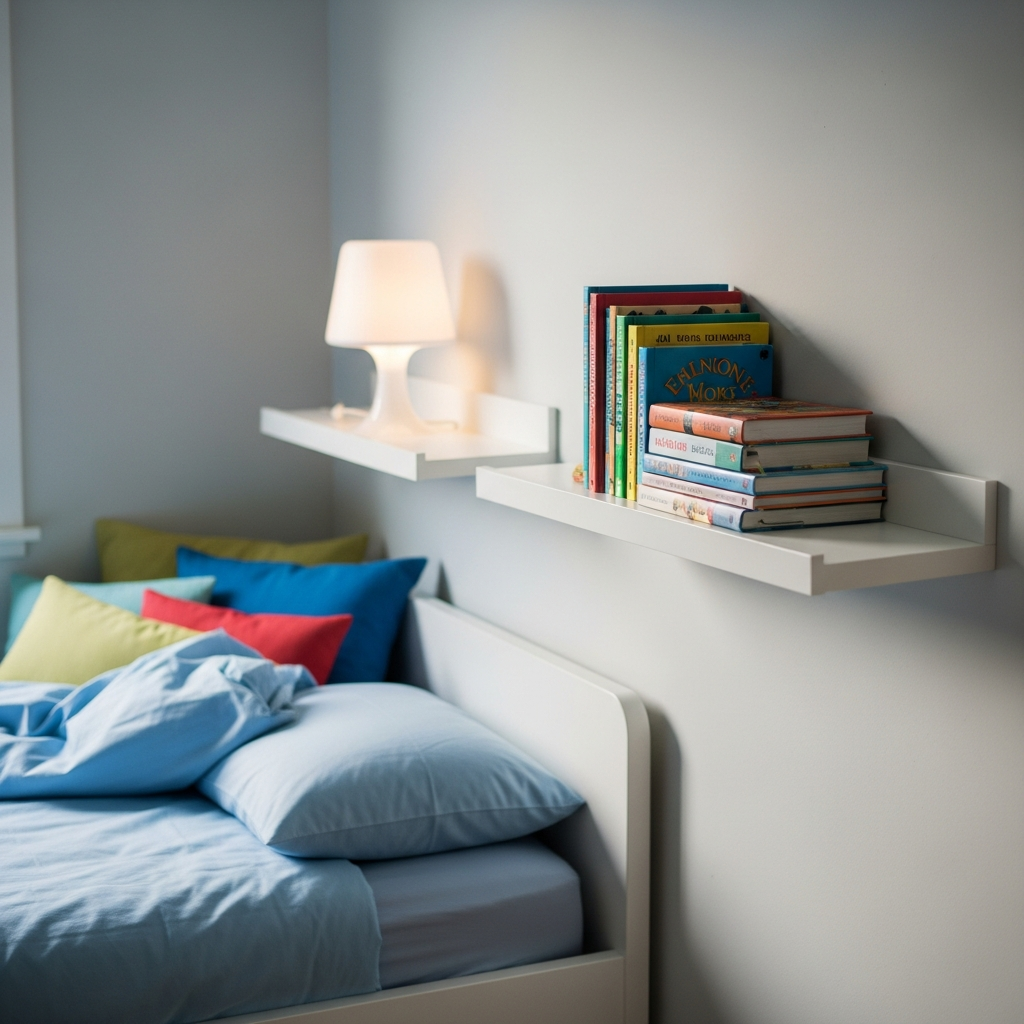
Floor space is precious in a shared room, so look to the walls for storage. Floating shelves placed next to each bed provide a spot for a water bottle, a favorite book, or a nightlight. This replaces the need for floor-standing nightstands and gives each child a dedicated place for their most important items.
13. Create a Shared Gallery Wall
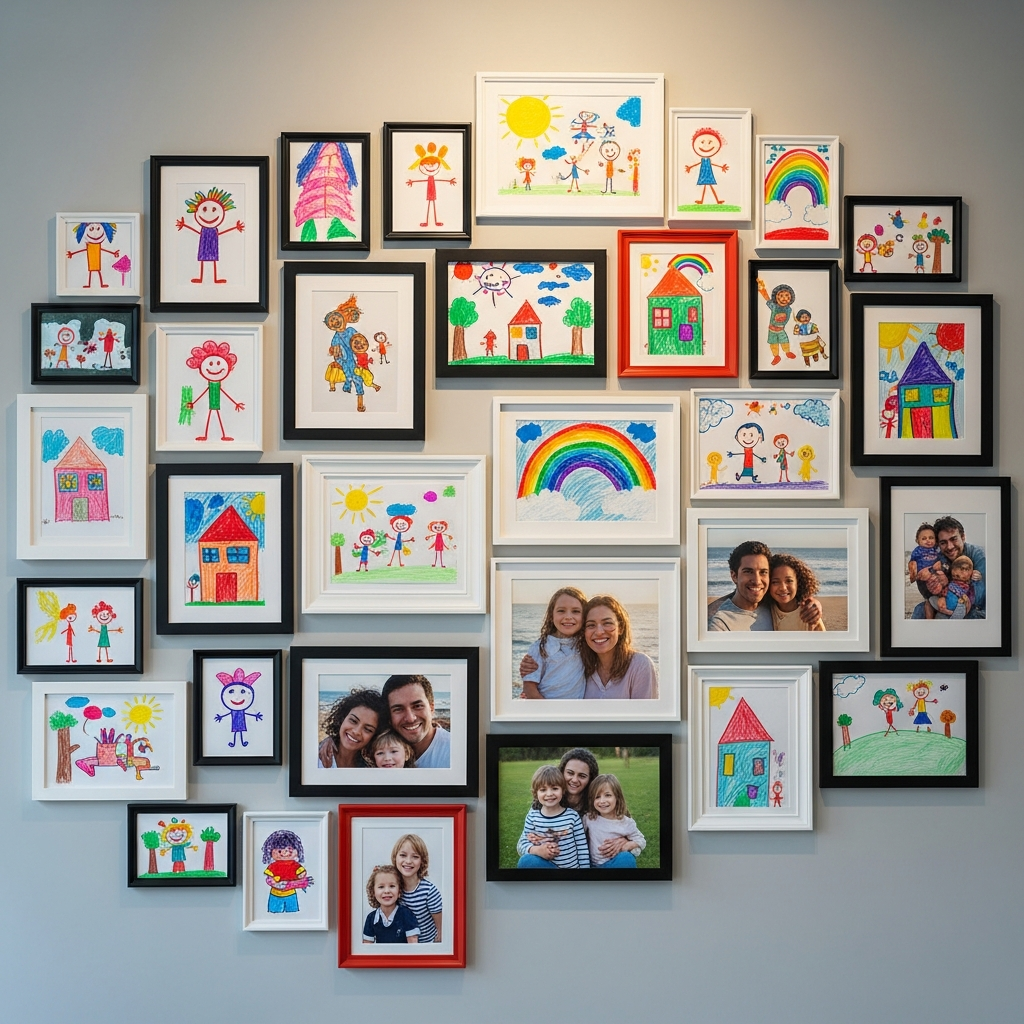
While individualization is important, fostering a sense of togetherness is also vital. Create a shared gallery wall in a common area of the room, such as above a dresser or desk, featuring photos of the siblings together or collaborative art projects. This serves as a visual reminder of their bond and unifies the room’s design.
14. Utilize Corner Storage Units
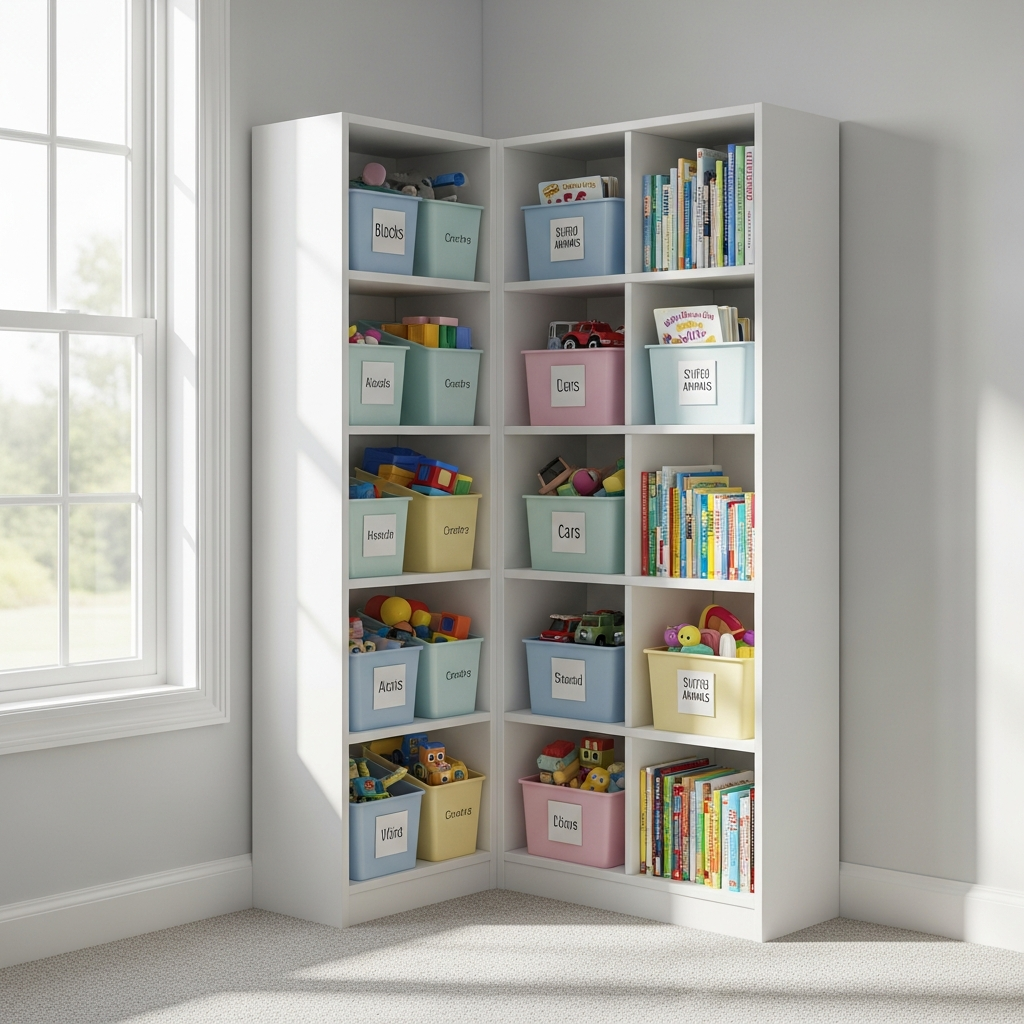
Corners are often underutilized in bedroom design. Installing corner-specific shelving units or rotating carousels can provide significant storage for toys and games. These units help keep the center of the room clear, providing more space for movement and shared activities between the children.
Conclusion
Designing a shared bedroom requires a blend of practical space management and creative personalization. By using vertical space, establishing clear boundaries, and involving your children in the decorating process, you can create a harmonious environment that supports both their individual growth and their relationship with one another. Whether you choose bunk beds for efficiency or room dividers for privacy, these fourteen ideas provide a solid foundation for a room that your kids will truly love and enjoy for years to come.