Parenting is an incredible journey, full of teaching moments, challenges, and immense joy. Often, we find ourselves wanting to help our children learn new things, whether it’s tying their shoes, doing homework, or navigating friendships. But how much help is “just right”? How do we support them without doing everything for them? This is where a wonderful approach called “scaffold parenting” comes in.
Imagine a building under construction. You see a temporary structure, like scaffolding, wrapped around it. This scaffolding helps the builders work safely and effectively, allowing them to reach high places and put all the pieces together. Once the building is strong and complete, the scaffolding is carefully removed. Scaffold parenting works in a very similar way for your child’s growth and learning. It’s about giving your child the right amount of temporary support to master new skills and build confidence, then gradually taking that support away as they become more capable.
This article will break down scaffold parenting into simple, easy-to-understand steps. We’ll explore why it’s such a powerful tool for your family and how you can use it every day to nurture independent, confident children.
What is Scaffold Parenting, Really?
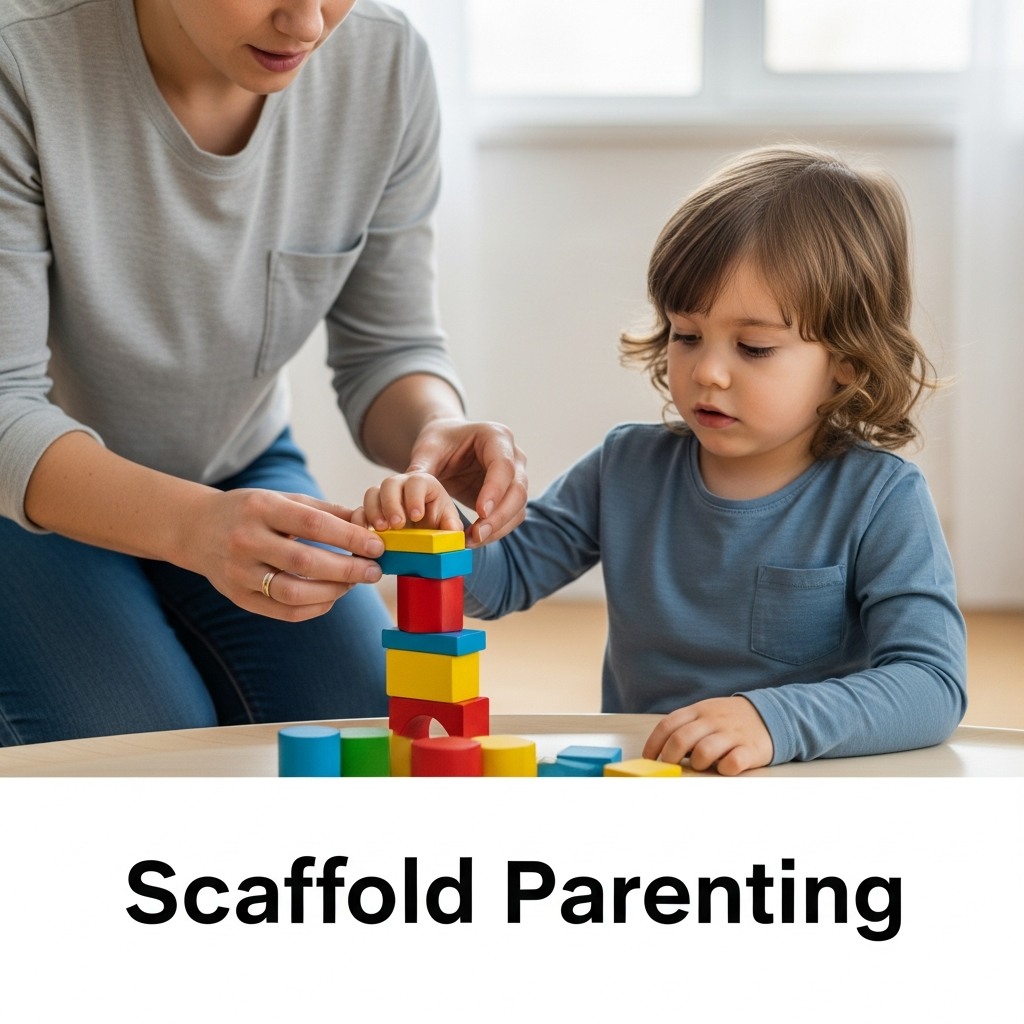
At its heart, scaffold parenting is about providing a supportive framework for your child to learn and grow. It’s not about doing things *for* them, but rather doing things *with* them, until they can do it on their own. Think of it as a bridge between what your child can currently do and what they are almost ready to do independently.
The idea comes from educational psychology, but it applies beautifully to everyday parenting. It acknowledges that children learn best when they are challenged just enough to stretch their abilities, but not so much that they become overwhelmed or frustrated.
The Core Idea: Support Today for Independence Tomorrow
The ultimate goal of scaffold parenting is to help your child become a self-sufficient, confident individual. This approach focuses on teaching them *how* to do things, not just getting the task done. By offering a helping hand when needed and stepping back when appropriate, you’re paving the way for them to tackle challenges on their own in the future.
It’s about meeting your child where they are right now, understanding their current capabilities, and offering assistance that specifically targets the parts of a task they find difficult.
Not Just “Helping” – It’s Strategic Helping
There’s a big difference between general “helping” and strategic “scaffolding.” If your child is struggling to build a tower with blocks, just putting the block on for them is helping, but it doesn’t teach them anything. Scaffold parenting would involve guiding their hand, suggesting which block to use next, or holding one part steady while they place another. It’s about being mindful of *how* you help, so that each interaction is a learning opportunity.
Why Scaffold Parenting Works Wonders

This gentle yet effective method offers many benefits for both you and your child. It’s a way of parenting that fosters growth, resilience, and a strong relationship.
Building Confidence and Self-Esteem
When children successfully complete a task with a little bit of support, they feel a sense of accomplishment. This builds their confidence in their own abilities. They learn that new challenges are not impossible, especially with a supportive guide by their side. This reduces frustration and replaces it with a can-do attitude.
Fostering Independence and Problem-Solving Skills
Scaffold parenting directly teaches children to think for themselves. Instead of giving them the answers, you guide them to discover solutions. This practice in problem-solving is invaluable, equipping them with skills they’ll use throughout their lives. They learn to break down problems, try different approaches, and persist even when things are tough.
Strengthening Your Parent-Child Bond
Working together on a task creates a partnership. Your child feels seen, understood, and supported. This collaborative approach can lead to fewer power struggles because you’re working *with* them, rather than simply telling them what to do. It shows your child that you believe in their potential and are there to cheer them on.
Promoting a Growth Mindset
A growth mindset is the belief that abilities and intelligence can be developed through dedication and hard work. Scaffold parenting naturally promotes this by showing children that effort leads to mastery. They learn that making mistakes is part of learning, and that with persistence, they can improve. This resilience is a powerful trait that will serve them well in all areas of life.
How to “Build Your Scaffold”: Practical Steps for Parents

Putting scaffold parenting into practice might feel natural for many parents, but becoming more intentional about it can make a big difference. Here are the steps to effectively “build” and then gradually remove your supportive scaffold.
Step 1: Observe and Understand Your Child’s Level
Before you can offer the right kind of help, you need to know where your child is currently at. Watch them carefully as they try new tasks.
What Can They Do Already?
Notice what skills they have mastered. This is their foundation.
What’s Just Beyond Their Reach?
Identify the specific parts of a task that are challenging. This is the “zone of proximal development”—the sweet spot where learning happens with a little help.
Asking Open-Ended Questions
Instead of jumping in, try asking questions like:
– “What do you think needs to happen next?”
– “How could we try that?”
– “What do you notice about…?”
These questions encourage them to think and articulate their process.
Step 2: Provide Just-Right Support (The “Sweet Spot”)
This is the art of scaffold parenting – offering enough help to prevent frustration, but not so much that you take over. The support should be temporary and directly related to the child’s difficulty.
Breaking Tasks into Smaller Chunks
A big task can feel overwhelming. Break it down into smaller, manageable steps.
– Instead of “Clean your room,” try “First, let’s put all the books on the shelf. Then, we’ll pick up the toys.”
Offering Hints and Cues
Gentle prompts can guide your child without giving the answer.
– Verbal cues: “Remember what we do first when we brush our teeth?”
– Gestures: Pointing to the missing piece of a puzzle.
– Visual cues: A picture schedule for getting ready in the morning.
Modeling the Task
Sometimes, showing is better than telling. Demonstrate how to do a part of the task first.
– “Watch how I hold the scissors to cut the paper.”
– “Let me show you how to peel this banana.”
Using Tools and Resources
Provide physical aids that help bridge the gap.
– A step stool to reach the sink.
– Larger-handled crayons for small hands.
– Training wheels on a bike.
– A visual timer to manage screen time.
Step 3: Gradually Release Responsibility (The “Fading” Part)
This is crucial. The scaffold isn’t meant to be permanent. As your child gains confidence and skill, you slowly remove your support.
Lessening Your Involvement Over Time
Move from direct help to more indirect guidance.
– From hand-over-hand help with drawing, to holding the paper, to just a verbal reminder to stay on the line.
– From doing a puzzle *with* them, to suggesting where a piece might go, to simply watching them complete it.
Celebrating Small Wins
Acknowledge your child’s effort and progress, no matter how small.
– “You picked up all your blocks, great job!”
– “I noticed how you figured out that tricky math problem all by yourself.”
This positive reinforcement encourages them to keep trying.
Allowing for Mistakes
Mistakes are powerful learning opportunities. When your child makes an error, resist the urge to fix it immediately.
– Encourage them to reflect: “What do you think happened there?”
– Guide them to problem-solve: “How could we try it differently next time?”
– Provide reassurance: “It’s okay to make mistakes; that’s how we learn!”
Scaffold Parenting in Action: Examples for Different Ages

Let’s look at how scaffold parenting can be applied in everyday situations across different age groups.
For Toddlers (1-3 years)
Toddlers are full of curiosity and eager to explore their independence.
– Getting Dressed: Instead of dressing them completely, lay out two choices of clothes and ask them to pick. Help with tricky parts like buttons or zippers, but let them pull up pants or put on socks themselves.
– Eating Independently: Pre-cut food into bite-sized pieces. Use a fork to pick up food together (hand-over-hand), then let them try. Praise their efforts, even if it’s messy.
– Potty Training: Explain the steps simply. Sit with them, offering encouragement. Use a picture chart to show the sequence (pull down pants, sit on potty, wipe, flush, wash hands).
For Preschoolers (3-5 years)
Preschoolers are developing new skills rapidly and enjoy being helpers.
– Household Chores: Break down a task like “tidying up toys” into smaller steps. “First, let’s put the red blocks in the bin. Then, the blue ones.” Use a visual checklist or a song to guide them.
– Learning Letters and Numbers: Instead of just pointing, trace letters together with your finger. Ask, “What sound does this letter make?” Use playdough to form letters or count objects with them.
– Social Skills: If they’re struggling to share, suggest, “Why don’t you ask Jimmy if you can have a turn with the truck when he’s finished?” or “Let’s set a timer for five minutes, and then you can switch.”
For School-Aged Children (5-12 years)
As children grow, the scaffold becomes more about intellectual and emotional support.
– Homework: Instead of doing their homework, help them break down a big assignment. “Let’s read the instructions together first. What’s the first thing you need to do?” Help them check their work, rather than correcting it for them.
– Learning a New Skill (e.g., riding a bike, a sport): Start with direct instruction and physical support (holding the seat). Gradually reduce your hold, then just run beside them, then simply cheer from the sidelines.
– Problem-Solving: If they’re upset about a friend, instead of solving it, ask, “What do you think happened? What are some things you could say or do to make it better?” Help them brainstorm solutions and role-play if needed.
Common Misunderstandings and How to Avoid Them

It’s easy to confuse scaffold parenting with other parenting styles. Understanding the distinctions helps you apply it effectively.
It’s Not “Helicopter Parenting”
Helicopter parenting involves hovering over a child and doing things *for* them, often out of anxiety, preventing them from experiencing failure or learning from mistakes. Scaffold parenting, in contrast, is about doing things *with* them, specifically to teach them to do it *themselves*. It’s a temporary support structure that is deliberately removed, not a permanent shield.
It’s Not “Permissive Parenting”
Permissive parenting often involves very few demands, expectations, or boundaries. Scaffold parenting still involves clear expectations and structure. It’s a guided learning process within established limits, not a free-for-all where children are left to do whatever they want without direction.
It’s Not a Quick Fix
Scaffold parenting is a long-term strategy, not a magic bullet. It requires patience, consistency, and a willingness to adjust your approach based on your child’s individual needs and progress. There will be days when your child struggles, and you’ll need to offer more support, and days when they surprise you with their independence.
When to Seek Extra Support

While scaffold parenting is incredibly powerful, it’s important to recognize that some challenges are bigger than what this approach alone can address. If your child is consistently struggling with a developmental milestone, exhibits significant behavioral issues, or seems to be falling behind despite your best efforts, it’s always a good idea to consult with their pediatrician, a child development specialist, or an educational expert. There’s no shame in seeking professional guidance, and it shows you’re committed to your child’s well-being.
Conclusion

Scaffold parenting is a beautiful and effective way to raise capable, confident, and independent children. It’s about being a supportive guide, offering just the right amount of help at the right time, and then gracefully stepping back as your child gains mastery. You are already doing aspects of this naturally in your daily life as a parent. By understanding its principles and applying them intentionally, you empower your child to reach their full potential, navigate challenges with resilience, and build a strong sense of self-worth.
Remember, parenting is a journey of continuous learning for both you and your child. Embrace the process, celebrate the small victories, and trust in your child’s amazing capacity to grow. You are building not just skills, but a future for them, one supported step at a time.