Congratulations, expectant parent! Discovering you’re bringing a new life into the world is an incredibly exciting time, filled with dreams, preparations, and perhaps a few questions. Among the many considerations that naturally arise, what you eat often becomes a primary focus. It’s completely normal to feel a mix of excitement and a touch of overwhelm when navigating pregnancy food guidelines.
You want to do everything right for your developing baby, and that includes making informed choices about your diet. While most foods are perfectly safe and beneficial during pregnancy, there are a handful of items that carry potential risks and are best avoided or consumed with extreme caution. This isn’t about restriction; it’s about empowerment through knowledge, ensuring the healthiest environment for your little one to grow.
This guide aims to simplify those crucial food choices, focusing on four main categories that expectant parents should be mindful of. We’ll explain why these foods are a concern, offer clear examples, and, most importantly, provide plenty of safe, delicious alternatives so you can nourish yourself and your baby with confidence and peace of mind.
Understanding Food Safety During Pregnancy

During pregnancy, your immune system naturally adjusts to accommodate the growing baby. While this is a wonderful biological adaptation, it also means that both you and your baby can be more vulnerable to certain foodborne illnesses that might only cause mild discomfort in a non-pregnant adult. Bacteria, viruses, and parasites like Listeria, Toxoplasma, and Salmonella can cross the placenta and potentially harm your baby, leading to serious complications or developmental issues.
Knowing which foods pose these risks isn’t meant to cause anxiety, but rather to equip you with the knowledge to make smart, protective choices. Think of it as an extra layer of love and care you’re providing. By understanding the ‘why’ behind these recommendations, you can approach your meals with confidence, focusing on a diverse, nutrient-rich diet that supports both your health and your baby’s remarkable development.
The Big Four Foods to Approach with Caution

Let’s dive into the four main food categories that deserve your special attention during pregnancy. Remember, the goal here is not to create a long list of forbidden items, but to highlight the most common sources of potential risk, helping you navigate your plate safely.
1. Unpasteurized Dairy and Soft Cheeses

Dairy products are an excellent source of calcium, protein, and other vital nutrients for both mom and baby. However, not all dairy is created equal when you’re expecting. The key word here is ‘pasteurized.’
Why Avoid Unpasteurized Dairy?
Unpasteurized, or raw, dairy products and certain soft cheeses made from unpasteurized milk can harbor a dangerous bacterium called Listeria monocytogenes. Listeria infection (listeriosis) during pregnancy can be very serious, potentially leading to miscarriage, stillbirth, preterm labor, or severe illness in newborns. While rare, its potential severity makes avoiding these foods a crucial safety measure.
Foods to Be Cautious Of:
- Soft Cheeses: This includes varieties like Brie, Camembert, Feta, Blue Cheese (e.g., Roquefort, Gorgonzola), Chevre (goat cheese), and Queso Blanco/Fresco, especially if they don’t explicitly state ‘made from pasteurized milk’ on the label. Many imported soft cheeses are unpasteurized.
- Unpasteurized Milk and Dairy Products: Raw milk, unpasteurized yogurt, and ice cream made from raw milk fall into this category.
- Deli Salads with Soft Cheese: Be cautious with pre-made salads that might contain unpasteurized feta or similar cheeses.
Safe Alternatives You Can Enjoy:
The good news is that most dairy products available in stores are pasteurized and perfectly safe! You can happily enjoy:
- Hard Cheeses: Cheddar, Swiss, Parmesan, Provolone, Monterey Jack.
- Semi-Soft Pasteurized Cheeses: Mozzarella, cream cheese, cottage cheese, pasteurized ricotta.
- All Pasteurized Milk, Yogurt, and Ice Cream.
- Processed Cheese Slices.
Practical Advice:
Always, always check the label! If a cheese or dairy product doesn’t explicitly say ‘pasteurized,’ it’s best to err on the side of caution and choose an alternative. When dining out, don’t hesitate to ask your server if soft cheeses are made with pasteurized milk. It’s always better to be safe than sorry when it comes to your baby’s health.
2. Certain Types of Fish (High Mercury Content)
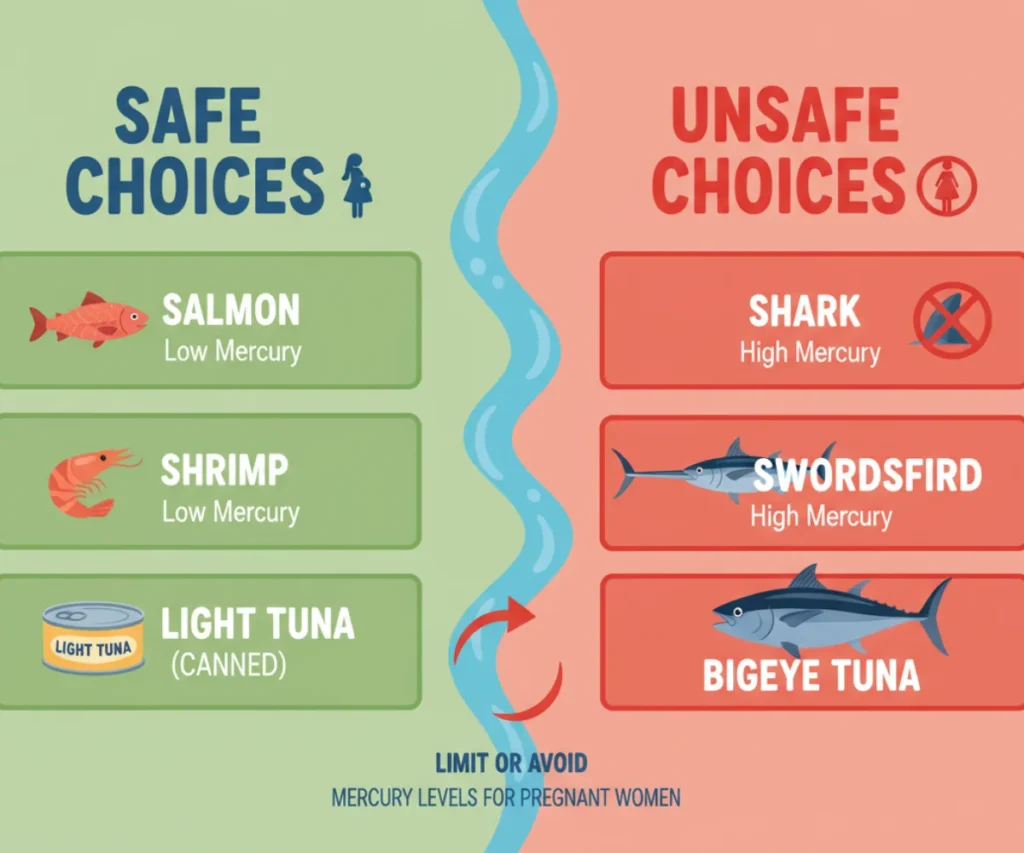
Fish can be a fantastic source of lean protein, omega-3 fatty acids (DHA and EPA), and other nutrients vital for your baby’s brain and eye development. However, some types of fish contain high levels of mercury, a neurotoxin that can be harmful to a developing fetus.
Why Avoid High-Mercury Fish?
Mercury consumed by a pregnant person can cross the placenta and accumulate in the baby’s developing brain and nervous system, potentially leading to developmental delays, learning disabilities, and other neurological issues. The key is moderation and smart choices.
Fish to Strictly Limit or Avoid:
- Shark
- Swordfish
- King Mackerel
- Tilefish (often found in the Gulf of Mexico)
- Bigeye Tuna (found in sushi, often listed as ‘Ahi’) – It’s higher in mercury than other tuna varieties.
Safe & Beneficial Fish Options (Low Mercury & High in Omega-3s):
There are many delicious and safe fish options that offer wonderful health benefits:
- Salmon: Rich in omega-3s, very safe.
- Cod
- Shrimp
- Light Canned Tuna: Limit albacore (‘white’) tuna to 6 ounces per week, but ‘light’ tuna (skipjack) is generally lower in mercury and can be consumed in moderation (up to 12 ounces per week).
- Catfish
- Pollock
- Tilapia
- Haddock
- Anchovies
- Sardines
Practical Advice:
Aim for 8-12 ounces (2-3 servings) of low-mercury fish per week. This provides essential omega-3s without the mercury risk. Be mindful of portion sizes. If you’re unsure about a specific type of fish, check reliable sources like the FDA or EPA guidelines, or simply opt for the widely known safe choices. Avoid raw fish, like sushi or sashimi, due to the potential for parasites and bacteria, even if the fish is low in mercury.
3. Raw or Undercooked Meats, Poultry, and Eggs

Protein is a cornerstone of a healthy pregnancy diet, supporting your baby’s rapid growth and development. However, raw or undercooked animal products can carry significant risks.
Why Avoid Raw or Undercooked Meats, Poultry, and Eggs?
These foods can be contaminated with bacteria such as Salmonella, E. coli, and Campylobacter, which can cause severe food poisoning, dehydration, and potentially lead to preterm labor or miscarriage. Additionally, raw or undercooked meat can contain the parasite Toxoplasma gondii, which causes toxoplasmosis. While often mild in adults, toxoplasmosis can cause serious birth defects or health problems for your baby.
Foods to Be Cautious Of:
- Rare or Medium-Rare Meats: Steaks, roasts, or ground meat that is pink in the middle.
- Undercooked Poultry: Chicken or turkey that isn’t cooked through.
- Deli Meats/Cold Cuts: Unless heated until steaming hot (165°F or 74°C), these can harbor Listeria. This includes turkey, ham, salami, bologna, and hot dogs.
- Raw Eggs: Found in homemade Caesar dressing, hollandaise sauce, certain custards, raw cookie dough, and eggnog.
- Pâtés and Meat Spreads: Especially refrigerated versions, due to Listeria risk. Canned or shelf-stable versions are usually fine.
Safe Practices & Alternatives:
- Cook Thoroughly: Always cook meat and poultry to their safe internal temperatures. Use a food thermometer: 145°F (63°C) for whole cuts of meat, 160°F (71°C) for ground meat, and 165°F (74°C) for all poultry.
- Heat Deli Meats: If you crave a sandwich, heat your deli meat until it’s steaming hot.
- Cook Eggs Firm: Ensure egg yolks and whites are firm. Choose pasteurized eggs for recipes requiring raw or lightly cooked eggs, or when making homemade sauces.
- Avoid Cross-Contamination: Use separate cutting boards for raw meats and produce, and wash your hands, utensils, and surfaces thoroughly after handling raw ingredients.
Practical Advice:
When dining out, specifically request meats to be well-done. Be wary of buffets where food might sit out at unsafe temperatures. When baking, resist the urge to taste raw batter or dough that contains raw eggs.
4. Unwashed Fruits and Vegetables & Unpasteurized Juices

Fresh fruits and vegetables are cornerstones of a healthy pregnancy diet, packed with vitamins, minerals, and fiber. However, if not properly handled, they can also pose risks.
Why Avoid Unwashed Produce and Unpasteurized Juices?
Soil and contaminated water can carry bacteria like Toxoplasma gondii (the same parasite found in raw meat), E. coli, Salmonella, and other harmful pathogens onto the surface of fruits and vegetables. Consuming produce that hasn’t been thoroughly washed, or drinking unpasteurized juices, means you could be ingesting these contaminants directly. Unpasteurized juices, particularly those sold at farm stands or in juice bars, can harbor harmful bacteria if not processed correctly.
Foods to Be Cautious Of:
- Any fresh fruits and vegetables that haven’t been thoroughly washed. This includes pre-packaged salads labeled “pre-washed” – an extra rinse at home provides added assurance.
- Fresh-squeezed juices from farmers’ markets or juice bars unless you can confirm they are pasteurized or have been treated to kill harmful bacteria.
- Sprouts (alfalfa, clover, radish, mung bean, etc.) have a high risk of bacterial contamination due to the warm, moist conditions in which they are grown. It’s generally advised to avoid them unless cooked thoroughly.
Safe Practices & Alternatives:
- Wash Everything: Rinse all raw fruits and vegetables thoroughly under running tap water, even if you plan to peel them. Gently rub produce by hand or use a clean vegetable brush for firm items like melons and potatoes.
- Remove Outer Leaves: For leafy greens, remove the outermost leaves before washing.
- Dry Produce: After washing, dry produce with a clean cloth or paper towel to further reduce bacteria.
- Choose Pasteurized Juices: Opt for juices that clearly state ‘pasteurized’ on the label. Most commercially available juices in grocery stores are pasteurized.
- Cook Sprouts: If you must eat sprouts, ensure they are cooked thoroughly.
Practical Advice:
Even if you’re eating organic produce, proper washing is essential. Be particularly careful with melons, as bacteria can transfer from the rind to the flesh when cut. When ordering salads in restaurants, ask if produce is washed thoroughly, and consider avoiding sprouts unless they are cooked into a dish.
Beyond the Big Four General Food Safety Tips for Expectant Parents

While focusing on the four specific categories is vital, adopting a few general food safety habits will significantly enhance your peace of mind and protect your health throughout your pregnancy:
- Wash Your Hands Frequently: Before and after handling food, especially raw meat, poultry, and eggs.
- Prevent Cross-Contamination: Use separate cutting boards, plates, and utensils for raw and cooked foods. Keep raw meats away from other foods in your grocery cart and refrigerator.
- Cook to Safe Temperatures: Invest in a food thermometer and use it! Visual cues aren’t always enough to ensure food is cooked thoroughly.
- Chill Promptly: Refrigerate perishable foods within two hours (one hour if the ambient temperature is above 90°F / 32°C). Bacteria multiply rapidly at room temperature.
- Read Labels Carefully: Pay attention to expiration dates and instructions for storage and preparation.
- When in Doubt, Throw It Out: If you’re unsure about a food’s safety or freshness, it’s always best to discard it.
The Bigger Picture Enjoying a Healthy Pregnancy

Pregnancy is a time of immense growth and transformation, and your diet plays a supporting role in this incredible journey. While it’s essential to be aware of foods to avoid, try not to let it overshadow the joy of nurturing your body and your baby. Focus on the abundance of healthy, delicious foods you can enjoy.
- Embrace Variety: Fill your plate with a rainbow of fruits and vegetables, whole grains, lean proteins, and healthy fats.
- Stay Hydrated: Drink plenty of water throughout the day.
- Listen to Your Body: Pregnancy can bring unique cravings and aversions. While it’s important to make healthy choices, also be gentle with yourself.
- Consult Your Healthcare Provider: If you have specific dietary concerns, unusual symptoms, or simply want personalized advice, always reach out to your doctor, midwife, or a registered dietitian. They are your best resource for tailored guidance.
Remember, this period of careful eating is temporary, and it’s all for the most wonderful reason: protecting your precious little one. Every safe food choice you make is a testament to your love and dedication as a parent. You’re doing a wonderful job!
Conclusion
Navigating the culinary landscape during pregnancy can initially seem daunting, but by focusing on these four key food categories to avoid—unpasteurized dairy and soft cheeses, certain high-mercury fish, raw or undercooked meats/poultry/eggs, and unwashed produce/unpasteurized juices—you’re making powerful, informed decisions for your health and your baby’s well-being. This knowledge isn’t about creating fear; it’s about empowering you to make confident, safe choices that contribute to a healthy, thriving pregnancy.
As you embark on this beautiful journey, remember that diligent food safety practices, coupled with a balanced and nutrient-rich diet, are your best allies. Be gentle with yourself, celebrate every healthy meal, and never hesitate to consult your healthcare provider with any questions. You’ve got this, and a wonderful, healthy future awaits you and your growing family!