Returning to a fitness routine after childbirth is an important step in physical and mental recovery for many new parents. While finding the time to visit a gym can be difficult with a newborn, incorporating your baby into your workout provides a practical solution. These exercises are designed to help rebuild core strength, improve cardiovascular health, and enhance muscle tone, all while fostering a deeper bond with your child through movement and play. Always ensure you have received medical clearance from your healthcare provider before beginning any postnatal exercise program.
1. Pelvic Floor Squeezes with Baby
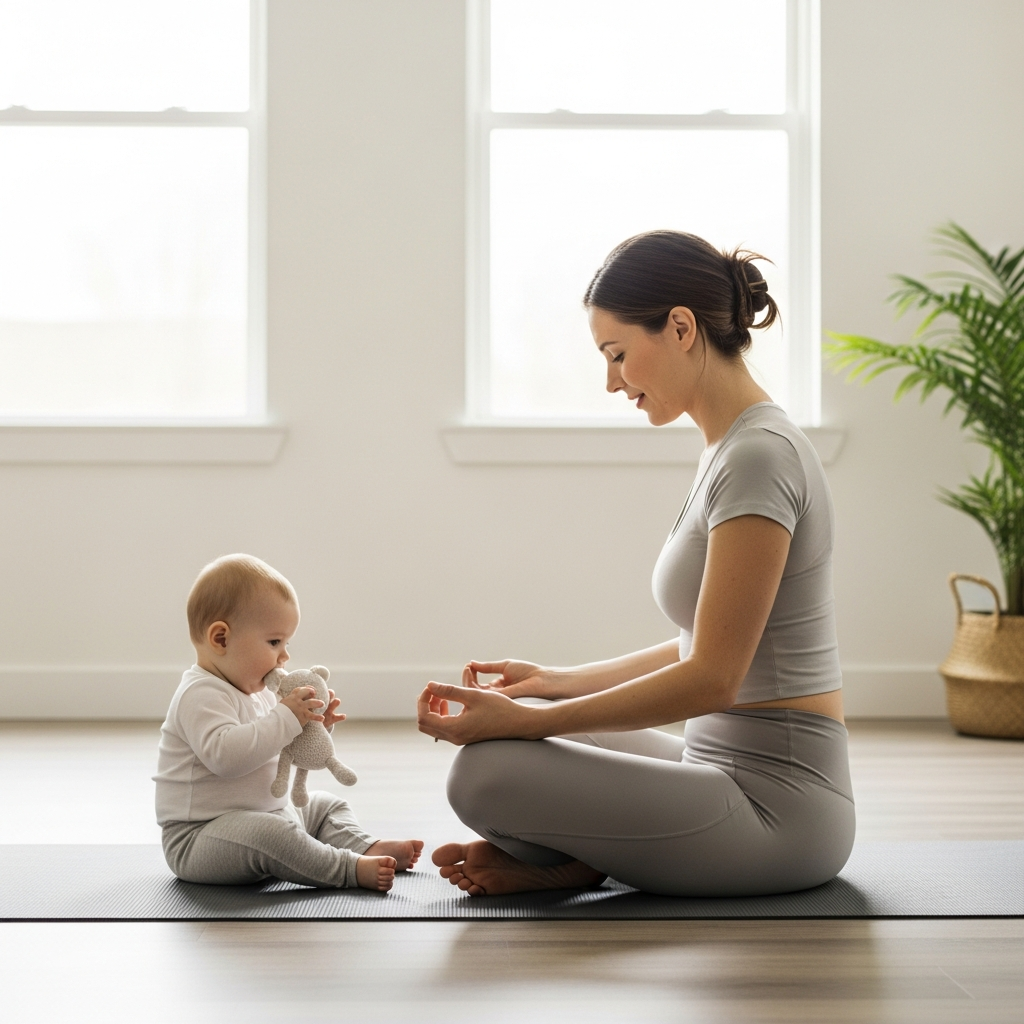
Known commonly as Kegels, these exercises are the foundation of postnatal recovery. Sit comfortably on the floor or a chair with your baby in your lap. Engage the muscles of your pelvic floor by lifting and squeezing, holding for five seconds, and then slowly releasing. This movement is invisible to others but vital for internal recovery and core stability. Performing these while holding your baby adds a gentle weight and provides a quiet moment of connection.
2. Baby Overhead Press

This exercise targets the shoulders and triceps while engaging the upper back. Hold your baby securely under their arms or around their torso while standing with feet hip-width apart. Slowly lift your baby toward the ceiling until your arms are fully extended, then lower them back to chest level. Ensure your core is tight and your back remains straight to avoid strain. This vertical movement is often very entertaining for infants, providing visual stimulation during your workout.
3. Classic Baby Squats
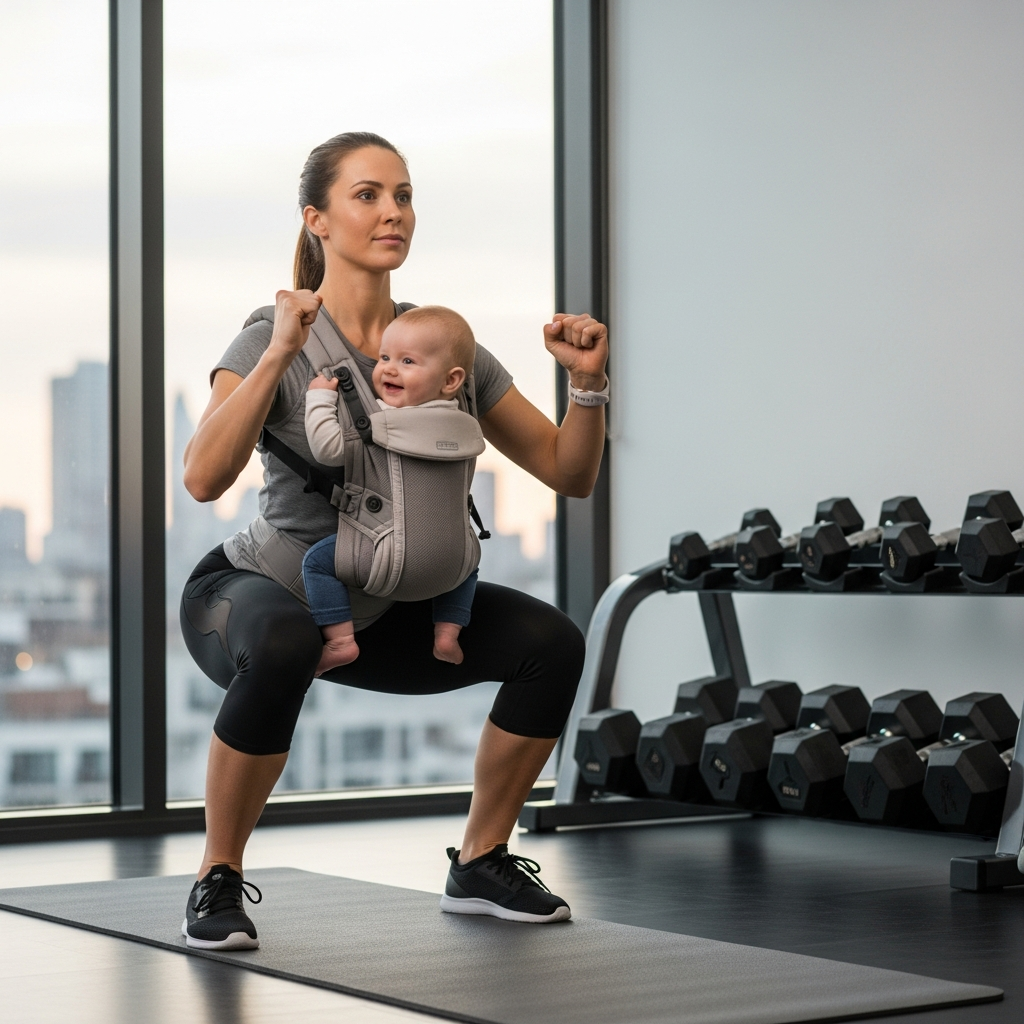
Squats are excellent for strengthening the glutes, hamstrings, and quadriceps. Hold your baby close to your chest or in a carrier. Stand with feet slightly wider than shoulder-width and lower your hips as if sitting in an invisible chair. Keep your chest up and your weight in your heels. As you rise back up to a standing position, you are lifting both your body weight and your baby, which increases the intensity of the lower-body workout.
4. Pelvic Tilts for Core Recovery
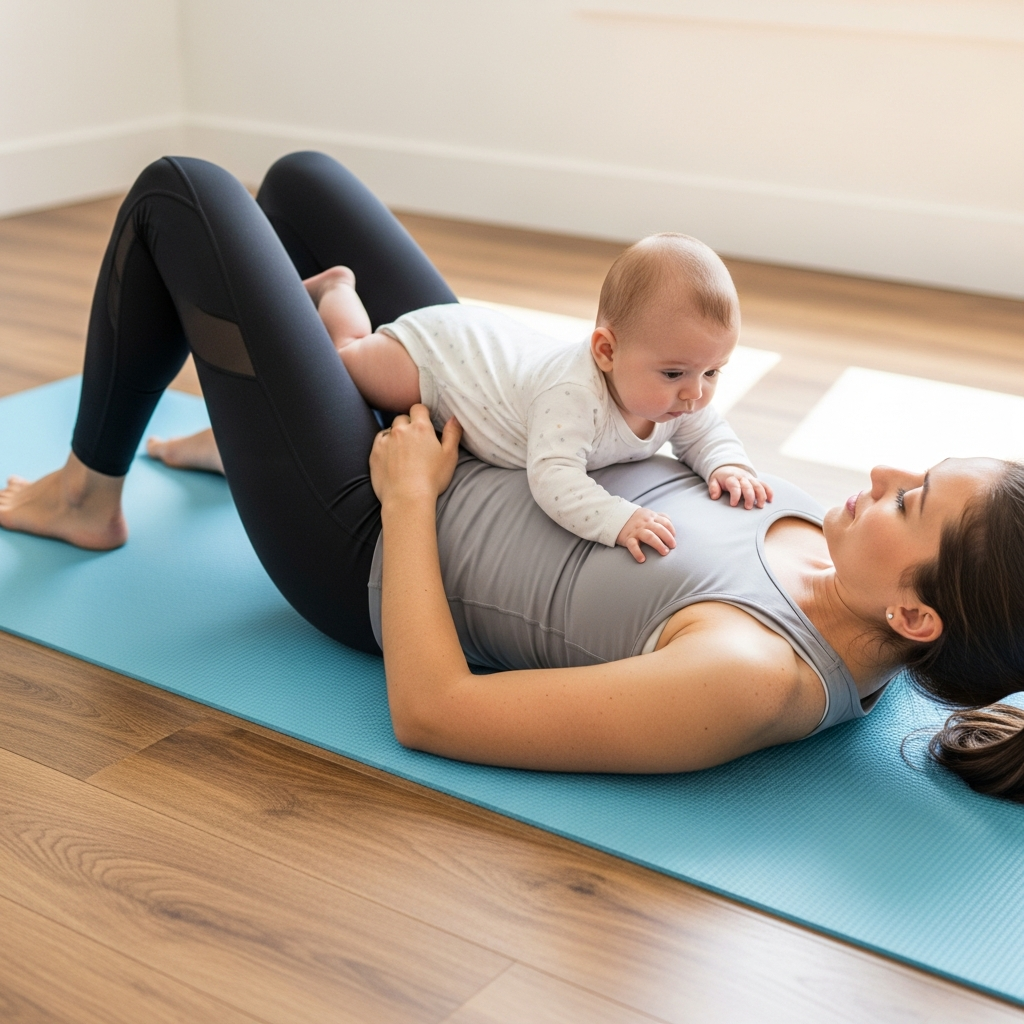
Pelvic tilts help to safely re-engage the abdominal muscles after pregnancy. Lie on your back with your knees bent and feet flat on the floor. Place your baby safely on your lower abdomen or pelvis, holding them securely with your hands. Gently press your lower back into the floor by tilting your pelvis upward. Hold for a few seconds and then return to a neutral position. This subtle motion helps alleviate lower back pain and strengthens the deep core.
5. Walking Lunges with Baby Carrier
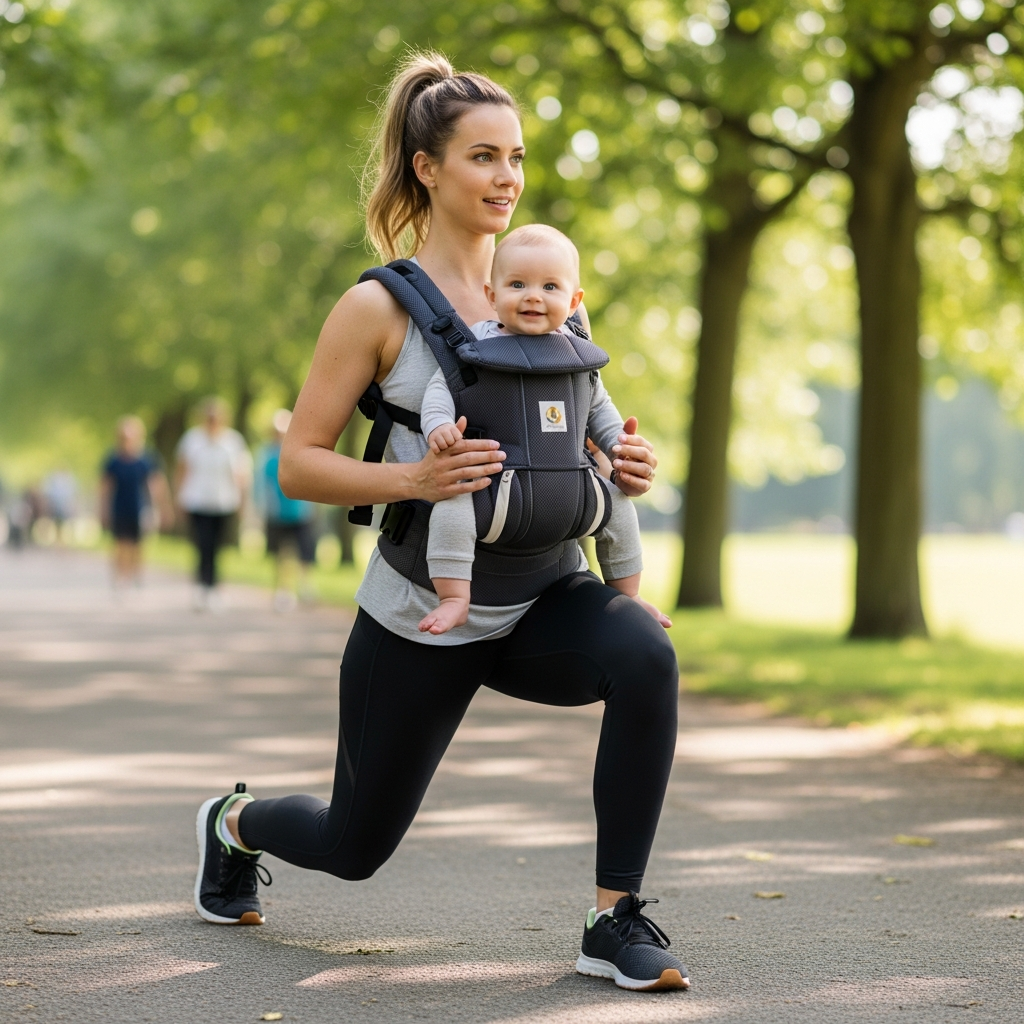
Walking lunges improve balance and lower-body endurance. With your baby securely fastened in an ergonomic front-facing or parent-facing carrier, take a large step forward with one leg. Lower your hips until both knees are bent at approximately 90 degrees. Step forward with the back leg to return to a standing position, then repeat with the opposite leg. The added weight of the carrier makes this a highly effective functional exercise.
6. Floor Glute Bridges
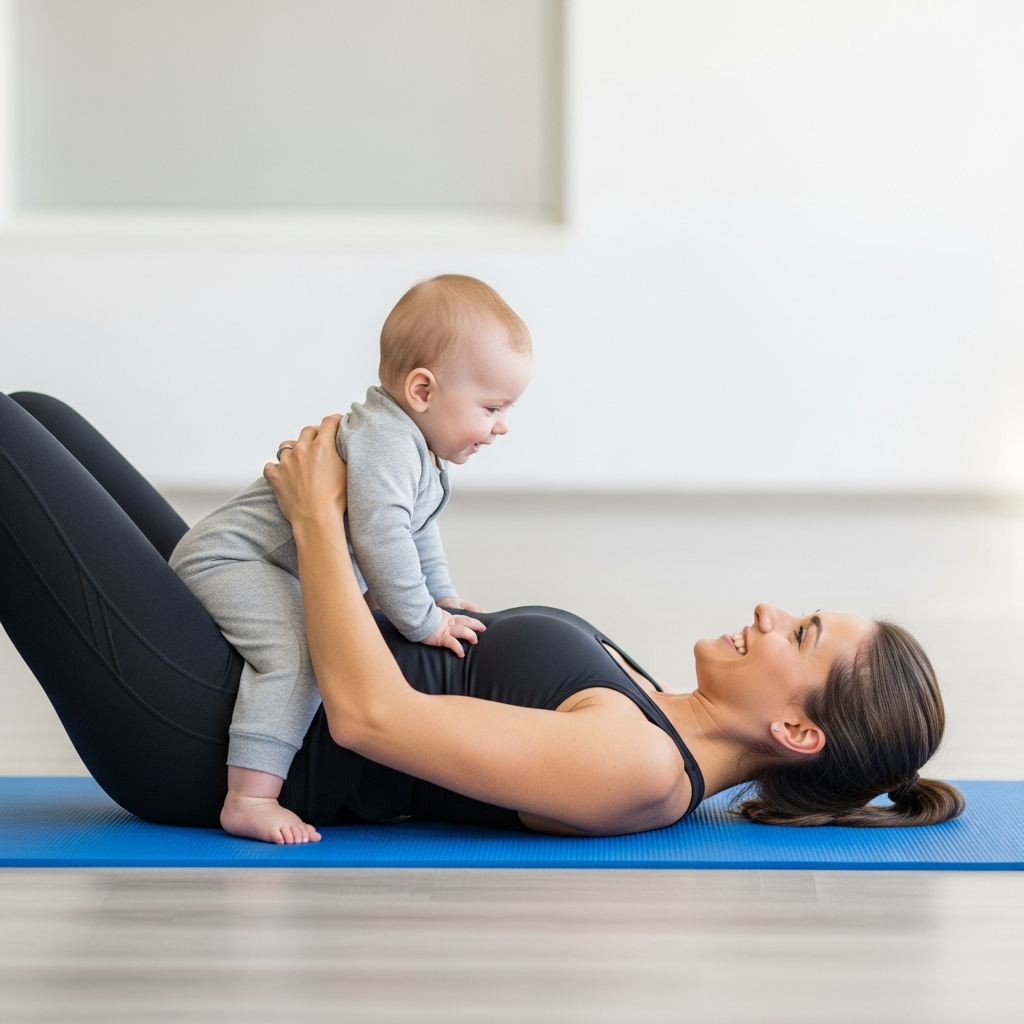
This exercise focuses on the posterior chain, including the lower back and glutes. Lie on your back with your feet flat on the floor and knees bent. Have your baby sit on your hips, supported safely by your hands. Lift your hips toward the ceiling, squeezing your glutes at the top of the movement. Lower your hips slowly back to the mat. This movement helps restore pelvic stability and strengthens the muscles needed for carrying your baby throughout the day.
7. Plank with Baby Kisses
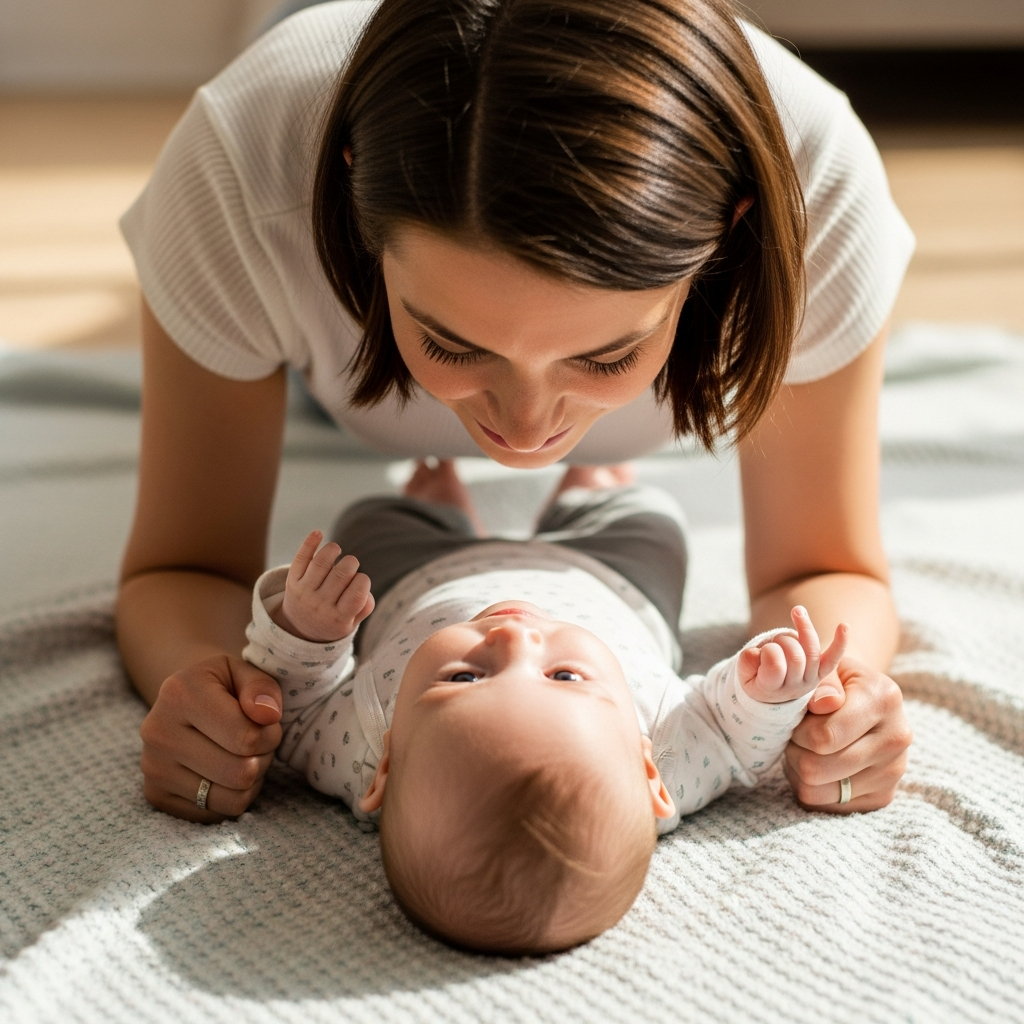
Planks are a powerhouse for core stability. Assume a plank position on your forearms or hands, ensuring your body forms a straight line from head to heels. Place your baby on a soft mat directly beneath your face. As you hold the plank and engage your abdominals, you can interact with your baby by smiling or giving them a quick kiss. This turns a challenging static hold into a playful bonding experience.
8. Reverse Lunges for Stability
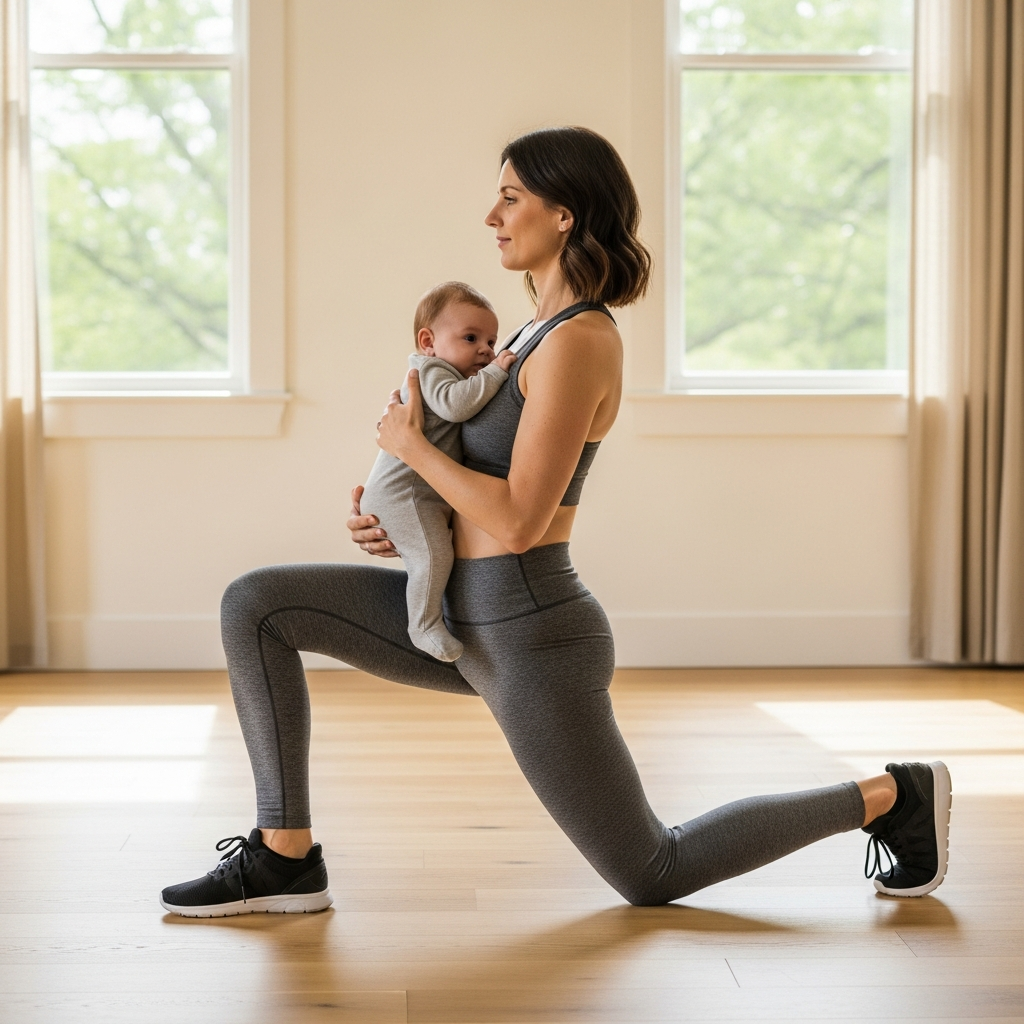
Reverse lunges are often gentler on the knees than forward lunges. Stand tall while holding your baby securely in front of you. Step one foot back and lower your back knee toward the ground. Return to the starting position and switch legs. This exercise targets the lower body while requiring significant core engagement to maintain balance while holding the extra weight of your infant.
9. Standing Calf Raises
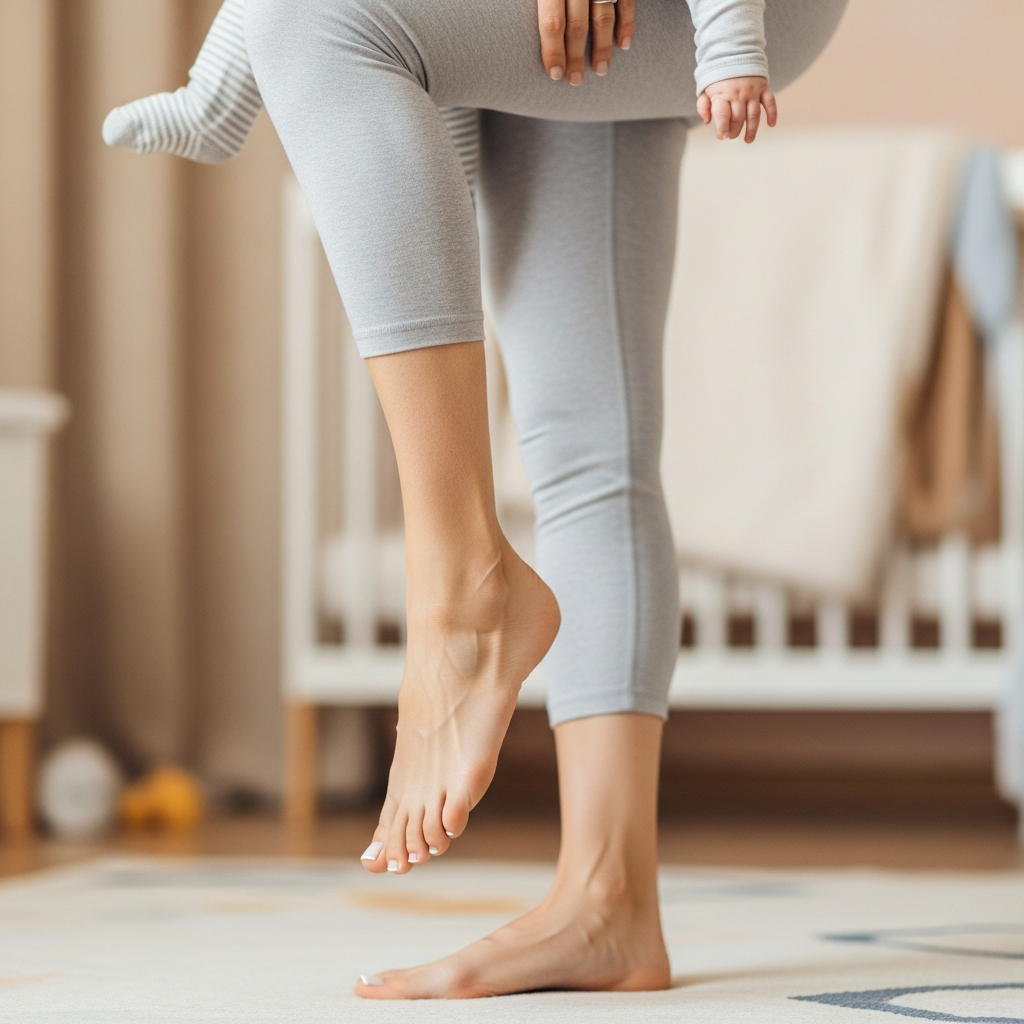
To tone the lower legs and improve ankle stability, stand with your feet hip-width apart while holding your baby in your arms or a carrier. Slowly rise onto the balls of your feet, holding the contraction for a second at the top, and then lower your heels back to the ground. This simple yet effective move can be done anywhere, from the kitchen to the park, making it easy to fit into a busy day.
10. Seated Russian Twists
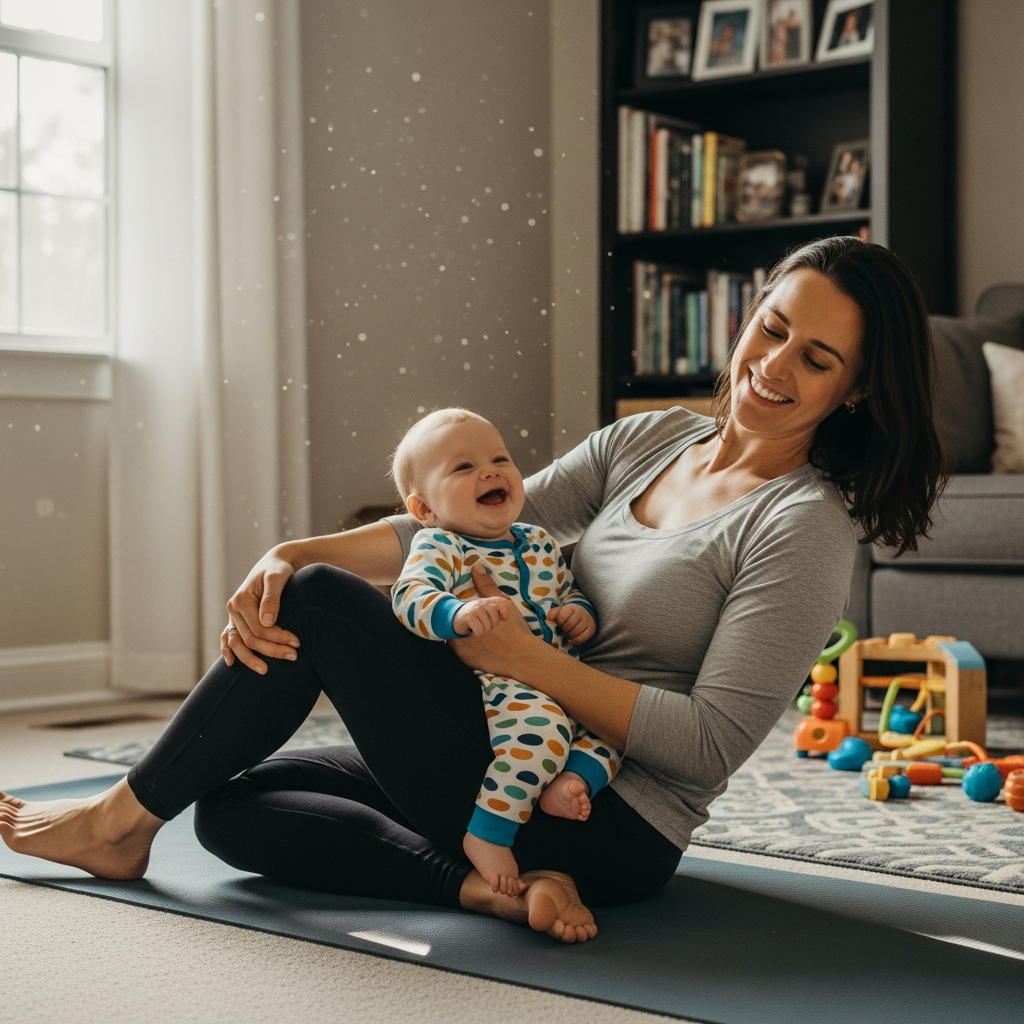
Russian twists target the oblique muscles and help with rotational strength. Sit on the floor with your knees bent and your baby in your lap. Lean back slightly while keeping your spine long and straight. Gently rotate your torso to one side, then the other, moving your baby across your center line. Ensure the movement is controlled and that your core is fully engaged to protect your lower back.
11. Wall Sits with Weighted Hold
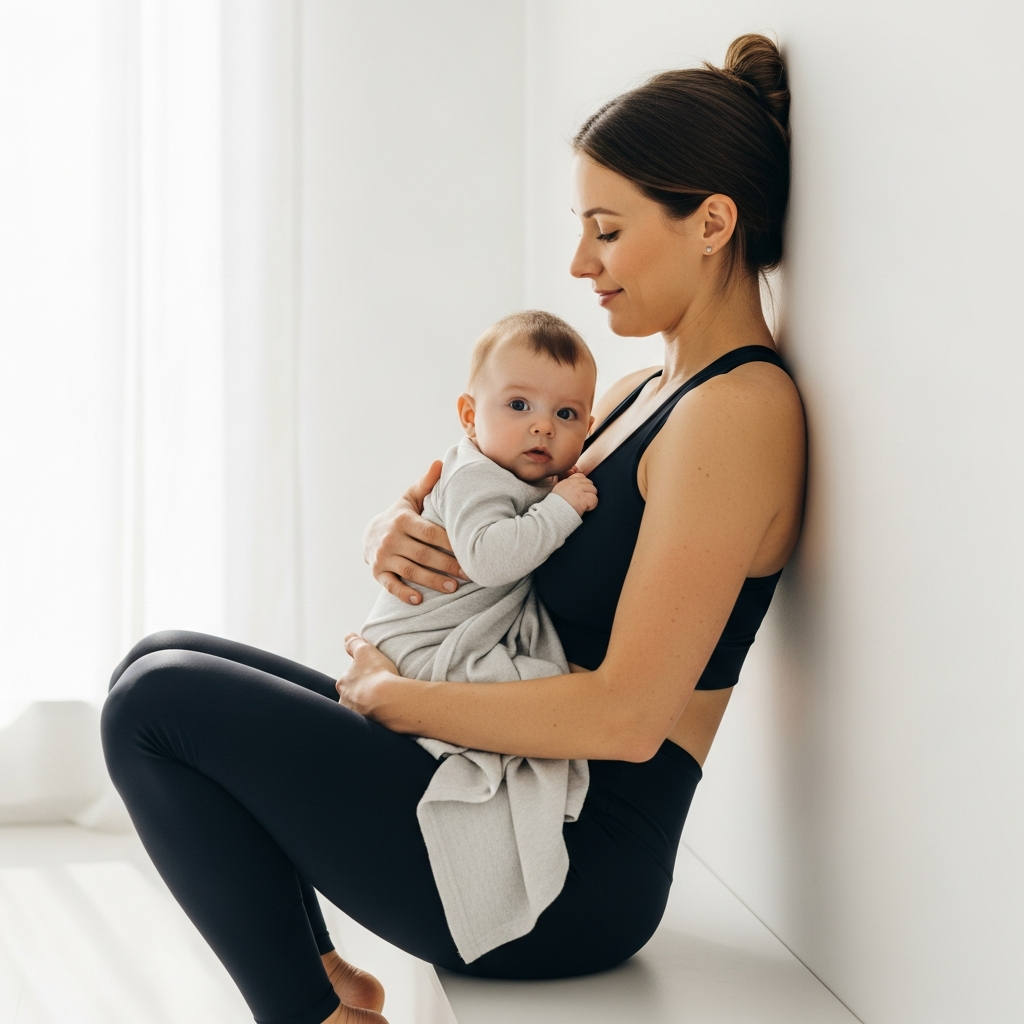
Wall sits are a great isometric exercise for building leg stamina. Stand with your back against a flat wall and slide down until your thighs are parallel to the floor, as if sitting in a chair. Hold your baby securely in your arms. Maintain this position for 30 to 60 seconds, focusing on deep breathing and keeping your back pressed firmly against the wall. The added weight of the baby increases the challenge for your quadriceps.
12. Modified Pushups with Baby
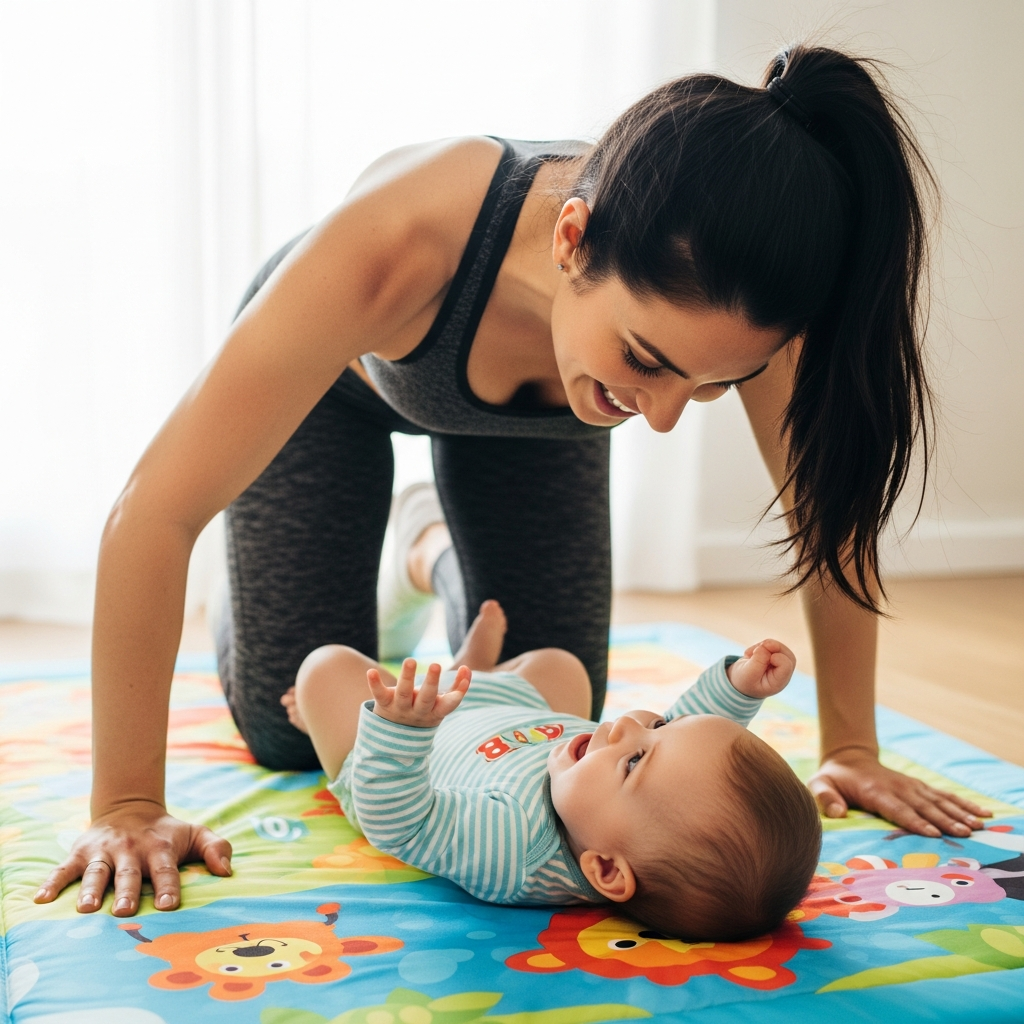
Pushups strengthen the chest, shoulders, and core. Position yourself on your knees and hands, with your baby lying on a soft mat between your arms. Lower your chest toward the floor, coming close to your baby for a quick interaction or peek-a-boo, and then push back up to the starting position. This modified version allows you to maintain proper form while regaining upper body strength after pregnancy.
Conclusion
Incorporating your baby into your postnatal fitness routine is an excellent way to prioritize your health while remaining present for your child. By following these twelve exercises, you can gradually rebuild your strength and endurance in a way that feels natural and rewarding. Remember to listen to your body, move at your own pace, and enjoy the unique bonding experience that exercising with your baby provides. Consistency and patience are key as you navigate this new chapter of your fitness journey.