Welcome to the beautiful, busy, and sometimes bewildering world of new parenthood! Adjusting to life with a baby is a huge journey. Between sleepless nights, feeding schedules, and simply soaking in every precious moment, finding time for yourself can feel almost impossible.
But what if you didn’t have to choose between caring for your baby and caring for your body? Postpartum recovery is crucial, and gentle movement can make a world of difference. The good news is, you can combine bonding with your little one and getting back into a fitness routine.
This article shares 12 gentle postnatal exercises you can do right alongside your baby, turning your workout into a fun, interactive experience for both of you. Remember, every mom’s recovery is different, so please listen to your body and go at your own pace.
Why Exercise with Your Baby?

Engaging in gentle exercise after childbirth offers a range of wonderful benefits, not just for you, but for your baby too.
Benefits for Mom:
* Physical Recovery: Helps strengthen your core, pelvic floor, and other muscles that underwent significant changes during pregnancy and birth. It can improve posture, which is often challenged by holding and feeding a baby.
* Energy Boost: While it sounds counterintuitive when you’re already tired, regular movement can actually increase your energy levels and reduce feelings of fatigue.
* Mood Enhancement: Exercise releases endorphins, nature’s feel-good chemicals. This can be a huge help in managing stress, anxiety, and the “baby blues,” promoting a more positive outlook.
* Body Confidence: Gradually regaining strength and feeling more capable in your body can do wonders for your self-esteem during a time of great change.
Benefits for Baby:
* Enhanced Bonding: Physical closeness and interaction during exercise strengthen your connection with your baby. They love to be near you and feel your presence.
* Sensory Stimulation: Being moved gently, hearing your voice, and seeing your smiling face provides valuable sensory input for their development.
* Fun and Engagement: Babies often enjoy the movement, singing, and eye contact that comes with these exercises. It’s a new way to play and interact.
* Modeling Healthy Habits: Even at a young age, babies learn from observing their parents. You’re setting a great example for a healthy lifestyle.
Important Things to Remember Before You Start
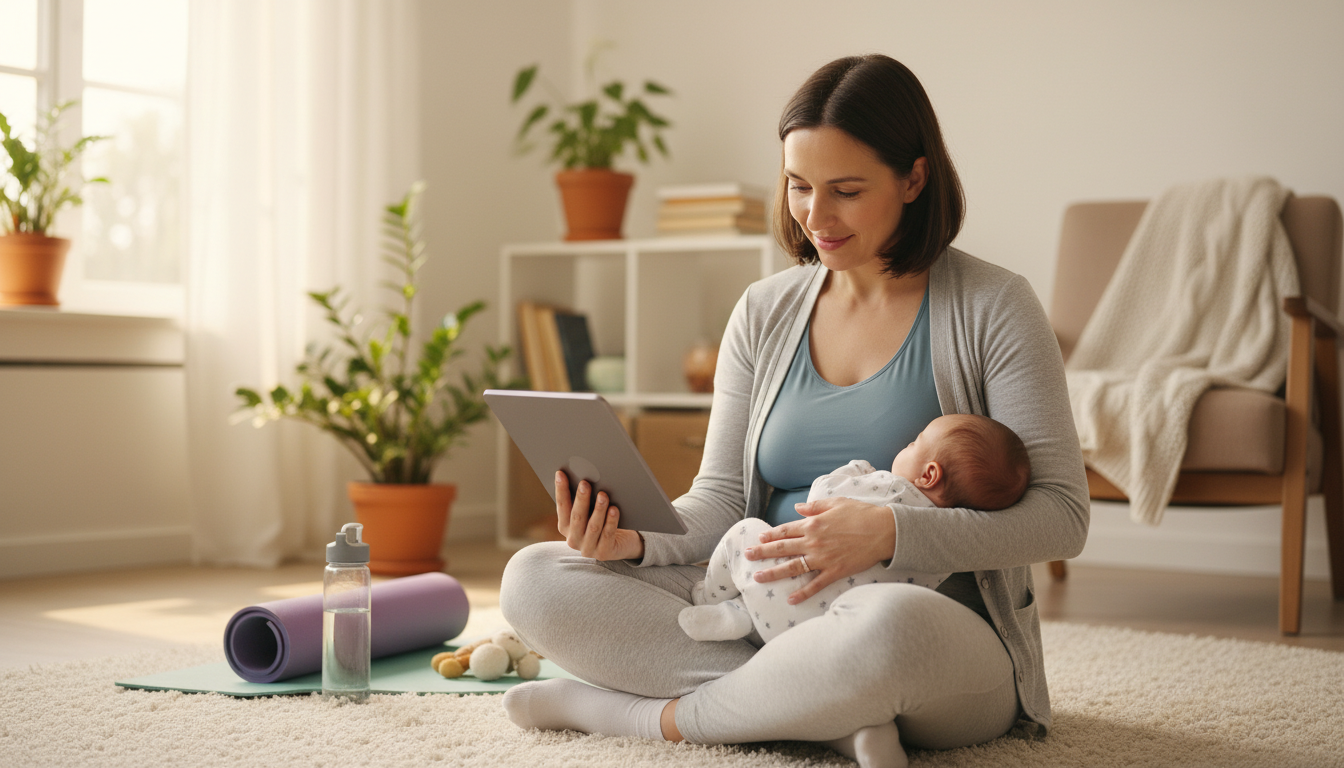
Your body has done an incredible job creating and bringing new life into the world. It needs time, patience, and gentle care to recover.
Always Talk to Your Doctor First:
Before beginning any exercise program after childbirth, it’s essential to get clearance from your healthcare provider. This is especially true if you had a C-section, experienced birth complications, or have specific health concerns. They can advise you on when it’s safe to start and what movements to avoid.
Start Slow and Gentle:
The first few weeks and months postpartum are not the time for intense workouts. Focus on gentle movements, proper form, and listening to your body. Gradually increase duration and intensity as you feel stronger. If something hurts, stop immediately.
Watch Your Baby:
Ensure your baby is in a safe, comfortable, and happy state during the exercises. If they seem fussy, uncomfortable, or unhappy, it’s best to stop and tend to their needs. You can always try again later. Make eye contact, sing, or talk to them to keep them engaged.
Hydrate and Fuel Your Body:
Staying well-hydrated is always important, especially if you are breastfeeding. Ensure you’re eating nutritious meals to support your recovery and energy levels.
Let’s Get Moving! 12 Postnatal Exercises with Your Little One

Here are 12 gentle, baby-friendly exercises designed to help you regain strength and bond with your little one.
1. Pelvic Tilts with Baby on Chest
This is a fantastic exercise for gently engaging your deep core muscles and pelvic floor.
How to Do It:
1. Lie on your back with your knees bent and feet flat on the floor, hip-width apart.
2. Place your baby safely on your chest, facing you, with your hands supporting their head and body.
3. Gently flatten your lower back towards the floor, engaging your abdominal muscles. Imagine your belly button drawing towards your spine.
4. Hold for a few seconds, then release, letting your back return to its natural curve.
5. Repeat for 8-12 repetitions.
Why It’s Great for Mom and Baby:
This exercise helps re-establish core control without straining. For your baby, it’s a wonderful opportunity for skin-to-skin contact, eye contact, and feeling your gentle movements.
Baby Interaction Tip:
Sing a soft song or make gentle cooing sounds as you rock them slightly with each tilt.
2. Bridge Pose with Baby on Hips
The bridge helps strengthen your glutes, hamstrings, and core, all while your baby enjoys a new vantage point.
How to Do It:
1. Lie on your back with knees bent and feet flat, similar to the pelvic tilt.
2. Place your baby gently on your hips or lower belly, supporting them with your hands.
3. Engage your glutes and lift your hips off the floor until your body forms a straight line from your shoulders to your knees. Avoid arching your back.
4. Hold for a breath, then slowly lower your hips back down.
5. Repeat for 8-12 repetitions.
Why It’s Great for Mom and Baby:
This builds foundational strength in your posterior chain. Your baby gets a gentle up-and-down motion that many little ones find soothing or fun, like a mini-rollercoaster.
Baby Interaction Tip:
Make funny faces or tickle their tummy as you reach the top of the bridge.
3. Baby Squats (Holding Baby)
Squats are a functional movement that strengthens your legs and glutes, which is super helpful for all the lifting you do as a parent.
How to Do It:
1. Stand with your feet shoulder-width apart, holding your baby securely in front of you, close to your chest.
2. Keeping your chest up and back straight, slowly lower your hips as if you’re sitting back into a chair. Ensure your knees don’t go past your toes.
3. Go as low as comfortable, then push through your heels to return to the standing position.
4. Repeat for 10-15 repetitions.
Why It’s Great for Mom and Baby:
This builds leg strength for carrying your baby, getting up from the floor, and everyday tasks. Your baby enjoys being held close and the gentle motion of the squat.
Baby Interaction Tip:
Give your baby a kiss on the head or forehead at the bottom of each squat.
4. Baby Bicep Curls
Use your baby as natural resistance to strengthen your arm muscles.
How to Do It:
1. Sit on the floor or a stable chair with good posture.
2. Hold your baby securely in your arms, facing you. Ensure their head is supported if they don’t have good head control yet.
3. Start with your arms extended downwards (but not locked).
4. Slowly bend your elbows, bringing your baby up towards your chest, like a bicep curl.
5. Lower them back down with control.
6. Repeat for 10-15 repetitions.
Why It’s Great for Mom and Baby:
This helps build the arm strength needed for all the lifting, holding, and cuddling. Babies often enjoy being moved up and down gently.
Baby Interaction Tip:
Make eye contact and talk to your baby, saying “up, down, up, down!”
5. Modified Plank with Baby Underneath
This is a fantastic core exercise, modified for postpartum safety, and turns into a fun peek-a-boo game.
How to Do It:
1. Place your baby safely on their back on a mat on the floor.
2. Get into a modified plank position over your baby, on your knees and forearms (or hands if more comfortable). Ensure your shoulders are stacked over your elbows/wrists, and your body forms a straight line from head to knees.
3. Gently engage your core, imagining drawing your belly button towards your spine.
4. Hold this position for 15-30 seconds, looking down at your baby.
5. Rest and repeat for 2-3 sets.
Why It’s Great for Mom and Baby:
This builds core strength and stability. For your baby, it’s a fun game of you appearing and disappearing, and they get to see your face from a different angle.
Baby Interaction Tip:
Play peek-a-boo or make funny faces as you hold the plank.
6. Leg Lifts with Baby on Shins/Feet
This exercise works your lower abdominal muscles and provides a fun, interactive way to engage with your baby.
How to Do It:
1. Lie on your back with your knees bent and feet flat.
2. Gently place your baby on your shins or feet, carefully supporting them with your hands, ensuring they are secure and comfortable.
3. Slowly lift your legs, bending at the knees, bringing your baby closer to your chest.
4. Gently extend your legs back down, controlling the movement. You can also do small, controlled pulses.
5. Repeat for 10-15 repetitions.
Why It’s Great for Mom and Baby:
Strengthens your lower abs and hip flexors. Babies often enjoy the gentle swinging motion and interacting with your feet.
Baby Interaction Tip:
Tickle your baby’s feet or talk to them as you move your legs.
7. Overhead Baby Press (or Baby Bench Press)
This exercise strengthens your shoulders and arms, essential for safely lifting and holding your growing baby.
How to Do It:
1. Lie on your back with your knees bent and feet flat on the floor.
2. Hold your baby securely, facing you, with your hands supporting their head and body, at your chest level.
3. Slowly and with control, press your baby straight up towards the ceiling, fully extending your arms.
4. Gently lower them back down to your chest.
5. Repeat for 10-15 repetitions.
Why It’s Great for Mom and Baby:
Builds upper body strength. Babies often love the sensation of being lifted and lowered, especially when accompanied by eye contact.
Baby Interaction Tip:
Smile and say “whee!” or “up we go!” as you lift them.
8. Walking Lunges with Baby in Carrier
Once you’ve regained some core stability and feel comfortable, walking lunges with your baby in a carrier can be a great functional exercise. Ensure your carrier is properly fitted and your baby is secure.
How to Do It:
1. Place your baby securely in a front carrier, ensuring they are comfortable and their airway is clear.
2. Stand tall with your feet hip-width apart.
3. Step forward with one leg, lowering your hips until both knees are bent at approximately a 90-degree angle. Ensure your front knee is directly above your ankle and your back knee hovers above the floor.
4. Push off your front foot to return to the starting position.
5. Alternate legs, performing 8-10 lunges per leg.
Why It’s Great for Mom and Baby:
This strengthens your legs, glutes, and improves balance, all crucial for carrying your baby through daily life. Your baby gets to experience movement and different sights.
Baby Interaction Tip:
Talk to your baby about what you see around you as you walk, or hum a tune.
9. Crunches/Modified Sit-ups with Baby on Lap/Chest
Gentle core work can be done with your baby as a motivator! Only do this if you have no diastasis recti (abdominal separation) or if your doctor has cleared it. Start with very gentle movements.
How to Do It:
1. Lie on your back with knees bent and feet flat.
2. Place your baby on your lap or lower belly, supporting them with your hands.
3. Gently lift your head and shoulders off the floor, engaging your upper abdominal muscles. Imagine bringing your rib cage towards your hips.
4. Avoid straining your neck. Only come up as far as comfortable.
5. Slowly lower back down.
6. Repeat for 8-12 repetitions.
Why It’s Great for Mom and Baby:
This helps strengthen the upper abdominal muscles. Your baby might find it amusing to see your face come closer and then move away.
Baby Interaction Tip:
Give your baby a quick kiss on the head at the top of each crunch.
10. Cat-Cow with Baby on Floor Beside You
This gentle yoga pose improves spinal flexibility and can relieve back tension. Your baby can watch you!
How to Do It:
1. Get on all fours (hands and knees) on a mat. Place your baby on their back beside you or in front of you, on their own mat.
2. Ensure your wrists are under your shoulders and knees under your hips.
3. Cat Pose: As you exhale, round your spine towards the ceiling, tucking your chin to your chest.
4. Cow Pose: As you inhale, drop your belly towards the floor, lift your chest and tailbone, looking gently forward.
5. Flow smoothly between cat and cow for 8-12 repetitions.
Why It’s Great for Mom and Baby:
This helps improve spinal mobility and reduces back stiffness. Your baby enjoys observing your movements and hearing your gentle breathing.
Baby Interaction Tip:
Talk to your baby, describing the movements: “Mommy is like a kitty cat, meow!” or “Now Mommy is a cow, moo!”
11. Bird-Dog with Baby on Mat in front
The bird-dog is excellent for core stability, balance, and coordination.
How to Do It:
1. Start on all fours, just like the cat-cow, with your baby safely on their back in front of you.
2. Engage your core to keep your spine stable.
3. Slowly extend your right arm straight forward and your left leg straight back, keeping them parallel to the floor. Avoid letting your hips shift.
4. Hold for a few seconds, then slowly return to the starting position.
5. Alternate sides, extending your left arm and right leg.
6. Repeat for 6-10 repetitions on each side.
Why It’s Great for Mom and Baby:
This helps strengthen your deep core muscles and improve balance, which is vital for carrying and moving with your baby. Your baby can watch your movements from their perspective.
Baby Interaction Tip:
Smile and talk to your baby as you hold the extended pose, encouraging them to track your movements.
12. Baby Kiss Push-ups (Modified)
This exercise strengthens your chest, shoulders, and triceps, and it’s a wonderfully sweet way to bond!
How to Do It:
1. Place your baby safely on their back on a mat on the floor.
2. Get into a modified push-up position on your knees, with your hands slightly wider than shoulder-width apart, positioned so your head is just above your baby.
3. Keeping your body in a straight line from head to knees, slowly lower your chest towards your baby.
4. Stop just short of touching them, giving them a sweet kiss on the forehead, cheek, or tummy.
5. Push back up to the starting position.
6. Repeat for 8-12 repetitions.
Why It’s Great for Mom and Baby:
Builds upper body strength. For your baby, it’s a fun game of you coming close for kisses and then going away, full of love and interaction.
Baby Interaction Tip:
Make kissing sounds and give a big smile with each “kiss.”
Making It a Habit: Tips for Success
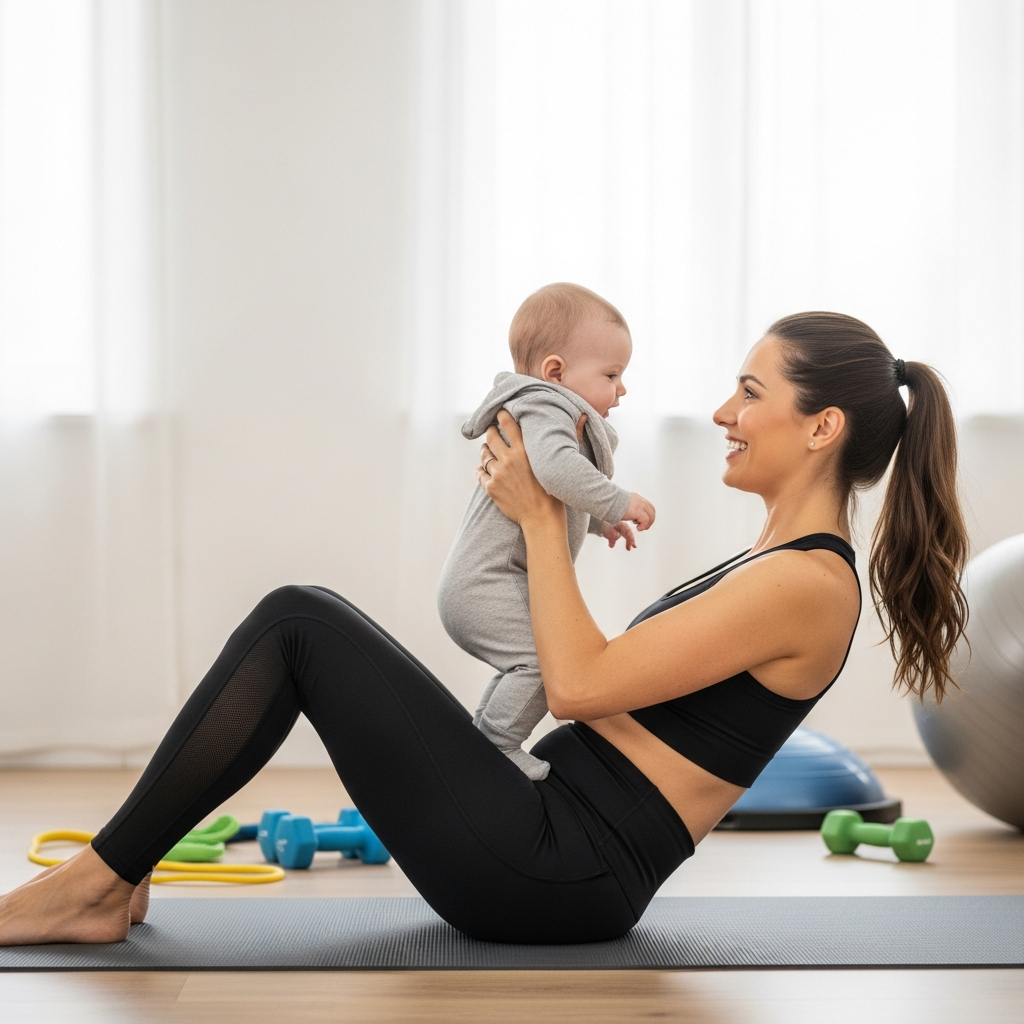
Fitting exercise into a new parent’s schedule can feel like a mission. Here are some tips to help you make it a regular part of your day:
* Don’t Aim for Perfection: Some days you might only get in five minutes, and that’s perfectly okay. Any movement is better than no movement.
* Small Chunks of Time: You don’t need an hour-long session. Break up your exercises into 10-15 minute segments throughout the day when your baby is content.
* Create a Dedicated Space: Even if it’s just a corner of the living room, having a clear space can make it easier to start. Lay down a blanket or mat for you and your baby.
* Make It Fun: Put on some music, sing to your baby, or simply enjoy the unique bonding time.
* Involve Your Partner: If you have a partner, encourage them to join in! It can be a fun family activity.
* Be Patient with Yourself: Your body is still recovering. There will be good days and challenging days. Celebrate small victories and be kind to yourself.
When to Seek Professional Guidance

While gentle exercise is beneficial, it’s also important to be aware of your body’s signals and know when to seek professional advice.
* Persistent Pain: If you experience sharp, continuous, or worsening pain during or after exercise, stop and consult your doctor.
* Diastasis Recti Concerns: This is the separation of your abdominal muscles. If you suspect you have it (a common symptom is a “doming” or “coning” effect in your abdomen when you try to sit up), a physical therapist specializing in postpartum recovery can provide specific exercises and guidance.
* Pelvic Floor Issues: Persistent leaking, feelings of heaviness, or pain in the pelvic area should be discussed with your doctor or a pelvic floor physical therapist.
* Any Unusual Symptoms: If something just doesn’t feel right, always err on the side of caution and talk to your healthcare provider.
Conclusion

Embracing postnatal exercises with your baby is a beautiful way to prioritize both your physical recovery and the incredible bond you share. It’s not about achieving a specific fitness goal quickly, but about nurturing your body, boosting your mood, and creating joyful, active memories with your little one.
Remember to approach this journey with patience, self-compassion, and a sense of fun. You’re doing an amazing job, and taking care of yourself is a vital part of taking care of your family. Enjoy these special moments of movement and connection with your baby!