Every parent knows the struggle of sleep. Those precious, elusive hours become a currency more valuable than gold when you have a baby. Amidst the many approaches to helping your little one sleep better, the “Pick Up and Put Down” (PUPD) method stands out as a gentle, responsive technique. It’s designed to teach your baby how to self-soothe and settle into sleep, all while reassuring them that you are there.
This method, popularized by Tracy Hogg, “The Baby Whisperer,” offers a middle ground for parents who want to guide their baby towards independent sleep without resorting to methods that involve prolonged crying. If you’re feeling overwhelmed by sleep challenges, or just curious about a kinder approach, let’s explore exactly what Pick Up and Put Down is all about.
What is the Pick Up and Put Down Method?

At its heart, the Pick Up and Put Down method is a sleep training technique that emphasizes a parent’s responsive presence. It’s about being actively involved in comforting your baby while gently encouraging them to learn the skill of falling asleep on their own. Instead of letting your baby cry for long periods, you respond to their distress by picking them up, soothing them, and then putting them back down.
The core idea is to interrupt crying and reassure your baby, but to put them back in their sleep space *before* they are fully asleep. This repeated action helps your baby understand that while you are always there for comfort, their crib is ultimately where sleep happens. It’s a loving dance between comfort and independence.
The Philosophy Behind Pick Up and Put Down

This method is rooted in the belief that babies, even very young ones, can learn to self-settle with the right support. It’s built on empathy and aims to maintain a strong attachment between parent and child during the sleep learning process.
Here’s a closer look at its philosophy:
* Respecting Your Baby’s Feelings: PUPD acknowledges that crying is a baby’s way of communicating. It doesn’t ignore distress but responds to it lovingly.
* Gradual Independence: It’s not about forcing sleep. Instead, it’s about gradually guiding your baby toward recognizing their sleep cues and learning to fall asleep without constant parental intervention.
* Building Trust: By consistently responding to their cries with comfort, you reinforce trust. Your baby learns that they are safe, loved, and that you will always come when they need you.
* Understanding Cues: The method encourages parents to become adept at understanding different types of baby cries and responding appropriately.
When is Pick Up and Put Down Most Effective?

Choosing the right time to introduce any sleep training method is crucial for its success and for your baby’s well-being. Pick Up and Put Down is no exception.
Ideal Age Range
The Pick Up and Put Down method is generally recommended for babies between **4 months and 12 months of age**.
* Why 4 months? Around four months, babies go through significant developmental changes, often experiencing the “four-month sleep regression.” They begin to develop more mature sleep cycles and the ability to link them. They also typically have better head and neck control, which makes the “pick up” action safer and easier.
* Beyond 12 months: While it can still be used, older toddlers might find the constant picking up and putting down more stimulating than soothing. For them, methods focusing more on presence and verbal reassurance, like “chair method,” might be more appropriate.
Signs Your Baby Might Be Ready
Before diving in, consider if your baby is developmentally ready and if the timing is right for your family.
* No Underlying Medical Issues: Ensure your baby is healthy, not teething, or experiencing any discomfort that might interfere with sleep.
* Established Feeding Routine: Your baby should be getting enough nourishment during the day and not waking primarily out of hunger at night. Discuss this with your pediatrician.
* Drowsy But Awake: Your baby is starting to show signs of being able to be put down drowsy, but not fully asleep, in their crib.
* Sleep Regression Hit: If your baby was sleeping well and suddenly isn’t, often around 4-6 months, PUPD can be a gentle way to help them re-learn good sleep habits.
Step-by-Step Guide to the Pick Up and Put Down Method
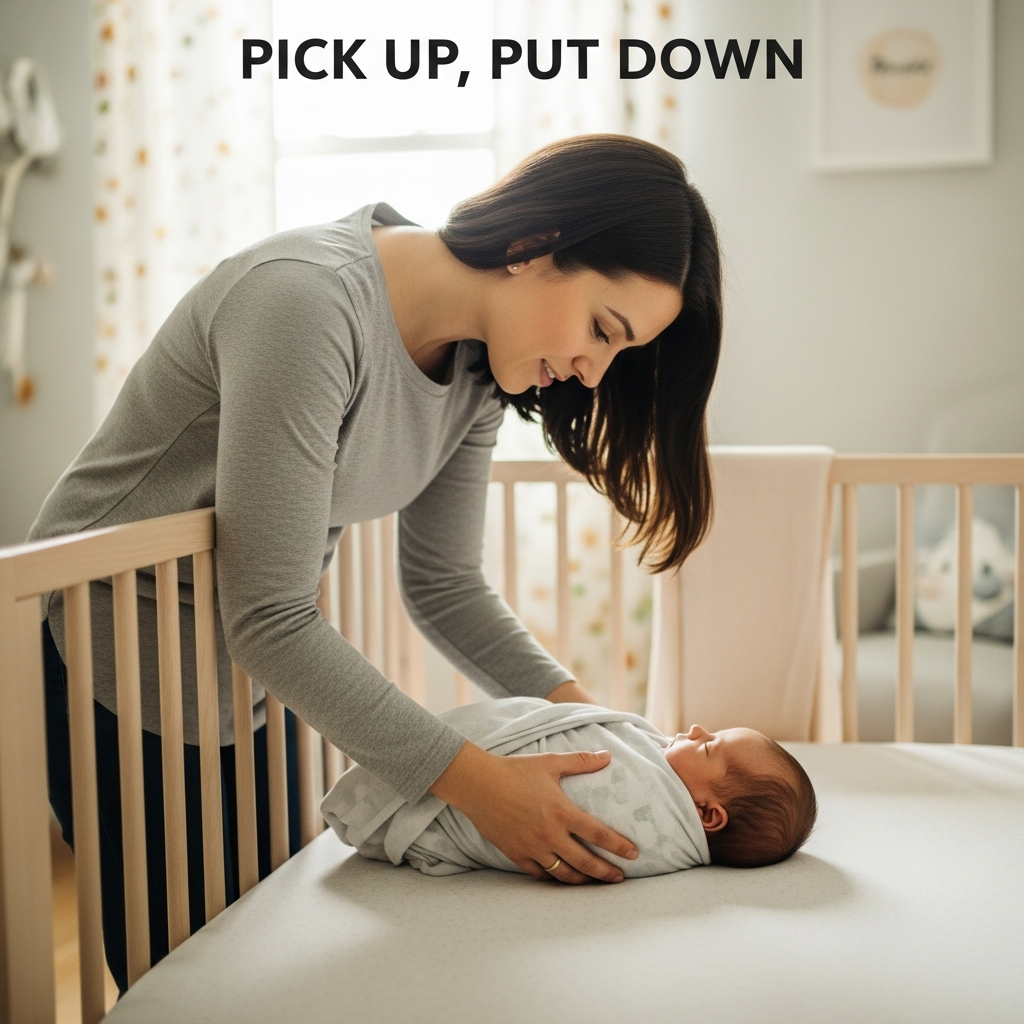
Consistency and patience are your two best friends when implementing Pick Up and Put Down. This method requires dedication, but the results can be incredibly rewarding.
Setting the Stage for Sleep Success
Before you even begin the pick up and put down cycle, create an environment and routine that supports sleep.
* Consistent Bedtime Routine: A predictable routine signals to your baby that sleep is coming. This might include a warm bath, a gentle massage, dimming the lights, reading a book, a final feeding, and a lullaby. Aim for the same sequence every night.
* Optimize the Sleep Environment: Ensure your baby’s sleep space is dark, quiet, and cool (around 68-72°F or 20-22°C). Use blackout curtains and a white noise machine if needed.
* Safe Sleep Space: Always follow safe sleep guidelines: baby on their back, in a crib or bassinet with a firm mattress and fitted sheet, free from loose blankets, bumpers, or toys.
* Age-Appropriate Wake Windows: Be mindful of your baby’s wake windows during the day to prevent overtiredness, which can make settling at night much harder.
The Core Pick Up and Put Down Steps (Nighttime Example)
Once your baby’s bedtime routine is complete, and they are calm and fed, it’s time to begin.
1. Drowsy But Awake: Place your baby into their crib when they are noticeably drowsy but still awake. This is the crucial first step to teaching them to fall asleep independently.
2. Wait and Observe: Give your baby a moment to settle. They might fuss or grumble a little, which is normal as they try to find comfort.
3. Pick Up When Crying Escalates: If your baby starts to truly cry (not just fussing), pick them up immediately. The goal is to interrupt the crying *before* it becomes a full-blown meltdown.
4. Soothe and Calm:*Hold your baby close. You can rock them gently, shush them softly, pat their back, or stroke their head. Your goal is to calm them down, not to put them to sleep in your arms. Keep interactions minimal and quiet.
5. Put Down When Calm (But Still Awake): As soon as your baby has calmed down and is drowsy again, gently place them back into their crib. This is the hardest part – resisting the urge to wait until they are fully asleep.
6. Repeat as Needed: If your baby starts to cry again, immediately repeat the cycle: pick up, soothe, put down. This process can be repeated many, many times in one night, especially in the beginning.
7. Gradual Withdrawal: As days turn into nights, you might find you need to pick up less often. You might be able to soothe them with just a hand on their chest or a verbal reassurance without picking them up.
Adapting for Naps
The PUPD method can also be used for naps, but expect it to be a bit more challenging. Naps are often harder for babies to master than nighttime sleep.
* Consistency is Key: Stick to the same pick up and put down steps.
* Time Limit: If a nap attempt lasts longer than 30-45 minutes with no sleep, it’s okay to end the nap attempt and try again later. Overtiredness from a long struggle can make the next sleep even harder.
* Shorter Duration: Don’t expect long naps immediately. Any independent nap is a win!
Understanding Your Baby’s Cries

One of the most important aspects of responsive sleep training like PUPD is learning to interpret your baby’s different cries. This helps you respond appropriately and avoid unnecessary picking up.
Different Types of Cries and What They Mean
* **Fussing or Grumbling:** Often, babies will make little noises or grumbles as they settle or stir. This is usually not a cry of distress and can be an attempt at self-settling.
* Response: Observe for a moment. Resist the urge to intervene immediately. Give them a chance to figure it out.
* Protest Cry: This cry is often intermittent, starts and stops, and sounds a bit like they are complaining. It’s their way of saying, “Hey, I don’t like this!” but it’s not usually a cry of true distress.
* Response: This is often when you begin the pick up, soothe, put down cycle. You respond to their protest but still guide them back to sleep in their crib.
* Distress or “I Need You” Cry: This is a more sustained, intense cry, often accompanied by red face and frantic movements. It indicates genuine upset or need.
* Response: Immediately pick up and offer comfort. Ensure all needs (hunger, diaper, comfort) are met before attempting to put down again.
The Importance of Timing Your Response
The “pick up” needs to happen quickly once a cry escalates beyond a protest. The goal is to prevent your baby from becoming fully hysterical.
* Too Soon: If you pick up at every tiny whimper, you might prevent your baby from ever learning to self-settle even for a moment.
* Too Late: If you wait until your baby is absolutely distraught, it will be much harder to calm them down, and the experience will be more stressful for both of you.
Learning the nuanced timing comes with practice and familiarity with your own baby’s unique communication style.
Common Challenges and Troubleshooting

Implementing any sleep method comes with its unique set of hurdles. Pick Up and Put Down is no different, and it can be particularly tiring for parents.
“It’s Not Working!”
It’s easy to feel this way, especially during the first few nights.
* Patience is Key: This method is gentle and takes time. It’s not uncommon for it to take 1-3 weeks to see significant improvement. Some babies may take longer.
* Consistency is Paramount: Every adult in the household needs to be on the same page and follow the steps exactly, every time. Inconsistency will only confuse your baby and prolong the process.
* Check for Underlying Issues: Rule out hunger, illness, gas, teething, or other discomforts. A comfortable, fed, healthy baby is more likely to sleep well.
Baby Cries More When Put Down
This is a very common reaction, especially for babies who are used to falling asleep in arms or with a pacifier.
* Ensure Baby is Calm *Before* Putting Down: Don’t rush this step. Wait until your baby is completely relaxed and settled, even if it takes longer in your arms, before attempting to put them back in the crib.
* Practice “Drowsy But Awake”: This is the most crucial part. The more you practice putting them down *before* they’re fully asleep, the quicker they’ll learn to bridge that gap on their own.
* Reassess Timing: Could your baby be overtired or undertired? Adjusting wake windows slightly might help.
Parent Exhaustion
Performing the pick up and put down cycle repeatedly throughout the night is physically and emotionally draining.
* Tag-Teaming with a Partner: If possible, switch off with your partner. One parent can handle the first part of the night, the other the second.
* Short Breaks: When it feels overwhelming, step away for a minute or two (ensure baby is safe in their crib) to compose yourself.
* Manage Expectations: Understand that there will be nights that are harder than others. It’s a marathon, not a sprint. Celebrate small victories.
Benefits of the Pick Up and Put Down Method

Despite the effort involved, PUPD offers several compelling advantages for both baby and parent.
* Gentle and Responsive: It avoids prolonged crying, which is a major concern for many parents, making it feel less harsh than some other methods.
* Builds Trust and Attachment: Your consistent presence and comfort reinforce your baby’s sense of security and trust in you.
* Teaches Self-Soothing Skills: By repeatedly calming them down and then putting them back in their sleep space, you’re teaching them the valuable skill of transitioning to sleep independently.
* Empowers Parents: It gives parents a clear, actionable plan for responding to their baby’s cries during sleep training, rather than feeling helpless.
* Avoids Prolonged Distress: Because you intervene when crying escalates, your baby doesn’t experience the extended periods of upset associated with “cry-it-out” methods.
Is Pick Up and Put Down the Right Choice for Your Family?

Deciding on a sleep training method is a deeply personal choice, and what works beautifully for one family might not suit another.
Consider these factors when evaluating if PUPD is right for you:
* Your Parenting Philosophy: Does a responsive, gentle approach resonate with your overall parenting style?
* Your Baby’s Temperament: Some babies adapt more quickly, while highly sensitive babies might find even this method overwhelming initially.
* Your Own Capacity for Consistency: This method demands a high level of consistency and patience, especially in the early days. Be honest about your ability to commit.
* Family Support: Do you have a partner or other caregivers who can support you and ensure the method is applied consistently?
It’s okay if, after trying it, you decide PUPD isn’t the best fit. There are many paths to helping a baby sleep, and the most important thing is finding one that feels right and sustainable for your family.
Conclusion

The Pick Up and Put Down method is a testament to the power of gentle guidance and loving consistency in the journey of baby sleep. It’s a method that respects your baby’s emotional needs while steadily teaching them the invaluable skill of independent sleep. It won’t be easy, and it will test your patience, but the commitment to being present and responsive often leads to a more peaceful sleep environment for everyone.
Remember, you are not alone in this parenting adventure. Trust your instincts, be consistent, and celebrate every tiny step forward. Your baby is learning, and you are doing an incredible job providing them with the tools they need for restful nights. Keep going, parent – you’ve got this.