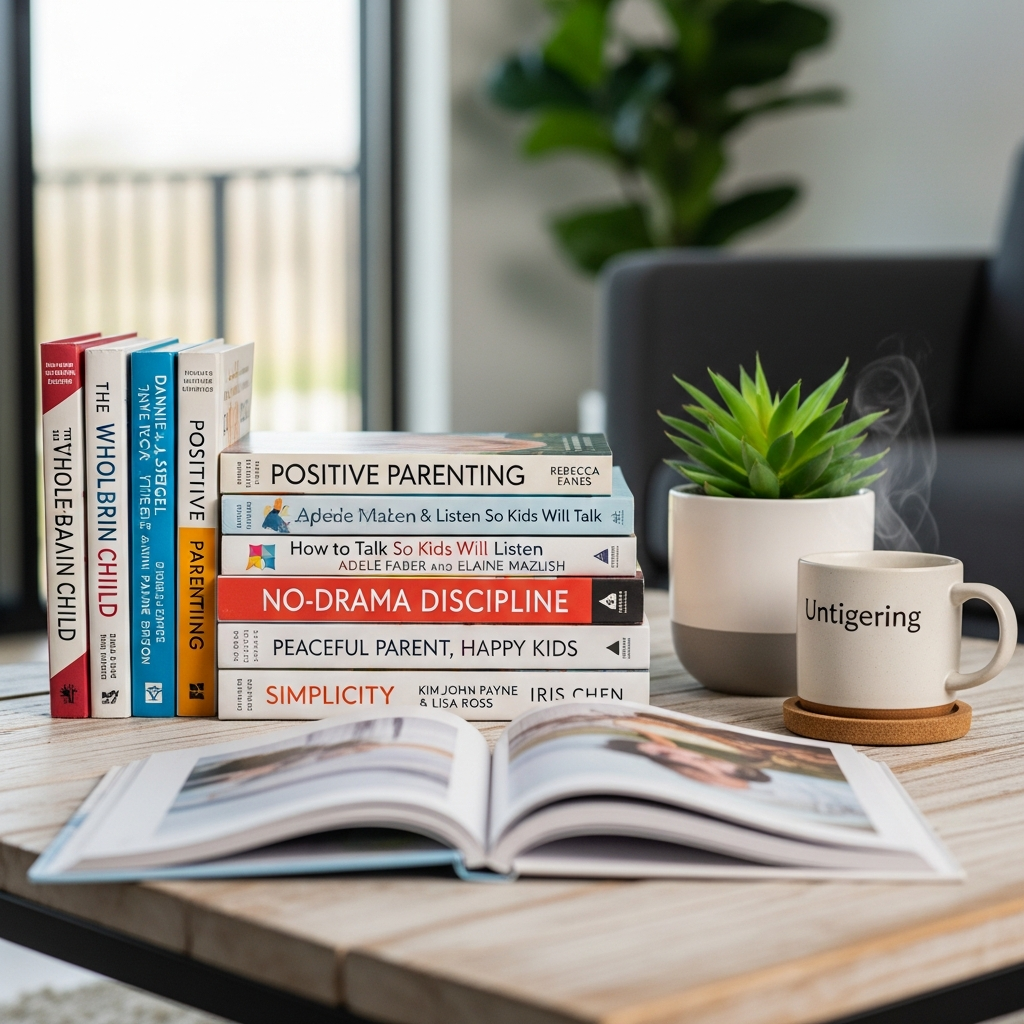
7 Parenting Books Every Parent Should Read
Raising children is a complex journey that often requires more than just intuition. In the modern age, child development experts and psychologists have synthesized decades of research into accessible literature that can transform the parenting experience. These books offer evidence-based strategies to foster emotional intelligence, communication, and resilience in children. By engaging with these expert perspectives, parents can move from a reactive state to a proactive, intentional approach that strengthens the family bond and supports long-term growth.
1. The Whole Brain Child by Daniel J. Siegel and Tina Payne Bryson

This foundational book introduces parents to the inner workings of a child’s developing brain. Using 12 key strategies, the authors explain how to integrate the emotional right brain with the logical left brain. By understanding brain science, parents can turn everyday struggles into opportunities for connection and teaching. The book emphasizes the importance of helping children process emotions rather than simply dismissing them, providing a roadmap for raising a well-balanced and emotionally healthy child.
2. How to Talk So Kids Will Listen and Listen So Kids Will Talk by Adele Faber and Elaine Mazlish

Widely considered a classic in the field, this book provides practical communication tools that reduce household conflict. It teaches parents how to validate a child’s feelings without necessarily agreeing with their behavior. By using specific linguistic techniques, parents can encourage cooperation without resorting to nagging or punishment. The text focuses on building mutual respect and helping children learn to solve their own problems through effective listening and expression.
3. No Drama Discipline by Daniel J. Siegel and Tina Payne Bryson
Discipline is often misunderstood as punishment, but this book reclaims the word to mean teaching. The authors provide a compassionate framework for responding to difficult behavior by focusing on connection before redirection. This approach helps de-escalate tantrums and power struggles by addressing the underlying needs of the child. It offers clear steps for setting firm boundaries while maintaining a loving relationship, ensuring that discipline leads to skill-building rather than resentment.
4. Simplicity Parenting by Kim John Payne

In a world that is often too fast and too cluttered, Simplicity Parenting advocates for a slower pace of life. Kim John Payne argues that reducing the number of toys, books, and activities in a child’s life can significantly reduce their stress and anxiety. By creating more space and predictability, parents can help their children develop a sense of calm and wonder. This book provides a practical guide for simplifying the home environment, schedules, and information flow to reclaim the soul of childhood.
5. Parenting with Love and Logic by Charles Fay and Foster Cline

This book introduces a philosophy centered on raising responsible children who are prepared for the real world. The Love and Logic approach suggests that parents should provide a loving foundation while allowing children to experience the natural consequences of their choices. By shifting the burden of decision-making to the child in a controlled environment, parents help them develop critical thinking skills and self-discipline. It is an essential read for those looking to move away from power struggles and toward a more cooperative family dynamic.
6. The Explosive Child by Ross W. Greene
Dr. Ross Greene offers a groundbreaking approach for parents of children who exhibit chronic behavioral challenges. He posits that these children lack the skills to be flexible and handle frustration, rather than being inherently defiant. The book introduces Collaborative and Proactive Solutions, a method that involves working with the child to identify and solve the problems causing the outbursts. This shift in perspective transforms the relationship from adversarial to collaborative, focusing on problem-solving rather than behavior modification.
7. Positive Discipline by Jane Nelsen

Based on the theories of Alfred Adler and Rudolf Dreikurs, this book emphasizes the importance of belonging and significance. Positive Discipline teaches parents how to be both kind and firm at the same time. It moves away from the traditional model of reward and punishment, focusing instead on teaching life skills and encouraging self-reliance. The book provides a variety of tools, such as family meetings and problem-solving strategies, that help children feel empowered and motivated to contribute positively to their family and community.
Conclusion
Investing time in reading high-quality parenting literature is an investment in the future of the family. Each of these seven books offers a unique lens through which to view child development and the parent-child relationship. Whether focusing on brain science, communication strategies, or the power of simplicity, these resources provide the tools necessary to navigate the challenges of modern parenting. By applying these principles, parents can foster a more harmonious home environment and raise resilient, emotionally intelligent children.