Parenting is a beautiful journey, full of incredible joy, but it also comes with its share of challenges. Many of us dream of raising our children with kindness, understanding, and respect – a way of being often called gentle parenting. However, the idea of always being gentle can feel overwhelming. It might even seem like a recipe for more stress, not less, especially when you are tired or your child is having a big emotion.
The good news is that gentle parenting does not have to be stressful. It is not about being perfect, or never feeling frustrated. Instead, it is a mindset and a set of tools that, when understood and practiced with self-compassion, can actually bring more peace and connection to your family life. This article will help you uncover how to embrace gentle parenting in a way that feels natural, supportive, and, most importantly, reduces your stress, allowing you to build stronger, happier relationships with your children.
Understanding What Gentle Parenting Truly Means

Before we dive into making it stress-free, let’s get clear on what gentle parenting really means. It is more than just being “nice” all the time.
Beyond Just Being “Nice”
Gentle parenting is built on four main pillars:
* Empathy: Trying to understand your child’s feelings and perspective, even when their behavior is difficult.
* Respect: Treating your child as a whole person worthy of dignity, just as you would an adult. This means listening to them, valuing their opinions, and considering their needs.
* Understanding: Recognizing that children’s behavior often communicates an unmet need or an emotion they cannot yet express in words. It is about looking beneath the surface.
* Boundaries: Setting clear, consistent, and kind limits that help children feel safe, learn self-control, and understand the world around them.
The goal is to foster a strong, secure attachment with your child and guide them toward self-regulation and healthy social skills, not just to make them obey.
Common Misconceptions to Let Go Of
It is easy to misunderstand gentle parenting, and these misunderstandings can cause a lot of unnecessary stress. Let’s clear up a few:
* **It is not permissive parenting:** Gentle parenting is not about letting your child do whatever they want. It is about having boundaries, but communicating and enforcing them with kindness and respect.
* It does not mean you never say “no”: Saying “no” is a vital part of teaching safety and limits. The difference is *how* you say it and *why*.
* It does not mean your child will never be upset: Children need to experience a full range of emotions. Gentle parenting helps them learn to navigate these feelings, rather than suppressing them.
* It does not mean you have to be calm all the time: Parents are human. You will get frustrated. Gentle parenting encourages repairing these moments, not pretending they did not happen.
The Foundations of Stress-Free Gentle Parenting

The secret to less stress in gentle parenting often starts with you. When you feel grounded, you can better respond to your child’s needs.
Parent Self-Regulation: Your First Step
You cannot pour from an empty cup. Your ability to stay calm and respond thoughtfully is the bedrock of gentle parenting.
* Take a pause: When you feel your emotions rising, take a deep breath. Count to five. Step away for a moment if it is safe to do so.
* Name your feelings: Silently acknowledge what you are feeling (“I’m frustrated right now,” “I feel overwhelmed”). This helps create a tiny bit of distance.
* Have a ‘mama/papa needs a minute’ signal: Teach older children a simple phrase or gesture that means you need a moment to collect yourself.
Your calm presence is the greatest gift you can give your child, helping them learn how to regulate their own emotions over time.
Empathy as Your Guiding Star
Empathy helps you connect with your child, reducing power struggles and fostering cooperation.
* Validate feelings: Even if you do not understand or agree with the behavior, you can acknowledge the feeling. “I see you’re really sad that the toy broke,” or “It sounds like you’re frustrated with your blocks.”
* Get on their level: Physically lower yourself to meet your child’s eyes. This simple act shows you are present and engaged.
* Remember their age: A toddler throwing food is not intentionally trying to annoy you; they are exploring or expressing a feeling they cannot voice. Adjust your expectations accordingly.
When children feel understood, they are more likely to listen and cooperate.
Setting Clear, Kind Boundaries
Boundaries are not punishments; they are guideposts that create safety and structure. They are essential for a peaceful home and for a child’s development.
* Communicate clearly and simply: Use positive language. Instead of “Don’t run,” try “Please walk inside.” For younger children, keep it to one or two words.
* Explain the “why” (age-appropriately): “We hold hands in the parking lot so you stay safe,” or “We don’t draw on the walls because paint belongs on paper.”
* Be consistent, but gentle: Consistency helps children understand what to expect. This does not mean being rigid; it means calmly reinforcing limits, even when it is challenging.
* Offer choices within limits: “Do you want to put on your blue shirt or your red shirt?” This gives them a sense of control while still meeting your boundary (getting dressed).
Practical Strategies for Daily Gentle Interactions
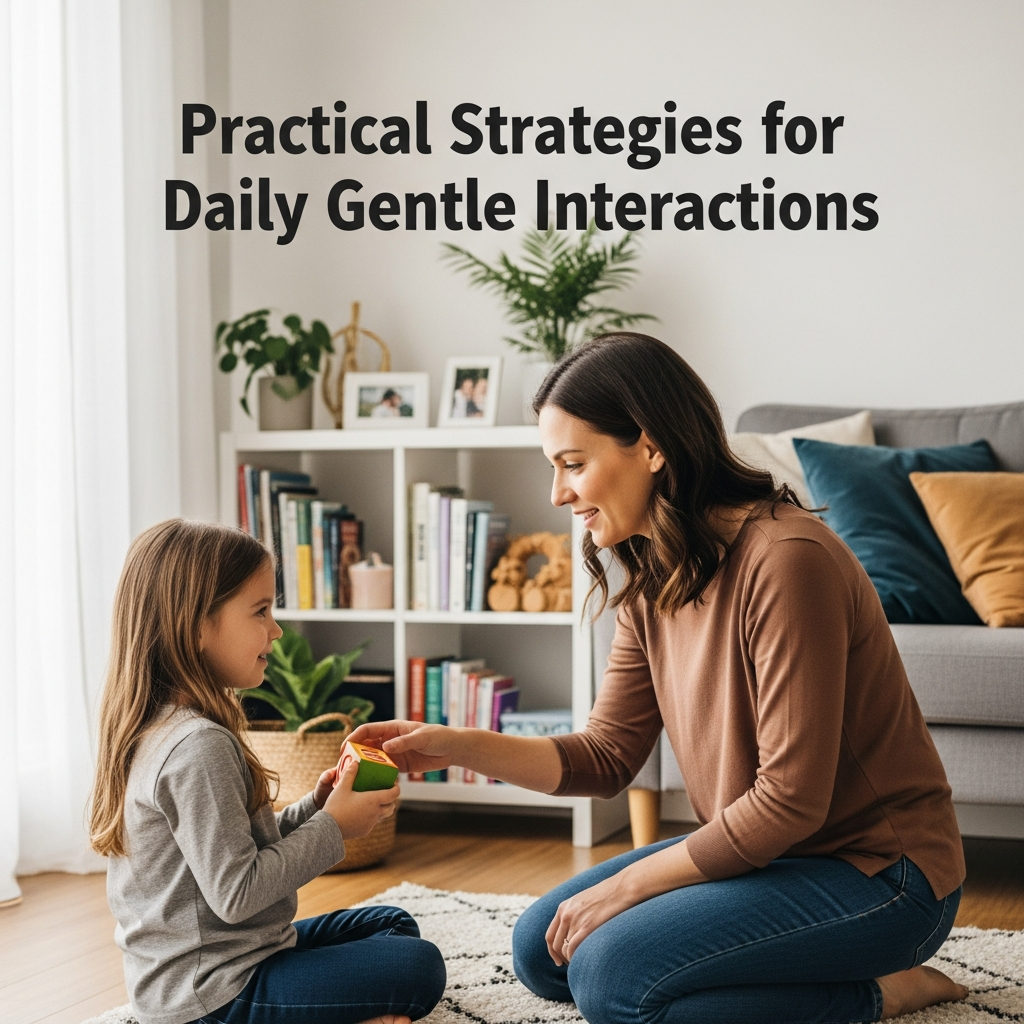
Let’s look at how gentle parenting plays out in everyday moments, helping you navigate common challenges without unnecessary stress.
Responding to Big Emotions (Tantrums and Meltdowns)
These moments can be incredibly stressful, but gentle responses can make a huge difference.
* Connect before you correct:** When your child is upset, their logical brain is offline. First, offer comfort and a calm presence. “I’m here with you,” or a hug if they allow it.
* Avoid asking questions or reasoning: In the heat of the moment, questions like “Why are you doing that?” or long explanations will not work. Focus on acknowledging their distress.
* Offer a safe space: Sometimes, a child just needs to get their feelings out. Guide them to a quiet corner or simply stay nearby, letting them know you are available when they are ready.
* Remember it is not about you: A child’s tantrum is rarely personal. It is an expression of overwhelming feelings they cannot manage alone.
Encouraging Cooperation Through Connection
Instead of constantly battling your child, gentle parenting focuses on building cooperation.
* Involve them: Ask for their input where appropriate. “What do you think we should do for dinner tonight?” or “How should we put these toys away?”
* Use playful parenting: Turn mundane tasks into games. “Let’s race to see who can put their shoes on first!” or “Can you be my little helper and carry these books?”
* Give warnings for transitions: “In five minutes, we’ll turn off the TV,” or “Soon it will be time to leave the park.” This helps them mentally prepare.
* Offer “either/or” choices: “Do you want to clean up your blocks now or after your snack?” This gives them agency within your expectation.
Effective Communication That Builds Trust
Clear, kind communication is central to gentle parenting and reduces misunderstandings.
* Active listening: Give your child your full attention. Nod, make eye contact, and repeat back what you hear to confirm you understand. “So, you’re saying you feel left out because your friends didn’t invite you to play.”
* Use “I” statements: Focus on your feelings and needs without blaming. “I feel worried when you run into the street,” instead of “You are always running away from me.”
* Explain expectations simply: For chores, for example, “When we finish dinner, we all help clear the table.”
* Avoid shaming or blaming: Language like “You’re a naughty child” or “Why are you always so loud?” damages self-esteem and does not teach. Focus on the behavior, not the child.
Repairing Moments of Disconnection
No parent is perfect. You will make mistakes, raise your voice, or react in ways you regret. Gentle parenting includes repairing these moments.
* Apologize sincerely: “I’m sorry I yelled earlier. I was feeling frustrated, and it wasn’t okay for me to speak to you that way.”
* Explain briefly (without excuses): “My brain got overwhelmed, and I lost my temper.”
* Reconnect: Offer a hug, a smile, or spend some quiet time together. This shows your child that mistakes happen, but relationships can be mended. It teaches them empathy and how to apologize too.
Overcoming Common Gentle Parenting Hurdles
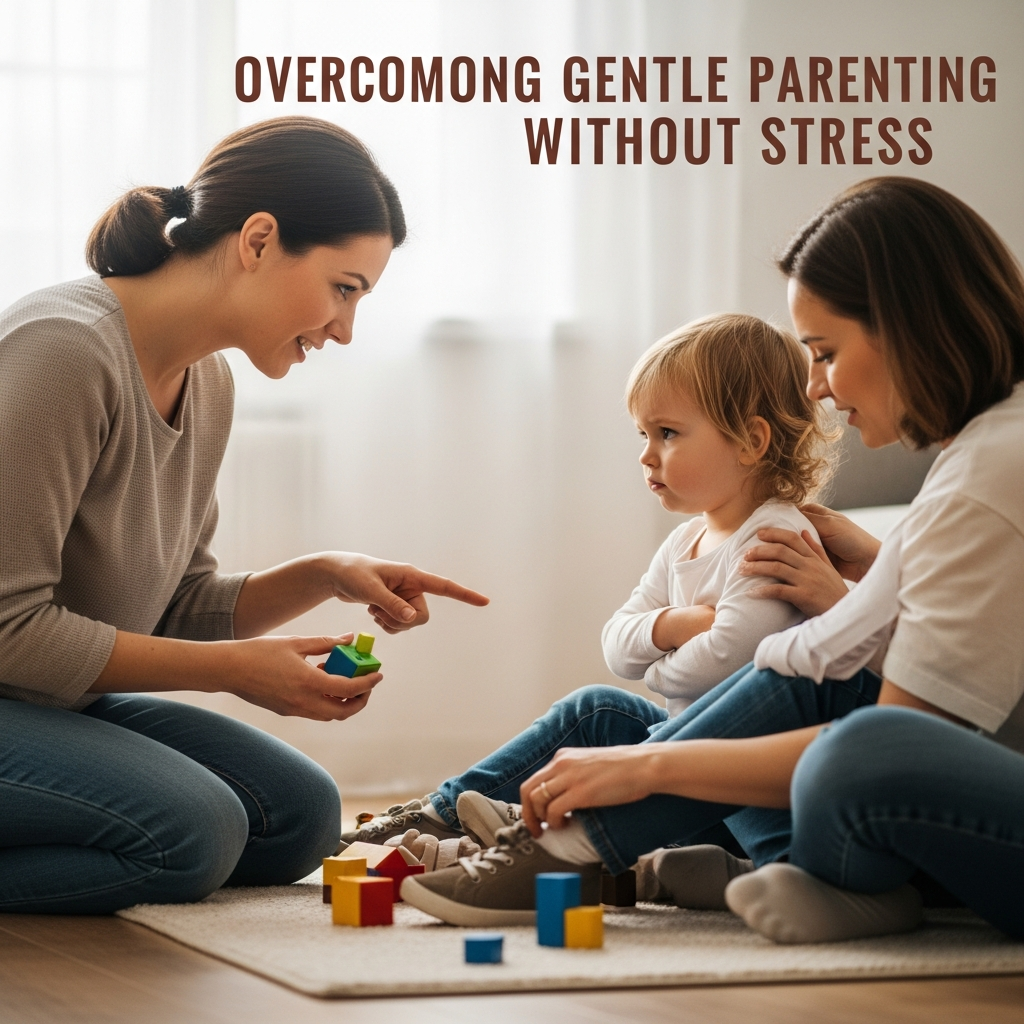
Even with the best intentions, gentle parenting can feel tough at times. Here’s how to navigate those moments without added stress.
Dealing with Outside Opinions
Family, friends, or even strangers might question your gentle approach. This can be a source of stress.
* Trust your instincts: You know your child best. Believe in your chosen path.
* Politely set boundaries: “Thank you for your advice, but we’re choosing to handle it this way,” or “We’re comfortable with our parenting style.”
* Limit discussions: You do not need to defend every choice. Change the subject or walk away if necessary.
* Focus on your family’s needs: Remember *why* you are doing this. Your primary goal is a loving, secure relationship with your child, not external approval.
When You Feel Like Giving Up
Gentle parenting is a marathon, not a sprint. There will be days you feel like it is not working.
* Practice self-compassion: Give yourself the same kindness and understanding you offer your child. It is okay to have a bad day.
* Lower your expectations: You do not have to be a perfect gentle parent. Aim for “good enough” moments.
* Remind yourself of the long-term goal: You are building resilience, empathy, and a strong relationship. These things take time.
* Seek support: Talk to your partner, a trusted friend, or another parent who understands. Sharing your struggles can lighten the load.
Building Your Personal Stress-Relief Toolkit
A less stressed parent is a more gentle parent. Prioritize your well-being.
* Small acts of self-care: Even five minutes of quiet, a warm drink, or listening to a favorite song can make a difference.
* Mindfulness: Take a moment to just *be* with your child, truly present in their play, rather than thinking about your to-do list.
* Prioritize basic needs: Sleep, nourishing food, and movement are not luxuries; they are essential for your ability to parent gently.
* Let go of perfection: Embrace the messiness of life. It is okay if the house is not spotless or if dinner is simple.
Gentle Parenting Across Different Ages

Gentle parenting principles apply from infancy through the teenage years, but the *how* changes.
Babies and Toddlers: Laying the Groundwork
This stage is about responsive care and building trust.
* Responsive care: Meet their needs for food, comfort, and connection promptly. This builds a secure attachment.
* Narrate your actions: “I’m going to pick you up now,” or “Let’s put on your diaper.” This helps them understand what is happening.
* Simple boundaries and redirection: “No hitting. We touch gently,” followed by gently moving their hand or offering a soft toy.
Preschoolers and Young Children: Growing Independence
As they develop language and a sense of self, gentle parenting encourages their blossoming independence.
* Encourage choices: Within limits, let them choose their clothes, snack, or which book to read.
* Explain consequences naturally: “If we don’t put our toys away, they might get stepped on and broken.”
* Problem-solve together: “It looks like you’re having trouble sharing this toy. What could we do so everyone gets a turn?”
School-Aged Children: Deeper Conversations
This age allows for more complex discussions and collaborative problem-solving.
* Active listening: Really hear their concerns about school, friends, or challenges.
* Collaborative problem-solving: “You’re feeling overwhelmed by your homework. What steps can we take to break it down?”
* Respect their evolving privacy: Give them space while still letting them know you are there for them.
Mastering gentle parenting without stress is not about achieving perfection, but about embracing a philosophy of kindness, understanding, and respect for both your child and yourself. It is a continuous journey of learning, growing, and adapting. By prioritizing your own well-being, practicing self-compassion, and focusing on connection over control, you can create a family life that feels more peaceful, more authentic, and ultimately, far less stressful. You are building a foundation of love and trust that will serve your children for a lifetime, and that is a truly powerful thing.