10 Best Educational Toys Parents Love
As parents, we all want the best for our children. We dream of them growing up to be curious, creative, and confident individuals. One wonderful way to support their development, right from their earliest days, is through play. And that’s where educational toys come in. These aren’t just fancy gadgets; they’re thoughtfully designed tools that make learning feel like the most exciting adventure.
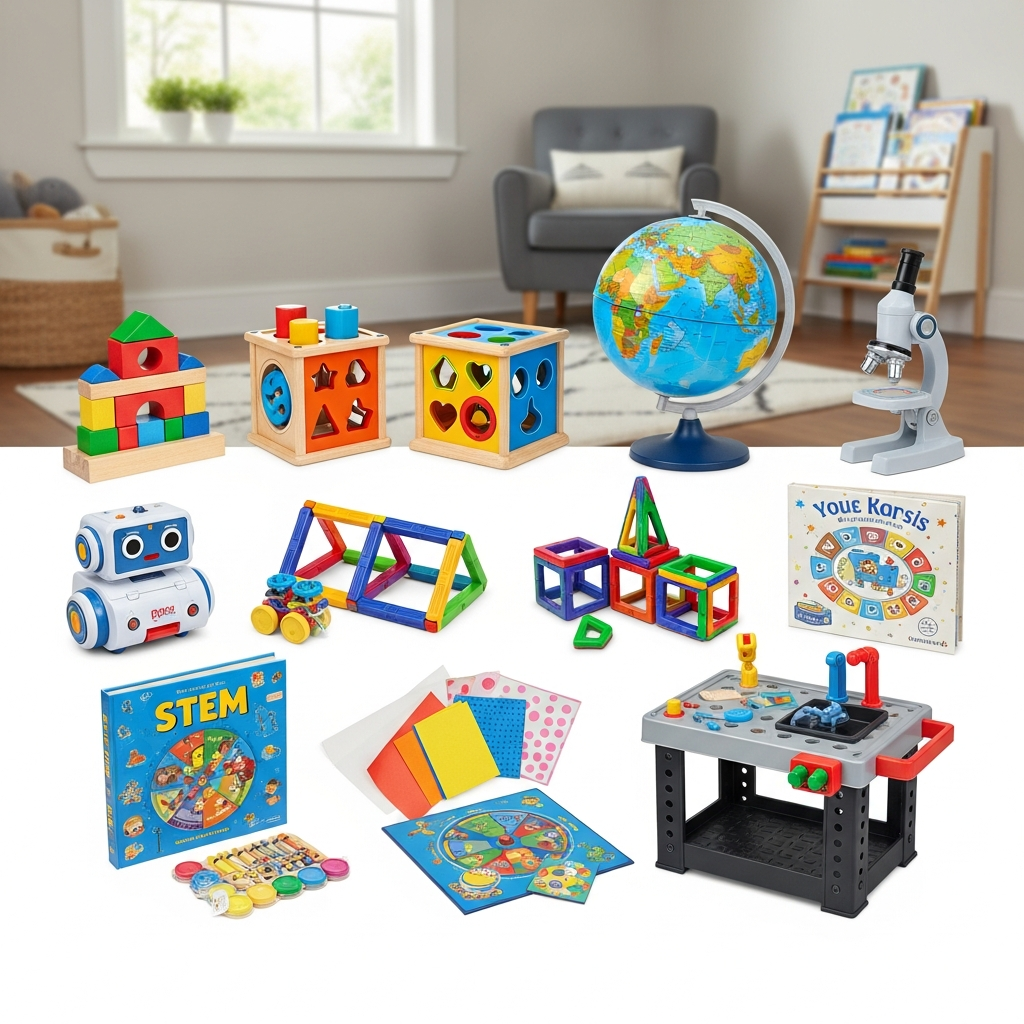
Choosing the right toys can feel overwhelming with so many options out there. But some toys have truly stood the test of time, earning a special place in parents’ hearts because they consistently deliver on both fun and learning. In this article, we’ll explore ten of these beloved educational toys that help children build essential skills, spark their imagination, and create lasting memories. Let’s dive into the treasures that parents genuinely love.
1. Building Blocks
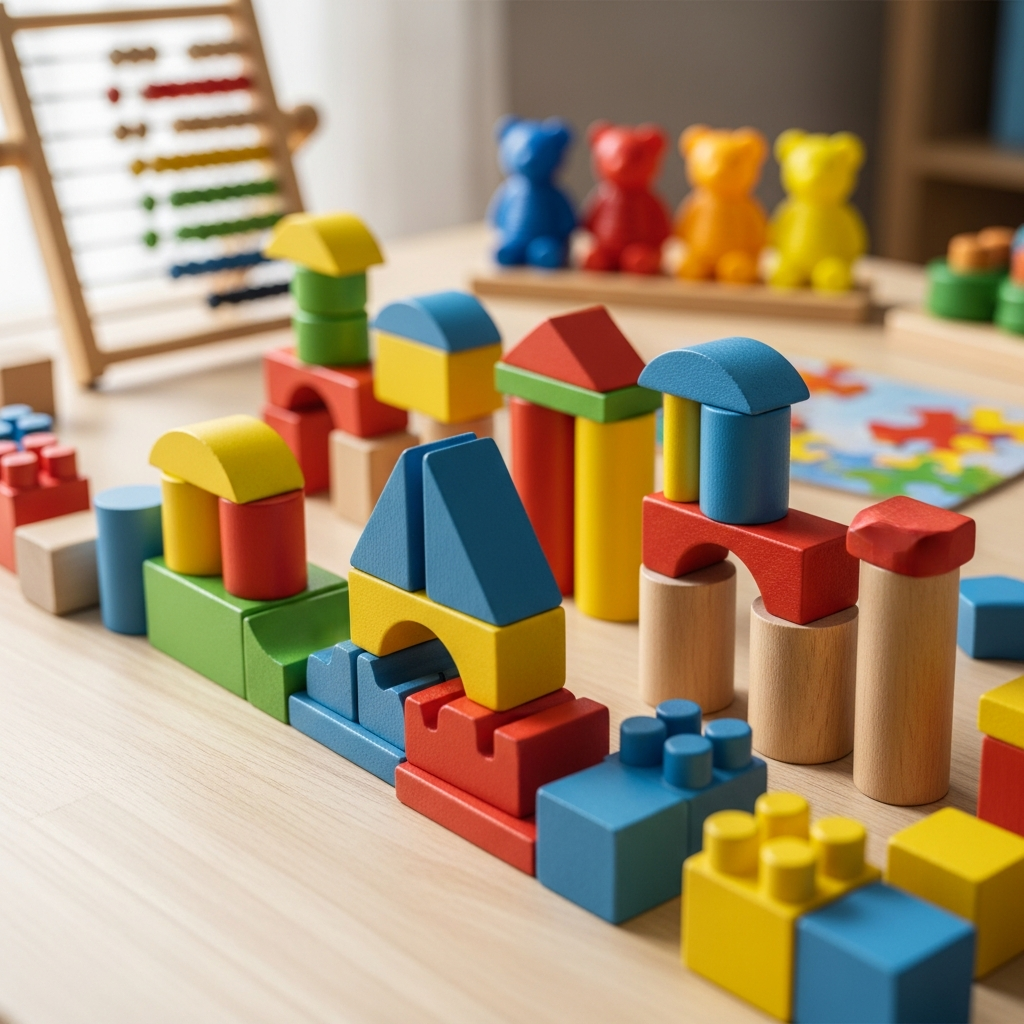
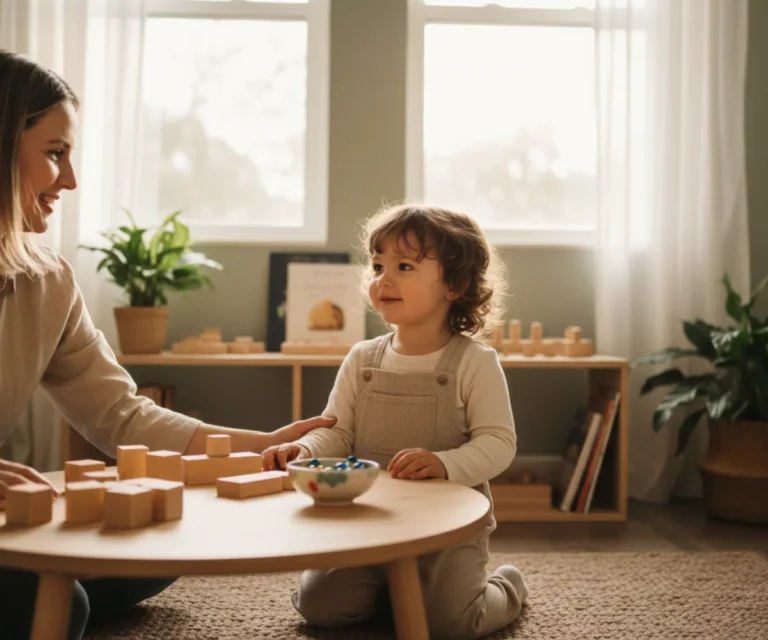
Building blocks are perhaps the most timeless and versatile educational toy. From simple wooden blocks to colorful plastic bricks, they offer endless possibilities for creation and discovery.
What they are and why they’re great
Blocks are fundamental for a child’s early development. They encourage open-ended play, meaning there’s no single “right” way to use them, fostering a child’s creativity from a young age.
* They enhance fine motor skills as little hands grasp, stack, and connect pieces.
* Children develop spatial awareness and problem-solving abilities as they figure out how to make their towers stand tall without toppling.
* They learn basic physics concepts like balance, gravity, and stability through trial and error.
* Blocks also promote imaginative play, as kids build castles, cars, or entire cities.
How parents can encourage play
* Start with a simple set and let your child explore freely, even if it’s just knocking over your creations.
* Introduce challenges as they grow, like building a bridge for a toy car or a house for their favorite stuffed animal.
* Play alongside them, asking questions like, “What are you building?” or “How can we make this stronger?”
2. Shape Sorters and Stacking Rings
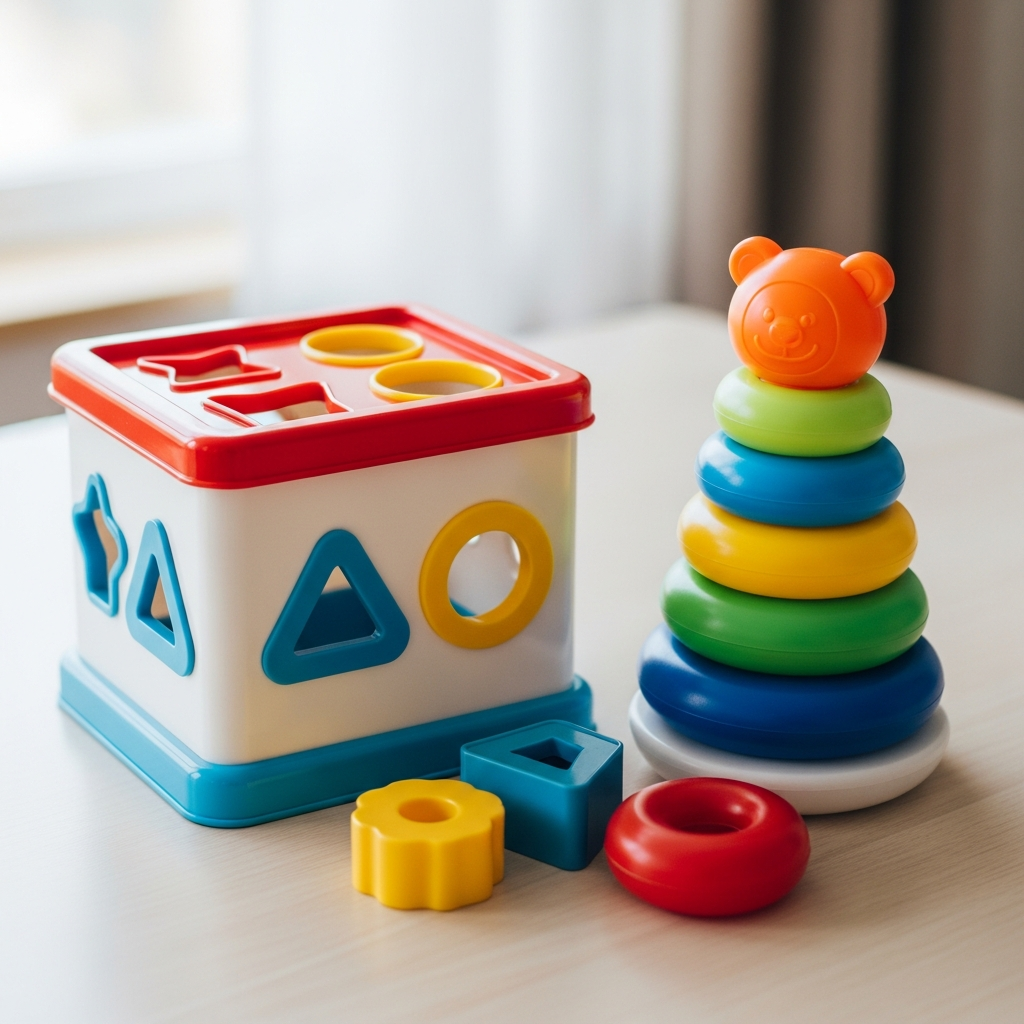
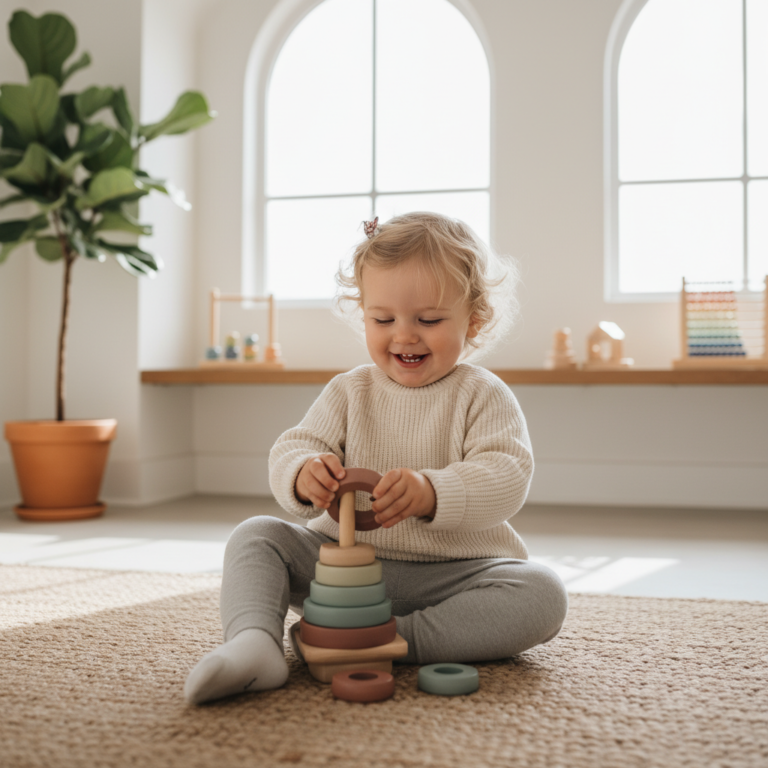
Perfect for babies and toddlers, shape sorters and stacking rings are fundamental for early cognitive development. They are simple, yet incredibly effective, in teaching basic concepts.
What they are and why they’re great
These classic toys challenge young minds to match shapes and sizes, which is crucial for early problem-solving. They are often colorful and easy for small hands to manipulate.
* They boost fine motor skills and hand-eye coordination as children grasp, place, and sort.
* Kids learn about different shapes and colors, building their vocabulary and recognition skills.
* They introduce concepts of size, order, and sequencing through stacking rings from largest to smallest.
* These toys also help with cause and effect—the right shape fits, the wrong one doesn’t.
How parents can encourage play
* Talk about the colors and shapes as your child plays, saying things like, “That’s a red circle!” or “Can you find the triangle?”
* Show them how to stack the rings in order a few times, then let them experiment on their own.
* Celebrate their small successes, like fitting a shape into the correct hole, to build their confidence.
3. Puzzles
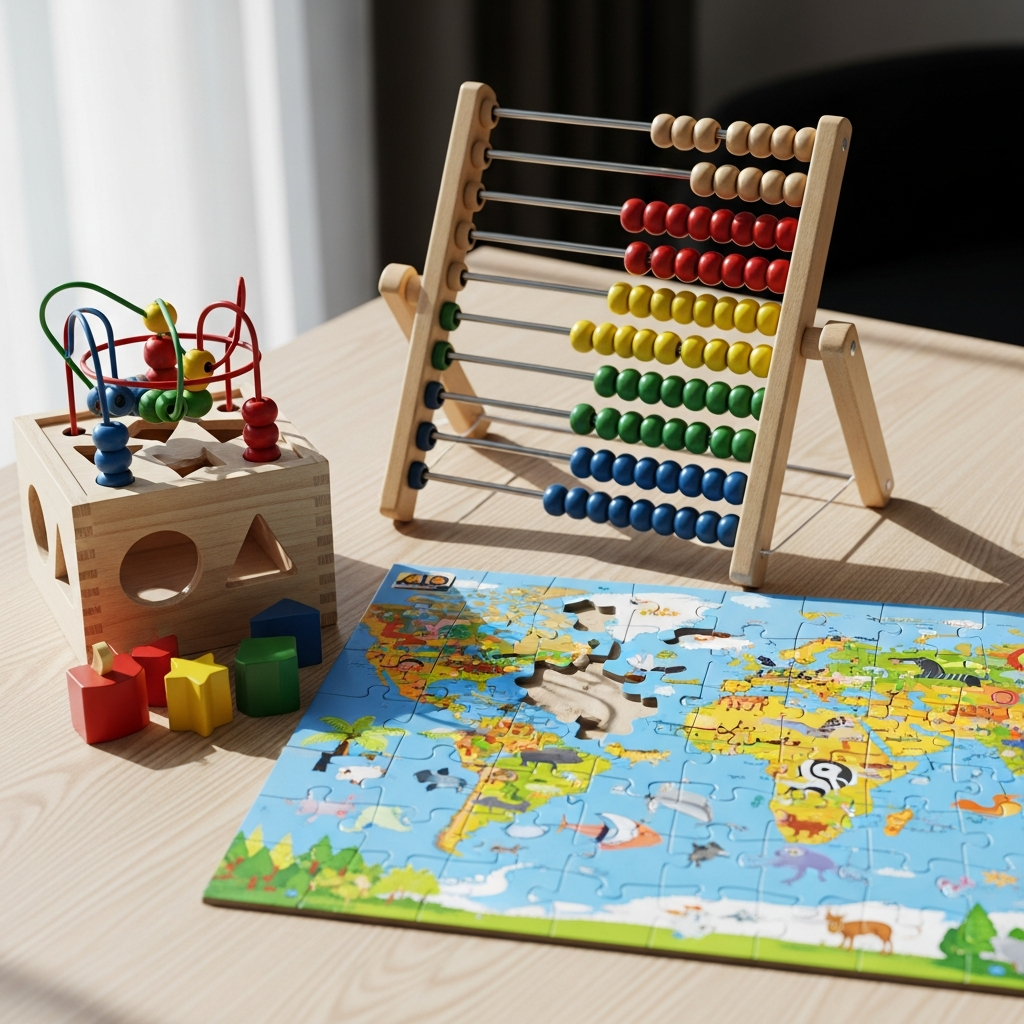
Puzzles are fantastic tools for developing a child’s mind. From chunky wooden puzzles for toddlers to complex jigsaw puzzles for older kids, they offer a rewarding challenge.
What they are and why they’re great
Puzzles require focus, patience, and strategic thinking. They come in many forms, from putting together pictures to interlocking 3D pieces, catering to different age groups and skill levels.
* They hone problem-solving skills as children try different pieces and strategies to complete the image.
* Fine motor skills and hand-eye coordination are improved by manipulating and placing puzzle pieces.
* Puzzles enhance cognitive abilities like shape recognition, memory, and logical reasoning.
* They teach persistence and the satisfaction of completing a task.
How parents can encourage play
* Choose puzzles that are age-appropriate to prevent frustration; start simple and increase complexity.
* Work on a puzzle together, guiding them without giving away all the answers.
* Talk about the picture on the puzzle, turning it into a storytelling opportunity once completed.
4. Art and Craft Supplies
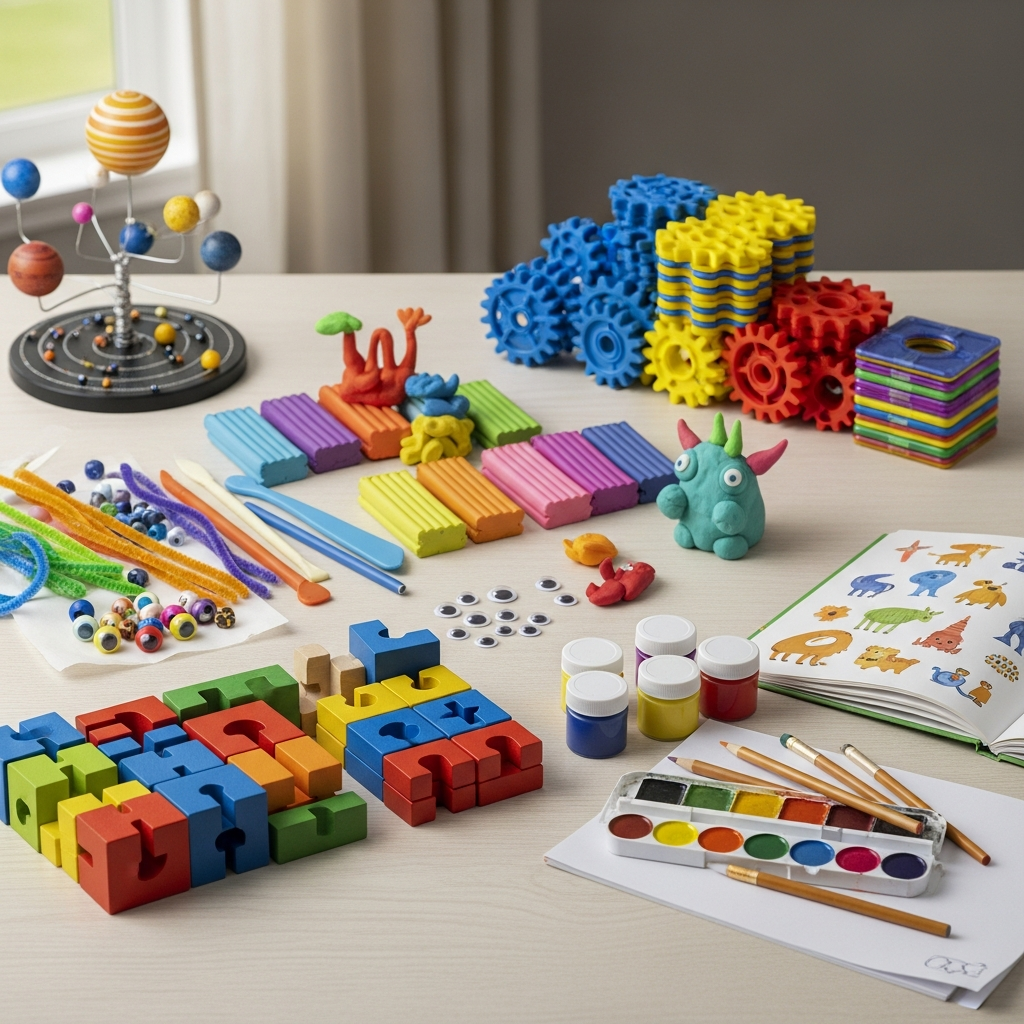
Unleashing creativity is vital for child development, and nothing does it quite like a good set of art and craft supplies. These aren’t just for making pretty pictures; they’re tools for expression.
What they are and why they’re great
Crayons, paints, play-doh, construction paper, and glue sticks open up a world of imagination. They allow children to translate their thoughts and feelings into tangible creations.
* They foster creativity and self-expression, allowing children to communicate in non-verbal ways.
* Fine motor skills are refined through holding crayons, cutting with scissors, and molding dough.
* Art activities enhance sensory exploration through textures, colors, and smells.
* They help develop concentration and focus as children become engrossed in their artistic projects.
How parents can encourage play
* Provide a variety of materials and a safe, mess-friendly space for them to create.
* Focus on the process, not just the finished product. Praise their effort and imagination.
* Ask open-ended questions about their art, like, “Tell me about your drawing,” instead of, “What is it?”
5. Pretend Play Sets
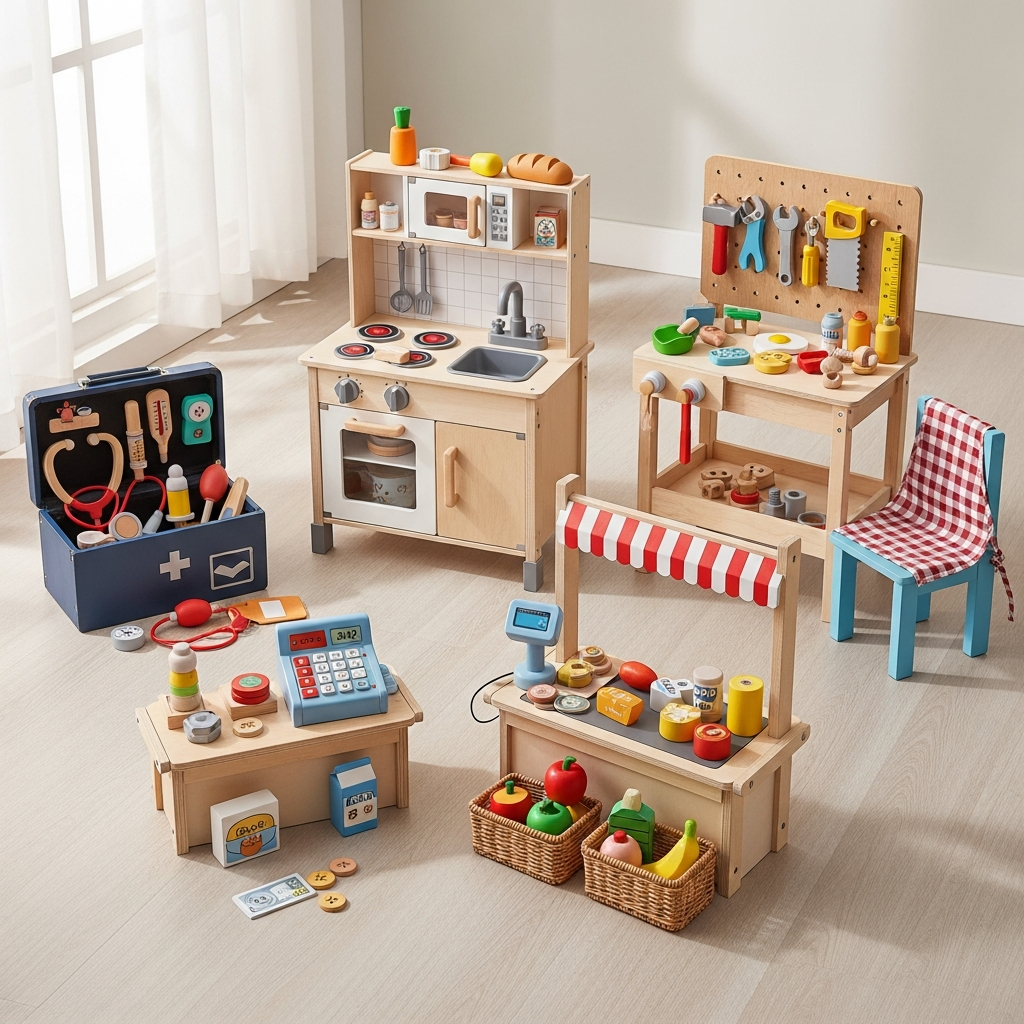
Role-playing is a cornerstone of childhood, helping children understand the world around them and develop crucial social-emotional skills. Pretend play sets make this even more engaging.
What they are and why they’re great
From doctor kits and toy kitchens to dress-up clothes and puppet theaters, pretend play sets allow children to step into different roles and act out scenarios.
* They nurture imagination and creativity as children invent stories and characters.
* Social skills and empathy are developed by taking on different roles and understanding others’ perspectives.
* Language development is boosted through dialogue, storytelling, and acting out scenes.
* Children learn about the world, different professions, and daily routines through imitation.
How parents can encourage play
* Join in their pretend world, taking on a role and following their lead.
* Provide simple props and costumes, allowing them to use their imagination to fill in the gaps.
* Encourage them to act out real-life situations like going to the store or visiting the doctor.
6. Musical Instruments
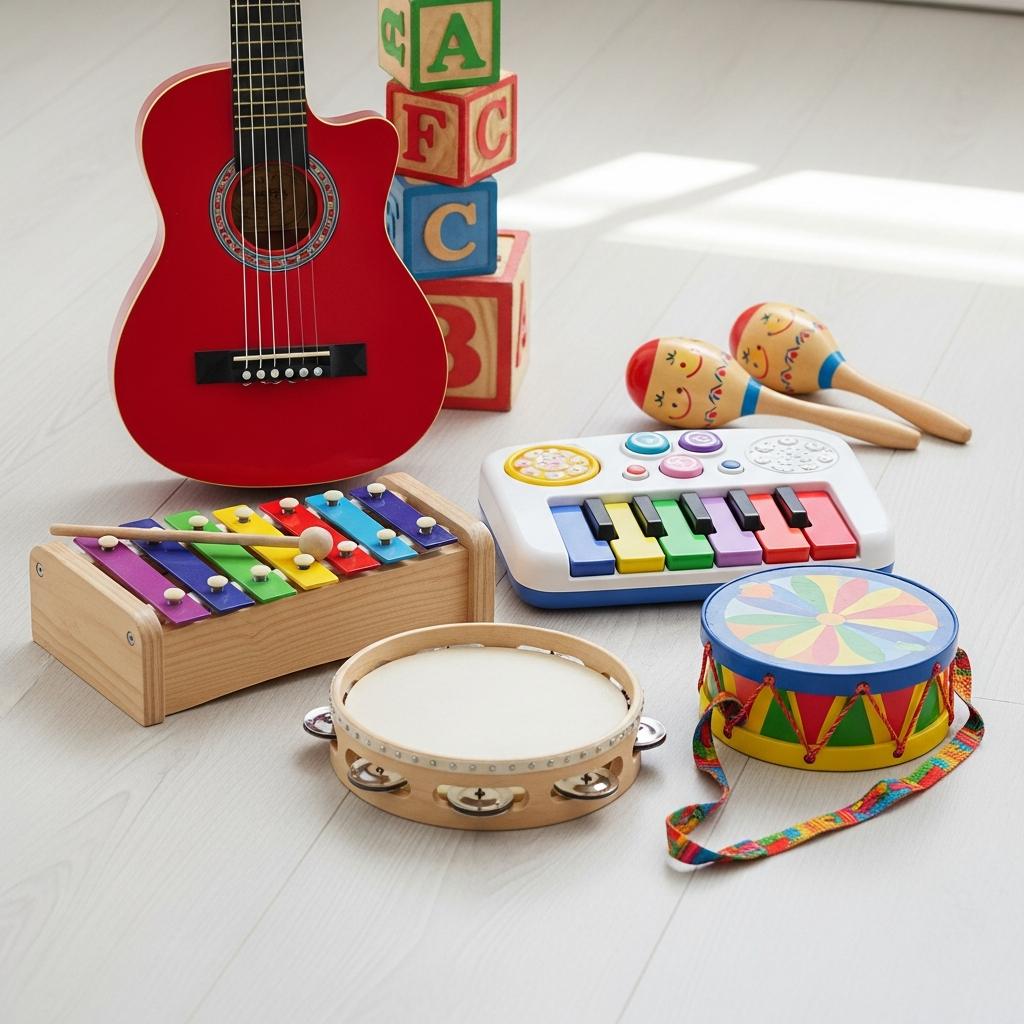
Music is a universal language, and introducing children to simple musical instruments can have a profound impact on their development. It’s about rhythm, sound, and creative expression.
What they are and why they’re great
Toy keyboards, shakers, drums, and xylophones aren’t just noise-makers. They are fantastic for sensory development and can even lay the groundwork for understanding mathematical patterns.
* They stimulate auditory development and help children recognize different sounds and tones.
* Rhythm and coordination are enhanced as children move their bodies to the beat or tap out patterns.
* They offer an outlet for self-expression and emotional release, whether happy or sad.
* Early exposure to music can also boost language skills and memory.
How parents can encourage play
* Sing songs together and encourage them to play along with their instruments.
* Create a “band” and take turns leading the music, fostering a sense of cooperation.
* Listen to different types of music and discuss the feelings they evoke.
7. Magnetic Tiles
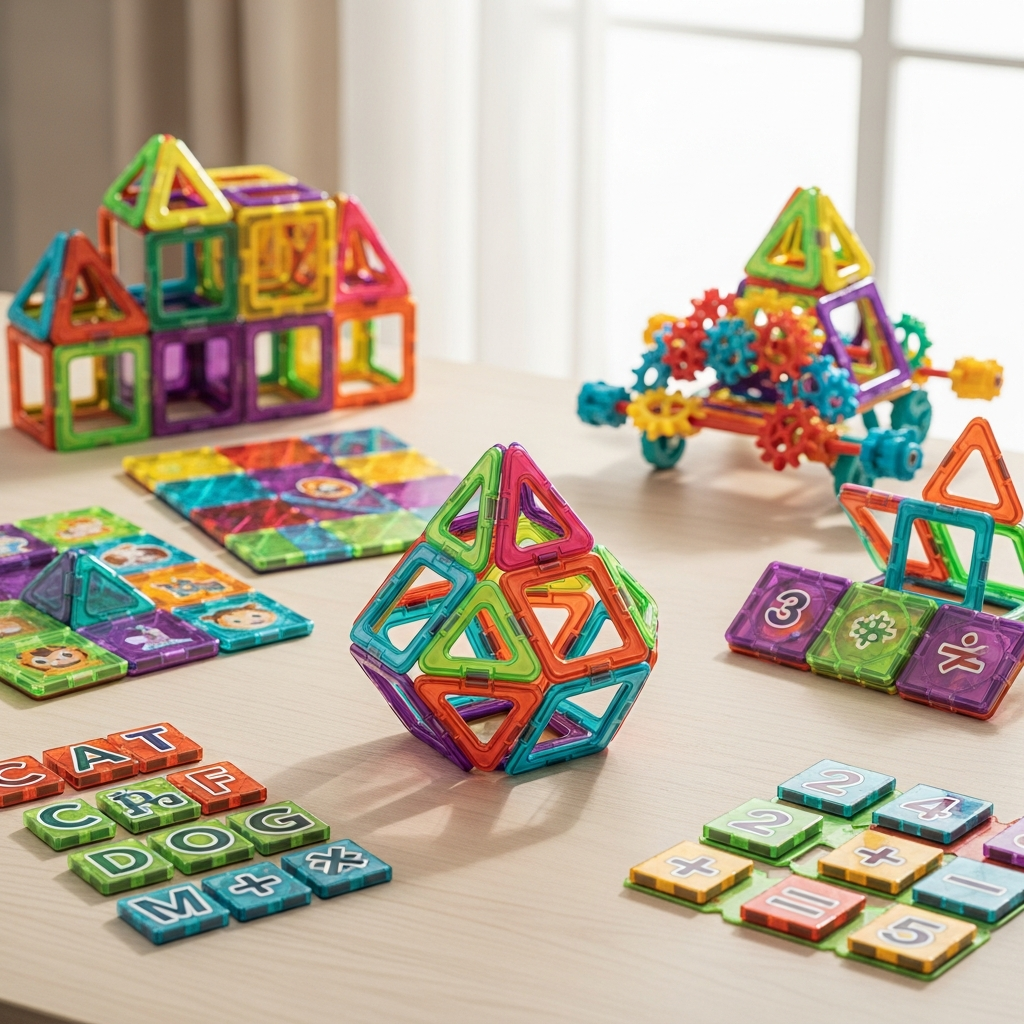
Magnetic tiles have surged in popularity, and for good reason. They combine the open-ended fun of blocks with the added magic of magnets, allowing for truly spectacular creations.
What they are and why they’re great
These colorful, translucent tiles snap together easily, allowing children to build intricate 2D patterns and impressive 3D structures. They’re a fantastic STEM toy.
* They develop spatial reasoning and understanding of geometry as children connect shapes to form larger structures.
* Fine motor skills are improved as children manipulate the tiles and connect them precisely.
* They foster creativity and imaginative construction, from towering castles to rocket ships.
* Children learn about cause and effect and basic principles of magnetism.
How parents can encourage play
* Start by making simple flat shapes, then encourage them to build upwards.
* Introduce challenges, like building the tallest tower or a ramp for a small car.
* Use them on a light table or near a window to explore how light interacts with the colorful tiles.
8. Board Games and Card Games

For preschoolers and older children, board games and card games are much more than just entertainment. They are powerful tools for social, emotional, and cognitive development.
What they are and why they’re great
From simple matching games to strategy-based board games, these toys teach valuable life skills in a fun, interactive setting. They bring families together for quality time.
* They teach important social skills like taking turns, following rules, and good sportsmanship (winning and losing gracefully).
* Cognitive skills such as counting, strategic thinking, memory, and problem-solving are all exercised.
* They enhance patience and focus, as children must wait for their turn and concentrate on the game.
* Games provide opportunities for verbal communication and family bonding.
How parents can encourage play
* Choose games that are appropriate for the youngest player to keep everyone engaged.
* Model good sportsmanship, emphasizing that the fun is in playing together.
* Adapt game rules slightly for younger children to make them more accessible and less frustrating.
9. Science Exploration Kits
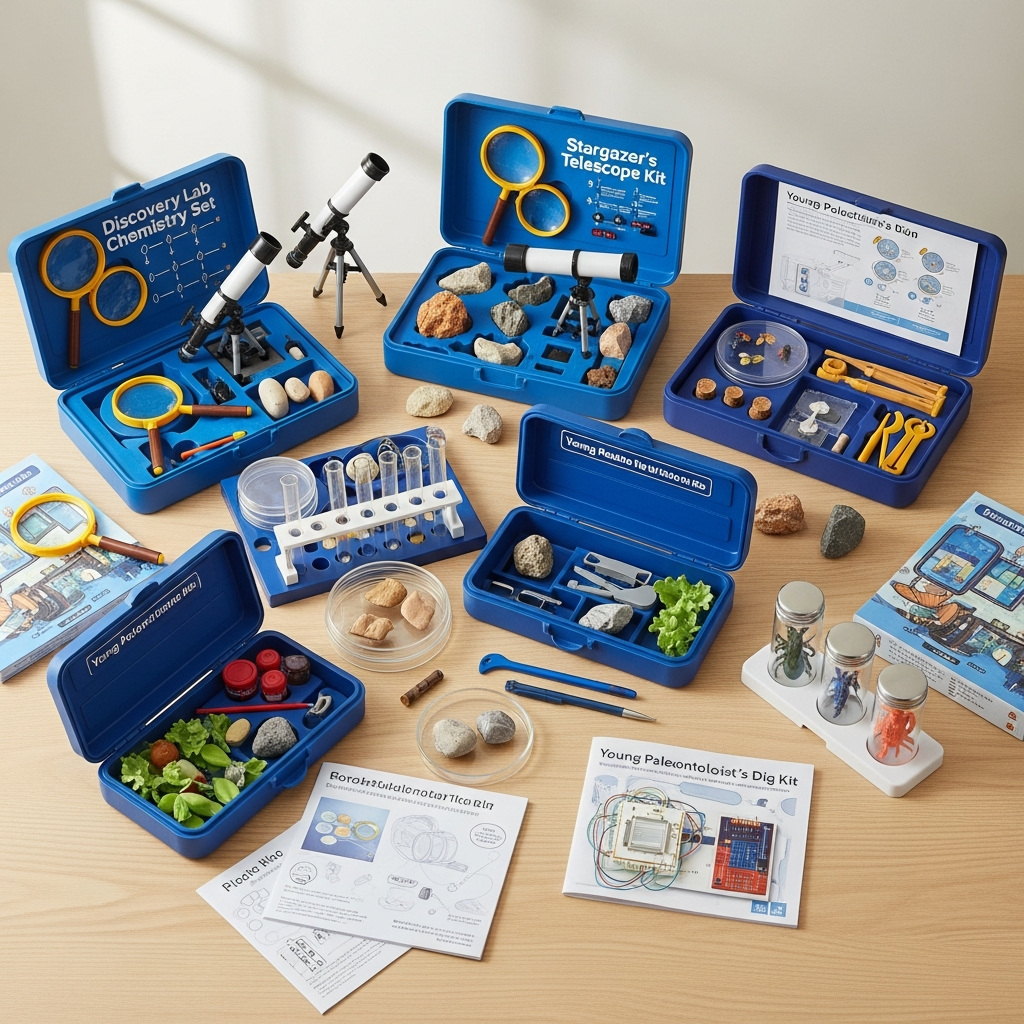
Sparking a child’s natural curiosity about the world is one of the greatest gifts we can give them. Science exploration kits make this journey exciting and accessible.
What they are and why they’re great
These kits range from simple experiment sets for young children to more complex chemistry or engineering kits for older kids. They turn abstract concepts into hands-on learning experiences.
* They ignite curiosity and encourage a love for scientific discovery and inquiry.
* Children develop critical thinking skills by forming hypotheses and observing results.
* They learn about various scientific principles in a practical, memorable way.
* Problem-solving and following instructions are key components of successful experiments.
How parents can encourage play
* Supervise experiments, especially those involving liquids or small parts, and ensure safety.
* Ask open-ended questions like, “What do you think will happen next?” or “Why did that change?”
* Turn everyday activities into science lessons, like observing plant growth or mixing colors.
10. Nature Exploration Kits and Tools
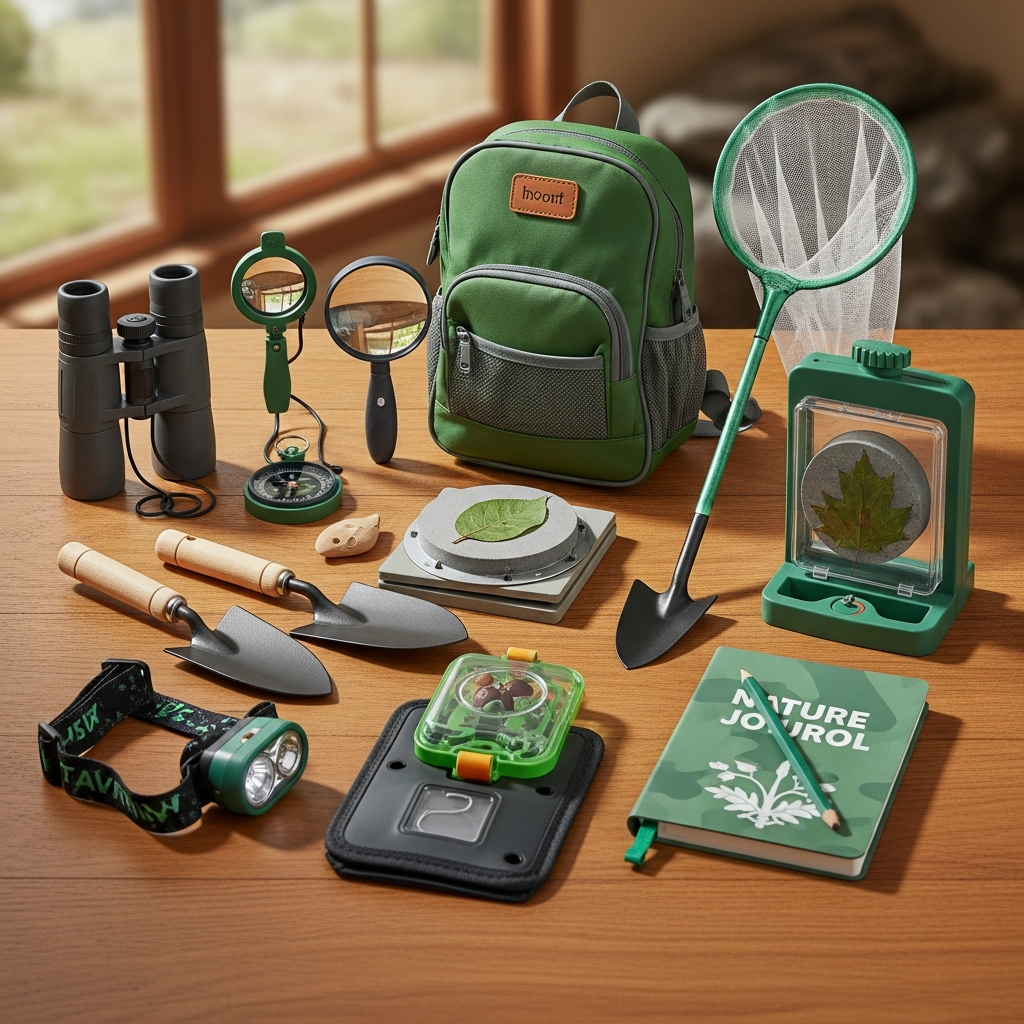
Connecting with nature is incredibly beneficial for a child’s overall well-being and development. Nature exploration kits make outdoor adventures even more exciting and educational.
What they are and why they’re great
These kits often include magnifying glasses, binoculars, bug viewers, field guides, and collecting tools. They encourage children to observe, investigate, and appreciate the natural world around them.
* They foster a sense of wonder and appreciation for nature, promoting environmental awareness.
* Observational skills are sharpened as children look closely at insects, leaves, and rocks.
* They encourage physical activity and outdoor play, which is vital for gross motor development and overall health.
* Children learn about ecology, biology, and the cycles of life in a hands-on way.
How parents can encourage play
* Take regular nature walks in your backyard, local park, or hiking trails.
* Teach them to respect living creatures and plants, observing without disturbing.
* Keep a nature journal together to draw findings or press leaves.
Beyond the Toys: Choosing and Playing Wisely
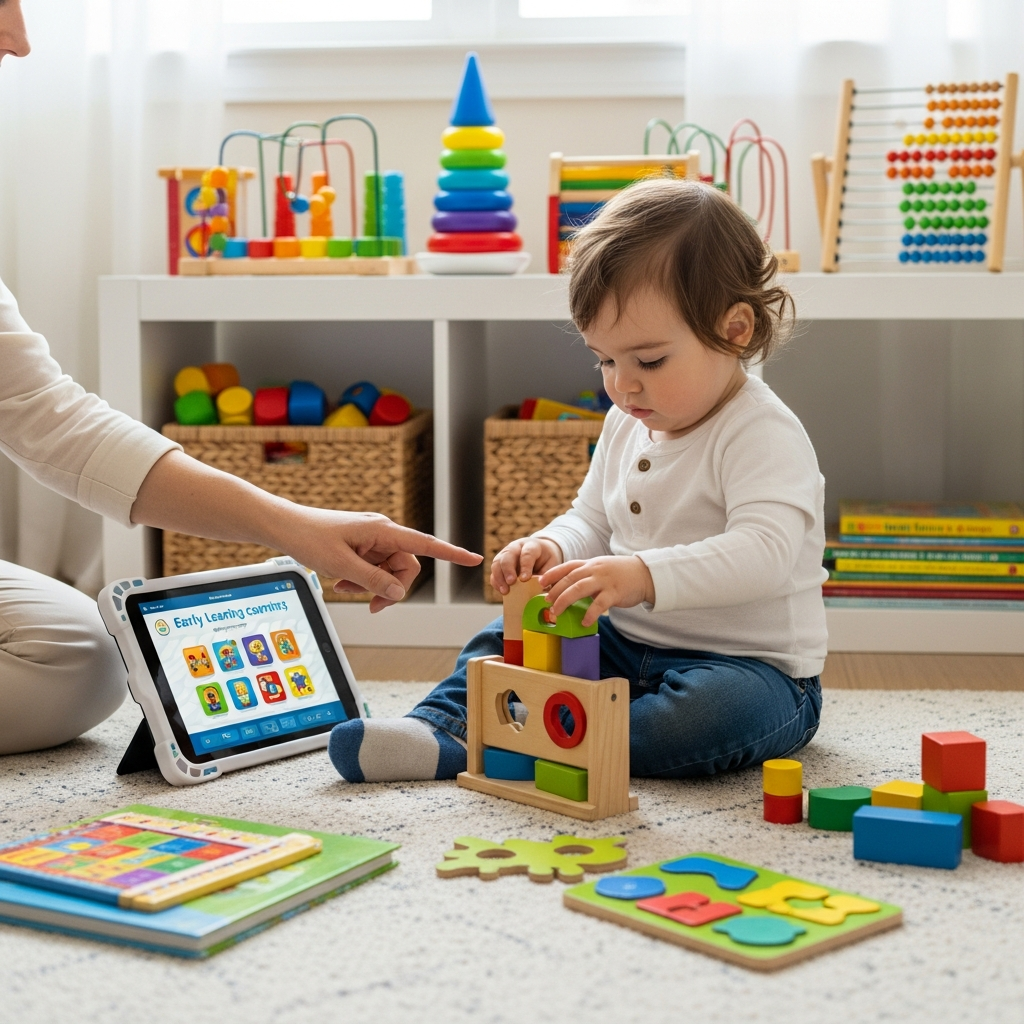
While these ten toys are fantastic, the real magic happens when parents are thoughtful about how they choose and use them.
Age-Appropriateness is Key
Always check the recommended age range on a toy. A toy too advanced can lead to frustration, while one too simple might quickly lose interest.
Look for Open-Ended Play
The best educational toys are often those that can be used in many different ways, encouraging creativity rather than dictating play.
Prioritize Safety and Durability
Choose toys made from safe, non-toxic materials that can withstand enthusiastic play. A toy that breaks easily isn’t fun for anyone.
Get Involved in Play
The most valuable “toy” is often you, the parent. Playing alongside your child, asking questions, and sharing in their discoveries amplifies the learning experience exponentially.
Less is Often More
A room overflowing with toys can be overwhelming. A smaller, curated selection of high-quality educational toys can actually lead to deeper, more focused play.
The True Magic of Play
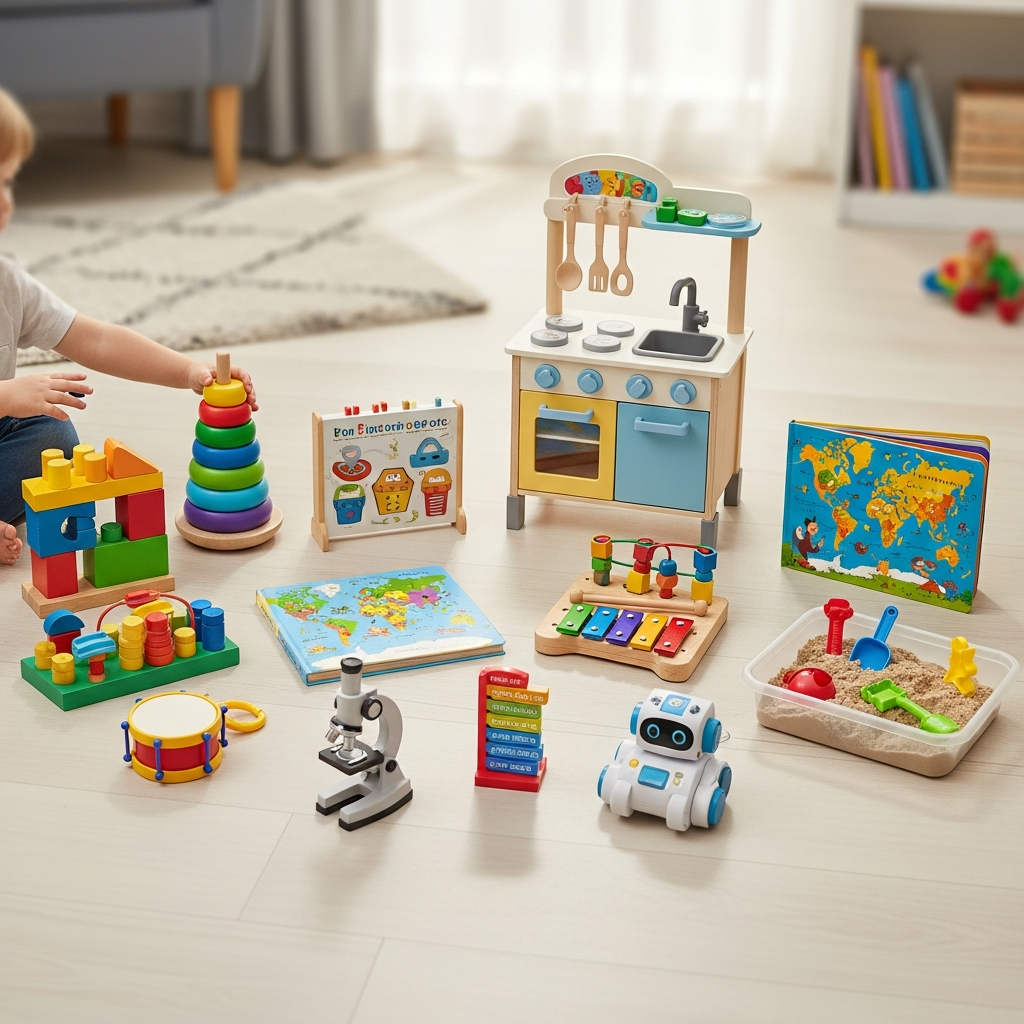
Remember, play is a child’s work. Through play, children explore, experiment, and make sense of their world. Educational toys are wonderful partners in this journey, but the loving interactions, encouragement, and shared moments with family are what truly build happy, healthy, and smart kids.
Final Thoughts
Investing in educational toys is an investment in your child’s future. The ten toys we’ve discussed are beloved by parents not just because they’re fun, but because they genuinely support growth across so many developmental areas. By choosing these timeless tools and engaging in play together, you’re helping your child build a strong foundation for a lifetime of learning and discovery. Embrace the joy of play, and watch your little ones flourish!