13 Gentle Ways to Discipline a One Year Old
Welcome to the wonderful, wild world of toddlerhood! As your little one approaches their first birthday and beyond, you might notice new behaviors emerging that make you wonder about discipline. It’s a common misconception that discipline only starts when children are older, but even at one year old, your child is absorbing information and learning boundaries. However, traditional ‘discipline’ methods aren’t suitable for this age. Instead, we focus on gentle guidance, teaching, and understanding. This article will walk you through 13 loving, effective, and gentle ways to guide your one-year-old, fostering their development while maintaining your strong, positive bond.
Remember, at one year old, children are driven by curiosity and an innate desire to explore their world. They are not intentionally ‘naughty’ or ‘defiant.’ Their brains are simply not yet equipped for impulse control, understanding complex rules, or grasping consequences. Our role as parents is to teach them, patiently and consistently, about safety, boundaries, and appropriate behavior, always through a lens of love and understanding.
Understanding Your One-Year-Old’s Development

Before diving into specific strategies, it’s crucial to acknowledge where your one-year-old is developmentally. Around this age, children are:
- Exploring actively: They are mobile, curious, and want to touch, taste, and experience everything.
- Developing independence: They’re testing limits and learning what they can and cannot do.
- Beginning to understand language: Simple words and phrases are starting to make sense, but complex instructions are still beyond them.
- Lacking impulse control: Their brains aren’t wired yet to stop themselves from doing something they want to do, even if they know it’s ‘no.’
- Highly reliant on caregivers: They need your consistent presence, reassurance, and guidance to feel secure and learn.
Given these developmental stages, our approach to ‘discipline’ must be nurturing, proactive, and focused on teaching rather than punishment.
1. Redirection is Your Superpower

When your one-year-old reaches for something they shouldn’t have, or engages in an undesired behavior, redirection is your most powerful tool. Instead of just saying ‘no,’ offer an immediate, appealing alternative. For example, if they’re trying to pull books off a shelf, hand them a sturdy board book of their own to look at, or point them towards a basket of safe toys. This shifts their focus without creating a power struggle.
2. Proactive Baby-Proofing

Prevention is always better than intervention, especially with a one-year-old. Baby-proofing your home minimizes opportunities for misbehavior and danger. Secure cabinets, cover outlets, gate off stairs, and remove breakable or dangerous items from their reach. When your home is safe for exploration, you’ll find yourself saying ‘no’ far less often, which is better for everyone’s emotional well-being.
3. Use a Firm, Simple ‘No’

While redirection is primary, there are times when a firm, clear ‘No’ is necessary, especially for safety. Use a calm but firm tone and pair it with a gesture, like shaking your head or holding up a hand. Keep it brief and immediately follow up with redirection or physically moving your child away from the danger. Overuse of ‘no’ can make it lose its impact, so reserve it for crucial moments.
4. Offer Limited Choices

One-year-olds crave a sense of control and independence. Offering limited, safe choices empowers them without overwhelming them. Instead of ‘Do you want to put on your shoes?’ which can be met with resistance, try ‘Do you want the red shoes or the blue shoes?’ Or, ‘Do you want to play with the blocks or the ball?’ This teaches decision-making skills and often prevents tantrums.
5. Embrace Positive Reinforcement
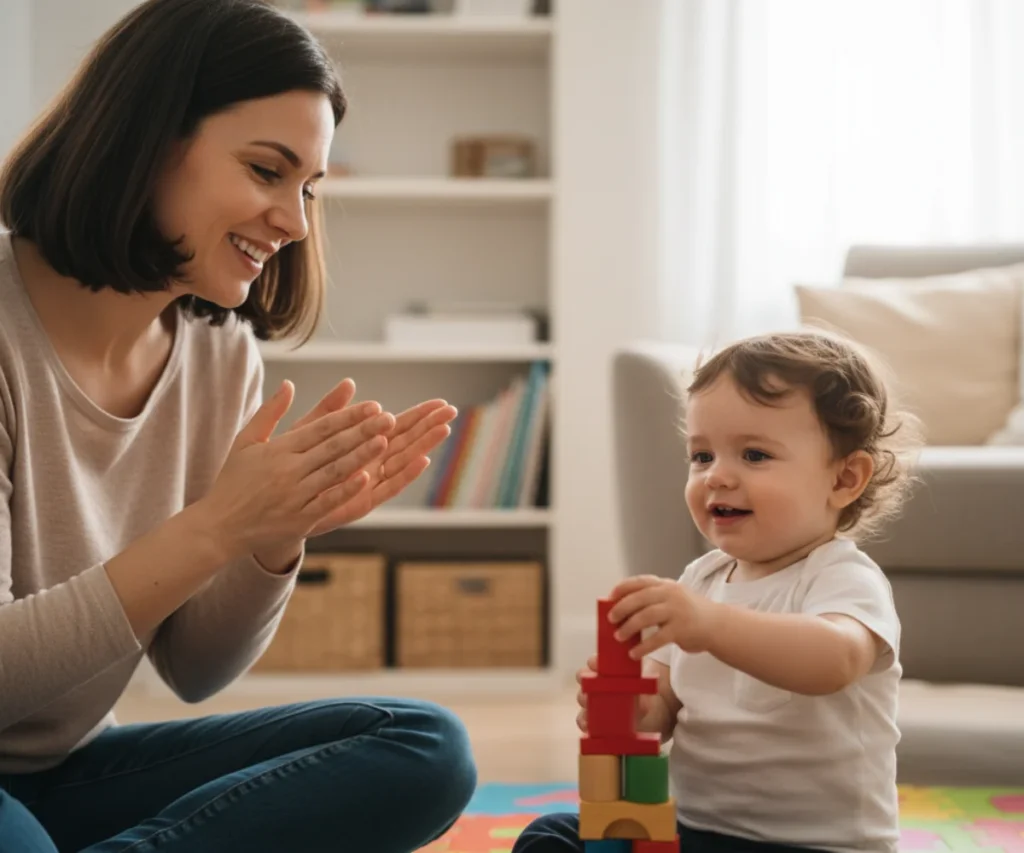
Catch your child being ‘good’! When your one-year-old does something desirable, like playing gently with a toy, sharing (even by accident!), or looking at you when you call their name, acknowledge it with praise, a smile, or a hug. ‘Good job stacking the blocks!’ or ‘Thank you for giving me the toy!’ This reinforces positive behaviors and encourages them to repeat those actions.
6. Ignore Minor Misbehavior
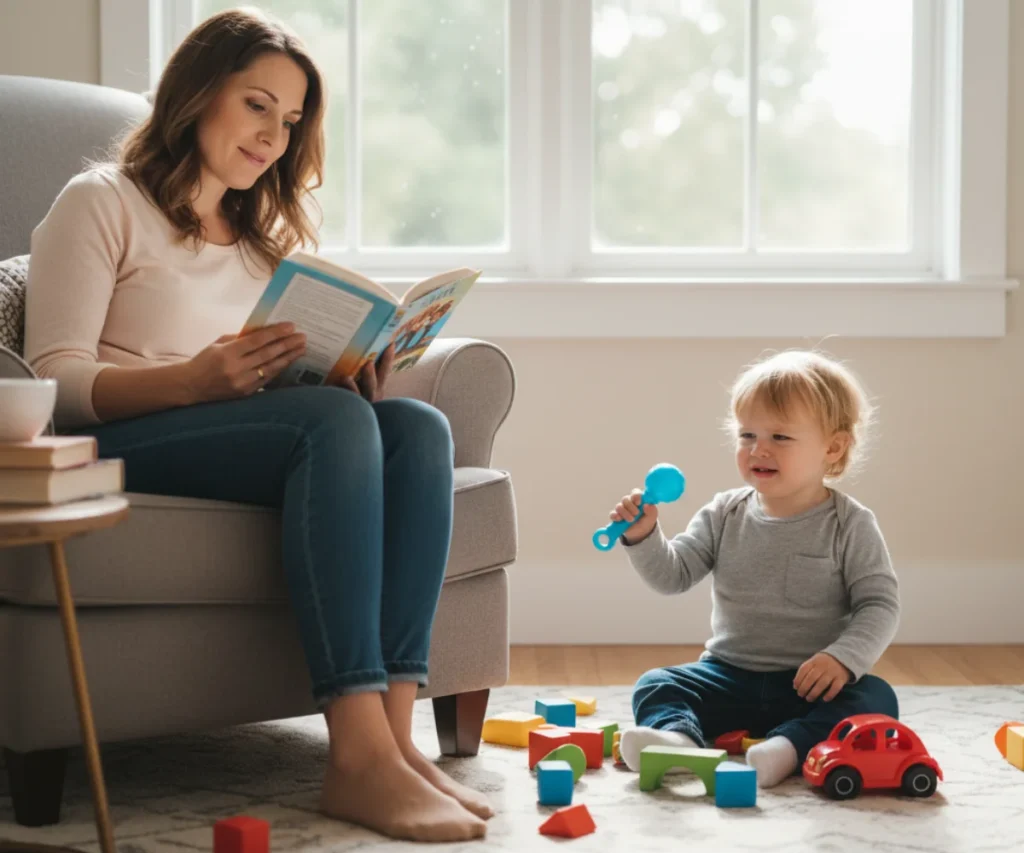
Some behaviors, while annoying, are harmless and often done for attention. Things like dropping food from the high chair (if not excessive), or a brief whimper for no clear reason. If the behavior isn’t dangerous or destructive, sometimes the best response is no response. Without an audience, the behavior often loses its appeal and fades away. Just be sure to pay attention when they are doing something positive!
7. Distraction as a Gentle Tool
Similar to redirection but often involving more engagement, distraction is excellent for steering a one-year-old away from an undesirable action or potential meltdown. If they’re fussing in the grocery cart, point out something interesting, sing a song, or pull out a novel, small toy they haven’t seen in a while. Their attention span is short, making distraction highly effective.
8. Model Good Behavior

Your one-year-old is constantly watching and imitating you. Be the example of the behavior you want to see. If you want them to be gentle with pets, demonstrate gentle touches. If you want them to share, share your snack with them (if age-appropriate). Modeling kindness, patience, and respectful interactions lays a strong foundation for their own behavior.
9. Consistency is Key

Whatever gentle discipline strategies you choose, consistency is paramount. If hitting is never allowed, it should never be allowed. If a certain item is off-limits, it’s always off-limits. If rules change constantly, your one-year-old will become confused and unsure of boundaries, leading to more testing. Discuss expectations with other caregivers to ensure everyone is on the same page.
10. Understand Their Communication

Often, what seems like ‘misbehavior’ is actually your one-year-old trying to communicate a need or feeling they can’t express with words. Are they tired, hungry, overstimulated, or frustrated? Learning to ‘read’ your child’s cues can help you address the root cause of the behavior before it escalates. Offering a snack, nap, or a quiet moment might be all they need.
11. Natural Consequences (within safety limits)

For some minor behaviors, allowing natural consequences (when safe and appropriate) can be a powerful teacher. If they throw a toy, they might not have access to it for a short period. If they refuse to wear their hat in the cold (and it’s not dangerously cold), they might feel a chill. Always prioritize safety, but within those bounds, these small lessons can be effective. Your role is to calmly observe, not to shame.
12. Gentle Holding and Reassurance

When a one-year-old is overwhelmed, frustrated, or engaging in a truly unsafe behavior, sometimes a gentle, calm hold can help. This isn’t a ‘time-out’ in the traditional sense, but a ‘time-in.’ Hold your child close, offer soothing words, and help them regulate their emotions. This physical comfort reassures them that you are there to help them through big feelings, not punish them for having them.
13. Pick Your Battles Wisely
ScheduledGenerate
You can’t enforce every single rule or correct every single tiny behavior. Choose your battles. Focus on safety and truly important boundaries. If your child wants to wear two different colored socks, or insists on holding a toy during dinner (as long as it’s not disruptive), sometimes it’s okay to let it go. Preserve your energy and your child’s goodwill for the moments that truly matter.
A Note on Safety vs. Exploration

It’s vital to distinguish between behaviors that are merely inconvenient or messy (like dumping toys) and those that are genuinely unsafe (like touching an electrical outlet or hitting). Safety boundaries are non-negotiable and require immediate, firm, and consistent intervention (e.g., a clear ‘No,’ immediate removal from the situation, and redirection). Exploration, on the other hand, should be encouraged within safe limits. Provide plenty of safe spaces and age-appropriate materials for your child to explore without constant intervention.
Think of yourself as a loving guide rather than a strict enforcer. Your goal is to teach, protect, and nurture, not to control or punish. This approach builds trust, strengthens your bond, and lays the groundwork for a secure, confident child.
Common Challenges and Solutions

Biting or Hitting
At this age, biting or hitting is rarely malicious. It’s often a sign of frustration, overstimulation, a lack of language skills to express needs, or even teething discomfort. When it happens:
- Respond immediately with a firm ‘No biting/hitting. That hurts.’
- Redirect their attention to a teether or a soft toy.
- If they bit another child, immediately attend to the bitten child first, showing your child the consequence of their action (that it hurt someone).
- Offer words they can use: ‘You’re frustrated. You can say ‘mad.” (Even if they can’t say it back yet, you’re teaching.)
Throwing Food
This is often an exploration of gravity and cause-and-effect. It can also be a sign they’re full or don’t like the food.
- Offer a small amount of food at a time.
- When they start throwing, calmly say ‘Food stays on the tray’ and remove the food.
- If it continues, assume they are done and remove them from the high chair.
- Provide alternative throwing opportunities with safe balls or soft toys during playtime.
Conclusion
Disciplining a one-year-old is less about punishment and more about teaching, guiding, and loving. It’s a journey filled with patience, repetition, and a deep understanding of your child’s developmental stage. By employing these 13 gentle strategies, you’re not just managing behavior; you’re building a foundation of trust, security, and respect that will serve your child for years to come. Embrace the beautiful chaos of this age, knowing that your consistent, gentle guidance is the most powerful tool you possess. You’re doing a wonderful job, and your little one is thriving under your loving care.