
9 Common Behavioral Problems in Kids Parents Should Know
Parenting is a journey filled with incredible joy, profound love, and, let’s be honest, a fair share of head-scratching moments. Every child is unique, and as they grow and develop, they express themselves in ways that can sometimes test our patience and understanding. Behavioral challenges are a normal part of childhood development, and recognizing them for what they are – often a cry for help, attention, or a struggle to communicate – is the first step toward effective guidance.
This article aims to shed light on nine common behavioral problems parents often encounter. More importantly, it offers empathetic, practical strategies to help you navigate these situations with confidence, warmth, and a deeper connection with your child. Remember, you’re not alone, and every challenge is an opportunity for growth – for both you and your little one.
1. Tantrums and Meltdowns

Ah, the tantrum. A rite of passage for many toddlers and preschoolers, and a moment that can make any parent feel like they’ve lost control. Tantrums are typically explosive emotional outbursts common in young children who are still developing language and emotional regulation skills. They often stem from frustration, unmet needs, overstimulation, or fatigue. A meltdown, while similar, can be more intense and overwhelming, often occurring when a child’s sensory system is overloaded or they are emotionally exhausted.
Understanding the Root Cause
- Frustration: Not being able to communicate desires or complete a task.
- Fatigue or Hunger: Basic needs not being met.
- Overstimulation: Too much noise, too many people, too many demands.
- Seeking Attention: Learning that big reactions get a response.
- Testing Boundaries: Exploring limits and control.
Empathetic Strategies for Parents
- Stay Calm: Your calm presence is a child’s anchor in their emotional storm. Take a deep breath.
- Acknowledge Feelings: “I see you’re very angry right now because you want the cookie.” Validate their emotion, even if you can’t give them what they want.
- Offer Choices (When Appropriate): If the tantrum is about control, offer two acceptable choices: “Do you want to wear the blue shirt or the red shirt?”
- Ignore the Performance, Address the Need: If it’s for attention, ensure safety, then calmly remove yourself slightly or turn away. Once they calm, reconnect.
- Physical Comfort: A hug, if accepted, can be incredibly grounding.
- Teach Coping Skills: After the tantrum, talk about what happened. “Next time you feel angry, you can squeeze your pillow or tell me with words.”
- Preventative Measures: Ensure your child is well-rested, fed, and has predictable routines. Avoid overwhelming environments if possible.
2. Aggression Hitting, Biting, Kicking

Seeing your child hit, bite, or kick can be alarming and embarrassing. This behavior is common in toddlers and preschoolers who lack the verbal skills to express strong emotions like anger, frustration, or fear. They might also be experimenting with cause and effect, or mimicking behaviors they’ve seen. While it’s a normal developmental phase for many, it’s crucial to address it firmly and consistently.
Why Aggression Happens
- Communication Gap: Unable to articulate needs or feelings.
- Impulse Control: Young children haven’t developed self-control yet.
- Testing Boundaries: Seeing what reactions their actions provoke.
- Seeking Attention: Negative attention is still attention.
- Frustration: When toys don’t work, or play isn’t going their way.
Guidance for Parents
- Immediate Intervention: As soon as aggression occurs, calmly but firmly stop the behavior. “No hitting. Hitting hurts.”
- Separate and Soothe: Remove your child from the situation or from the other child. Focus on calming them down.
- Address the Victim First: Show concern for the child who was hurt. This teaches empathy.
- Teach Alternative Behaviors: Once calm, discuss what happened. “When you feel angry, you can use your words: ‘My turn!’ or ‘Stop!'” Practice these alternatives.
- Consistent Consequences: A brief time-out or removal of a privilege, if appropriate for their age, can reinforce that aggressive behavior is not acceptable.
- Model Gentle Behavior: Children learn by observing. Be mindful of your own reactions and how you handle anger.
- Praise Positive Behavior: Catch them being kind, sharing, or using words, and offer specific praise.
3. Defiance and Not Listening
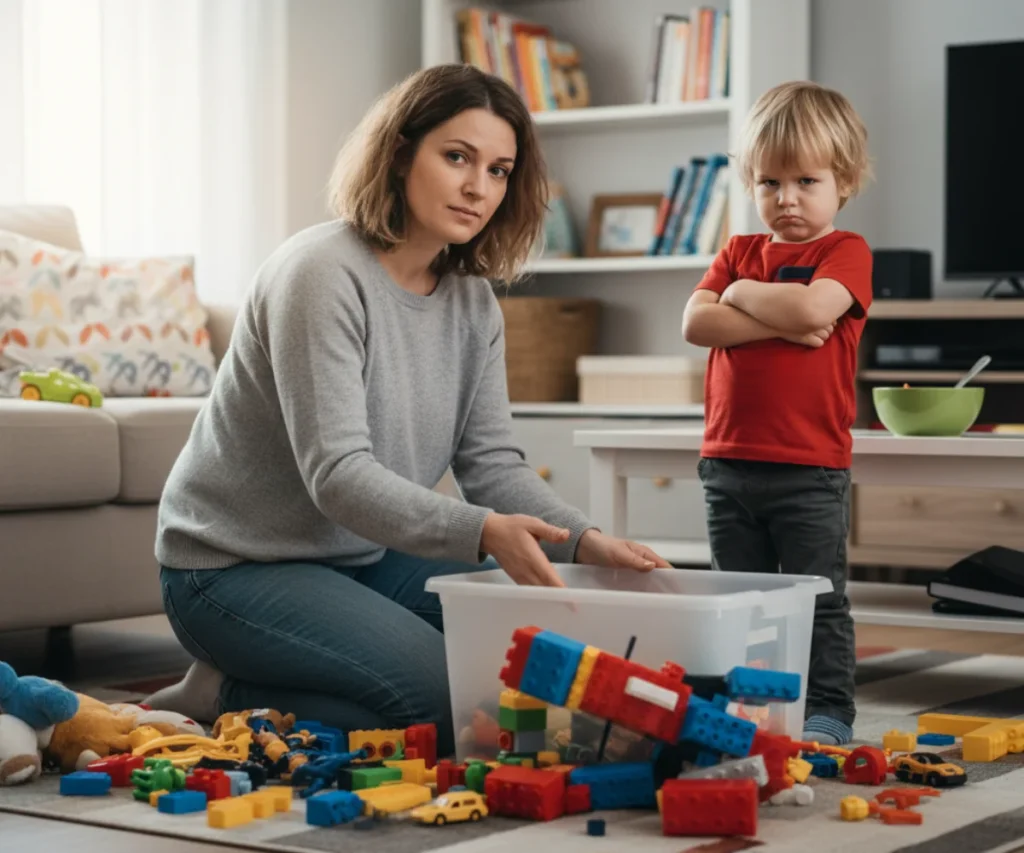
When you ask your child to do something simple, and they outright refuse or ignore you, it can feel like a personal challenge. Defiance, refusal to comply, or selective hearing are common as children assert their independence and test their limits. While frustrating, this is a normal part of developing autonomy, especially around age two and again in pre-teen years.
Reasons for Resistance
- Testing Limits: Understanding what they can and cannot control.
- Seeking Independence: Wanting to do things their way.
- Lack of Understanding: They genuinely might not have heard or understood the instruction.
- Overwhelmed: Too many instructions at once or feeling pressured.
- Attention Seeking: Knowing that saying ‘no’ gets a reaction.
Strategies for Cooperation
- Get Their Attention First: Go to your child, get down to their eye level, and make eye contact before giving an instruction.
- Clear, Concise Instructions: Use simple, positive language. Instead of “Don’t jump on the couch,” say “Feet on the floor, please.”
- Offer Limited Choices: “It’s time to clean up. Do you want to put away the blocks first or the cars?” This gives them a sense of control.
- State Consequences Clearly: “If you don’t put away your toys, we won’t have time for a story.” Follow through calmly.
- Connect Before You Direct: Spend a moment engaging with them before giving a task. “I love watching you build! When you’re done with that tower, it’s time to clean up.”
- Positive Reinforcement: Praise genuine attempts at cooperation, even small ones. “Thank you for starting to put your shoes on!”
- Pick Your Battles: Not every ‘no’ needs to be a power struggle. Decide what’s truly important.
4. Sibling Rivalry

The sounds of sibling squabbles can be a daily soundtrack in many homes. Sibling rivalry is a natural part of family life, as children compete for parental attention, resources, and their own identity within the family structure. While annoying, it’s also an opportunity for children to learn vital social skills like negotiation, compromise, and conflict resolution.
Common Triggers
- Attention: Competition for a parent’s time and praise.
- Possessions: Sharing toys, clothes, or personal space.
- Fairness: Perceived inequality in rules, chores, or privileges.
- Boredom: Sometimes, they just instigate to alleviate boredom.
- Different Personalities: Clashes due to contrasting temperaments.
Nurturing Harmony
- Avoid Comparisons: Resist the urge to compare your children, even positively. Each child is unique.
- Don’t Take Sides: Unless there’s a clear aggressor or physical harm, let them try to work it out. If you intervene, focus on the behavior, not the child.
- Teach Conflict Resolution: Give them tools: “Use your words,” “Take turns,” “Find another toy.” Model these behaviors.
- Ensure One-on-One Time: Regularly dedicate individual, uninterrupted time with each child. This fills their ‘attention cup’ and reduces the need to compete.
- Fairness Isn’t Always Equal: Explain that ‘fair’ means everyone gets what they need, not necessarily the exact same thing.
- Create a ‘Peace Corner’: A designated calm space where children can go to cool off when conflicts escalate.
- Praise Cooperation: When they play nicely or resolve a dispute, acknowledge and praise their efforts.
5. Lying and Dishonesty
Discovering your child has lied can feel like a betrayal, sparking worries about their character. However, lying in children, especially younger ones, is often more complex than adult deceit. For preschoolers, it can be magical thinking or difficulty distinguishing fantasy from reality. For older children, it might be to avoid punishment, gain approval, or test boundaries. Understanding the developmental context is key.
Why Children Lie
- Fantasy Play: Young children often blur lines between reality and imagination.
- Fear of Punishment: The most common reason; trying to avoid negative consequences.
- Seeking Attention or Approval: Exaggerating stories to impress.
- Experimenting with Truth: Testing how far they can stretch the truth.
- Protecting Feelings: Trying to spare someone’s feelings.
Fostering Honesty
- Model Honesty: Be truthful in your own words and actions.
- Create a Safe Environment: Let your child know it’s safe to tell the truth, even if they made a mistake. Focus on solutions, not just punishment.
- Emphasize Consequences of Lying: Explain how lying breaks trust. “When you don’t tell the truth, it makes it hard for me to believe you.”
- Distinguish Fantasy from Reality: For young children, gently clarify: “That’s a fun story, but in real life, unicorns don’t fly out of your closet.”
- Focus on the Behavior, Not the Child: Instead of “You’re a liar,” say “What you said wasn’t true.”
- Problem-Solve Together: If they lied to avoid a chore, discuss how to manage chores differently.
- Praise Honesty: If they confess a mistake, acknowledge their bravery and honesty before addressing the initial transgression.
6. Whining and Complaining
The high-pitched, drawn-out sound of whining can grate on even the most patient parent’s nerves. Whining and excessive complaining are often communication tactics children use when they feel unheard, powerless, or overwhelmed. It’s their way of trying to get your attention or express discomfort when they haven’t yet learned more effective methods.
Reasons for the Whine
- Seeking Attention: They’ve learned whining gets a quicker response than a normal voice.
- Frustration/Fatigue: Too tired or frustrated to use a regular voice.
- Feeling Powerless: Trying to exert control over a situation.
- Habit: It can become a learned behavior if it’s consistently successful.
- Unmet Needs: Hunger, thirst, boredom, or a need for connection.
Turning Down the Volume
- Don’t Reward Whining: The hardest part! Do not give in to demands made with a whiny voice.
- Teach the ‘Strong Voice’: “I can’t understand you when you whine. Please use your strong voice to tell me what you need.” Practice using a regular voice.
- Acknowledge and Translate: “It sounds like you’re frustrated right now. Can you tell me in a regular voice what’s bothering you?”
- Pre-empt Whining: If you know specific situations trigger whining (e.g., getting ready to leave), address potential issues beforehand. “We’re leaving in 5 minutes. What do you need before we go?”
- Fill Their ‘Attention Cup’: Regular positive attention can reduce the need for negative attention-seeking behaviors.
- Check for Underlying Needs: Are they tired, hungry, or genuinely needing something? Address these first.
- Be Consistent: Everyone in the household should respond similarly to whining to break the habit effectively.
7. Bedtime Struggles

Bedtime can transform from a peaceful wind-down to a nightly battleground. From endless requests for water or one more story, to outright refusal to stay in bed, bedtime struggles are a source of significant parental stress. Often, these behaviors are rooted in a child’s desire for control, fear of missing out, or anxiety about separation.
Causes of Nightly Battles
- Fear of Missing Out (FOMO): Not wanting to be excluded from adult activities.
- Seeking Control: Bedtime is one of the few areas where they feel they can exert power.
- Separation Anxiety: Especially in younger children, fear of being alone.
- Energy Levels: Not tired enough, or overtired and hyper.
- Lack of Routine: Inconsistent bedtimes confuse a child’s internal clock.
- Nightmares/Fears: Hidden anxieties that make bedtime daunting.
Making Bedtime Peaceful
- Establish a Consistent Routine: A predictable sequence of events (bath, pajamas, story, song, lights out) signals to their body and mind that it’s time to sleep.
- Wind-Down Time: Avoid screen time and stimulating activities before bed. Opt for quiet play, reading, or gentle conversation.
- Empower with Choices: “Do you want two books or one?” “Which pajamas do you want to wear?”
- One Last Call: Implement a “last call” for water, bathroom, or a hug to reduce endless requests.
- Brief Reassurance: If they get out of bed, gently and quietly return them with minimal interaction. “It’s bedtime. Good night.”
- Address Fears: Talk about any monsters under the bed during the day, not at night. Use a “monster spray” (water bottle) or a special nightlight.
- Adjust Sleep Schedule: If they genuinely aren’t tired, consider shifting bedtime slightly or ensuring enough daytime activity.
8. Picky Eating

The struggle to get children to eat a variety of healthy foods is a common and often frustrating challenge for parents. What might seem like stubbornness can often be a developmental stage known as ‘food neophobia’ (fear of new foods), or a child asserting their independence. While concerning, most picky eaters get enough nutrients, and pressuring them can backfire.
Why Kids Get Picky
- Food Neophobia: A natural evolutionary stage around age 2 where children become wary of unfamiliar foods.
- Desire for Control: Eating is one area children can control.
- Sensory Sensitivity: Texture, smell, or appearance can be overwhelming.
- Copying Others: Observing parents’ or siblings’ food preferences.
- Lack of Hunger: Snacking too much between meals.
Cultivating Healthy Habits
- Offer a Variety, Don’t Force: Always include one preferred food alongside new options. Don’t force them to eat.
- “No Thank You” Bite: Encourage one small bite of a new food. If they don’t like it, they don’t have to eat more. It takes 10-15 exposures for a child to accept a new food.
- Involve Them in Meal Prep: Children are more likely to eat what they’ve helped prepare.
- Make it Fun: Cut food into fun shapes, create colorful plates, or give food silly names.
- Model Good Eating Habits: Let your child see you enjoying a variety of healthy foods.
- Limit Snacking: Ensure there’s enough hunger for mealtimes.
- Be Patient and Persistent: Keep offering new foods without pressure. Their tastes will change.
- Family Meals: Eating together at a table fosters a positive relationship with food.
9. Shyness and Social Anxiety

Some children are naturally more reserved, preferring quiet observation over boisterous interaction. Shyness is a temperament trait. However, when shyness prevents a child from engaging in activities they want to do or causes significant distress in social situations, it might border on social anxiety. Understanding the difference and offering appropriate support is crucial.
Understanding Shyness and Anxiety
- Temperament: Some children are simply born more introverted or cautious.
- Fear of Judgment: Worrying about what others think.
- Lack of Social Skills: Not knowing how to initiate or maintain interactions.
- Past Negative Experiences: A bad experience might make them hesitant.
- Anxiety: A persistent and intense fear of social situations, leading to avoidance and physical symptoms.
Supporting Social Growth
- Respect Their Temperament: Don’t label them as ‘shy’ in front of others. Acknowledge their natural cautiousness.
- Gentle Exposure: Don’t force them into overwhelming social situations. Start with one-on-one playdates or small, familiar groups.
- Teach Social Skills: Role-play greetings, sharing, and asking to join in play.
- Be Their Anchor: In new situations, stay close and offer a secure base. Don’t push them away to ‘socialize.’
- Acknowledge Feelings: “I see you’re feeling a bit nervous about joining the game. That’s okay.”
- Praise Small Steps: Celebrate any attempt to interact, no matter how small. “I saw you waved hello to your friend today! That was great!”
- Connect Before You Correct: Ensure your child feels understood and supported before gently encouraging them to step outside their comfort zone.
- Seek Professional Help: If shyness is causing significant distress, school avoidance, or affecting daily life, consult with a pediatrician or child therapist.
A Supportive Takeaway
Navigating your child’s behavioral challenges is undeniably tough, but remember that every phase offers an opportunity for connection and growth. These common issues are not signs of parental failure, but rather normal developmental hurdles. Approach each situation with empathy, patience, and consistency. Focus on understanding the ‘why’ behind the behavior, teach positive coping mechanisms, and always reinforce your unwavering love and support. You’re building resilience and character in your child, one patient moment at a time. Keep going, parent – you’re doing great!