Safe Sleeping Positions for Babies and What to Avoid

As new parents, one of our biggest priorities is ensuring our baby’s safety, especially when they’re sleeping. The most crucial recommendation from pediatric experts worldwide is simple yet profound: always place your baby on their back to sleep, for every sleep, until they are one year old. This guideline is known as “Back to Sleep” and is a cornerstone of safe infant sleep practices.
When you bring your precious newborn home, it might feel instinctive to try different positions. However, research consistently shows that back sleeping significantly reduces the risk of Sudden Infant Death Syndrome (SIDS). This recommendation applies to naps as well as nighttime sleep. Whether it’s for five minutes or five hours, the back is the safest place for your baby to rest.
Many parents worry about their baby choking while sleeping on their back. It’s a natural concern! However, a baby’s anatomy naturally protects their airway when they’re on their back. Their windpipe is positioned above their esophagus, making it less likely for spit-up to enter their lungs. In fact, studies show that babies who sleep on their backs are at no greater risk of choking than those who sleep on their stomachs.
Why Back Sleeping is Best
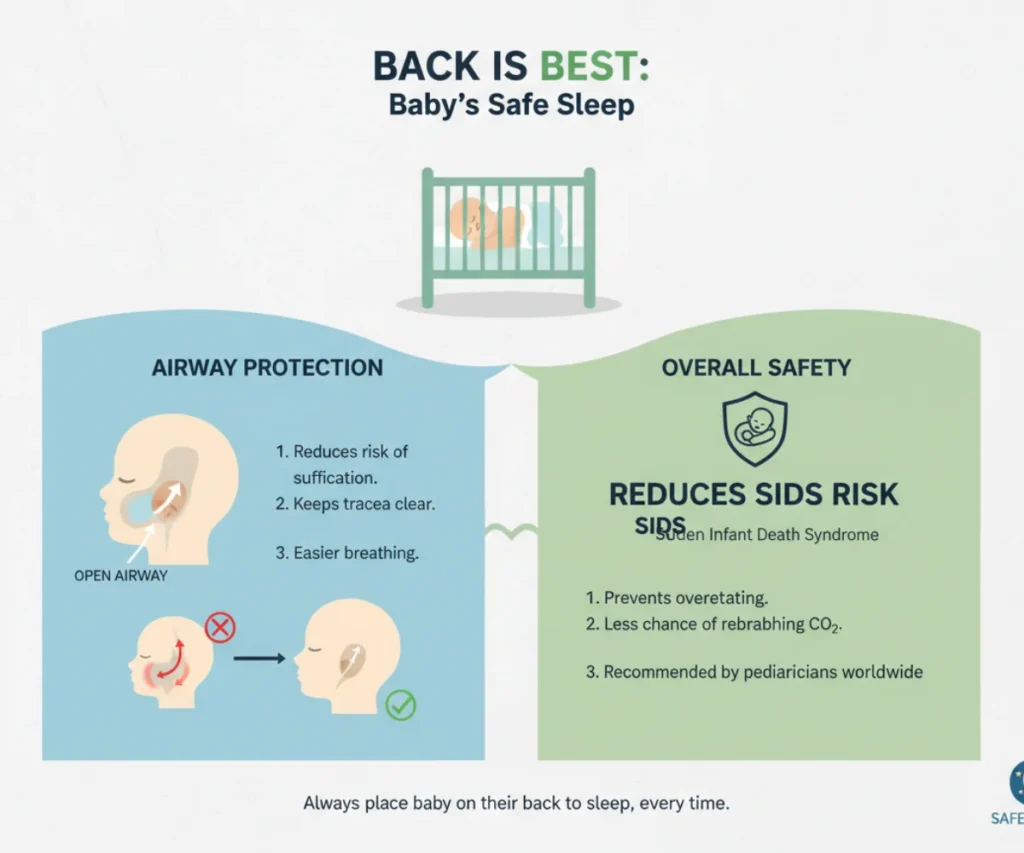
The recommendation to place babies on their back to sleep isn’t arbitrary; it’s backed by extensive research and has led to a dramatic decrease in SIDS rates globally. Here’s a closer look at why back sleeping is the optimal choice for your infant:
- Clearer Airways: When a baby sleeps on their back, their airway remains open and unobstructed. On their stomach, gravity can cause the jaw and tongue to fall backward, potentially blocking the airway.
- Reduced Rebreathing of Exhaled Air: If a baby sleeps on their stomach, especially on a soft surface, they can re-breathe their own exhaled air, which is high in carbon dioxide. This reduces oxygen intake and can be dangerous. Back sleeping prevents this from happening.
- Prevents Overheating: Babies sleeping on their back are less likely to overheat compared to those sleeping on their stomach, particularly when combined with a safe sleep environment.
- Easier Arousal: Research suggests that babies sleeping on their backs are more easily aroused from sleep, which is believed to be a protective factor against SIDS.
Understanding SIDS

Sudden Infant Death Syndrome (SIDS) is the unexplained death of a seemingly healthy baby younger than 1 year of age, usually during sleep. While the exact cause of SIDS isn’t fully understood, it’s thought to be linked to defects in the portion of a baby’s brain that controls breathing and arousal from sleep. SIDS is a tragic and heartbreaking event for any family, but thankfully, there are significant steps parents can take to reduce the risk.
Key risk factors for SIDS include:
- Sleeping Position: Tummy sleeping is the highest risk factor.
- Soft Bedding: Pillows, blankets, and loose bedding can obstruct a baby’s airway.
- Overheating: Too many layers or a warm room can increase risk.
- Smoking Exposure: Both during pregnancy and after birth.
- Co-sleeping: Sharing a bed with an adult or other children.
- Prematurity and Low Birth Weight: Babies born prematurely or with low birth weight are at a higher risk.
While SIDS cannot be entirely prevented, consistent adherence to safe sleep guidelines has dramatically lowered its incidence. By understanding these risks and implementing best practices, you are doing everything you can to protect your baby.
Beyond Position Creating a Safe Sleep Environment

While the “Back to Sleep” position is paramount, creating an overall safe sleep environment is equally vital. Think of your baby’s sleep space as a calm, clear, and secure sanctuary. Here’s how to set up a safe haven for your little one:
The Crib or Bassinet
- Firm, Flat Surface: Always use a firm mattress that fits snugly in the crib or bassinet, with no gaps. Soft mattresses, cushions, or other plush surfaces are not safe.
- Fitted Sheet Only: Cover the mattress with only a fitted sheet. Avoid loose blankets, quilts, comforters, or pillows.
- No Clutter: Keep the crib completely free of bumpers, toys, stuffed animals, extra blankets, or any other items. These can pose suffocation or strangulation hazards.
Room Sharing Not Bed Sharing
- Room Share: For at least the first six months, and ideally up to a year, keep your baby’s crib or bassinet in your bedroom. This allows you to easily monitor and feed your baby.
- Avoid Bed Sharing: Never share a bed with your baby. Adult beds have soft bedding, pillows, and blankets that can obstruct a baby’s breathing. There’s also a risk of rolling onto the baby.
- Safe Sleeping Surfaces: Never let your baby sleep on a couch, armchair, or other soft surface. These are not designed for infant sleep and dramatically increase the risk of SIDS.
Temperature and Clothing
- Optimal Room Temperature: Keep the room at a comfortable temperature for an adult, generally between 68-72°F (20-22°C).
- Dress Appropriately: Dress your baby in light sleepwear, such as a one-piece sleeper. A sleep sack or wearable blanket can be used instead of loose blankets. Avoid over-bundling.
Swaddling Safely
Swaddling can be comforting for newborns, but it must be done correctly and stopped at the right time. Swaddle snugly below the shoulders, ensuring hips can move freely. Stop swaddling as soon as your baby shows any signs of trying to roll over, which can happen as early as 2 months, or by 4 months at the latest. Once they can roll, swaddling can restrict their ability to reposition themselves if they end up on their tummy.
When Babies Start Rolling Over

It’s a huge milestone when your baby starts rolling over! This typically happens between 4 and 6 months of age, but some babies might surprise you earlier. Once your baby can consistently roll from their back to their tummy and from their tummy to their back, you don’t need to reposition them if they roll onto their stomach during sleep.
The important thing is to always place your baby on their back at the start of every sleep. If they independently roll to their tummy once asleep, and they are otherwise in a safe sleep environment (no loose bedding, firm mattress), you can let them be. Their ability to roll indicates they have the muscle strength and coordination to free their airway if needed.
However, if your baby is not yet able to consistently roll both ways, or if they are still swaddled, continue to reposition them onto their back if you find them on their tummy. This is also why stopping swaddling when signs of rolling appear is so crucial.
The Importance of Tummy Time
While back sleeping is essential for safety, supervised tummy time during waking hours is equally important for your baby’s development. Tummy time helps strengthen neck and shoulder muscles, which are vital for rolling, crawling, and eventually sitting. Aim for several short sessions of tummy time each day, always under direct supervision.
Special Considerations and Concerns
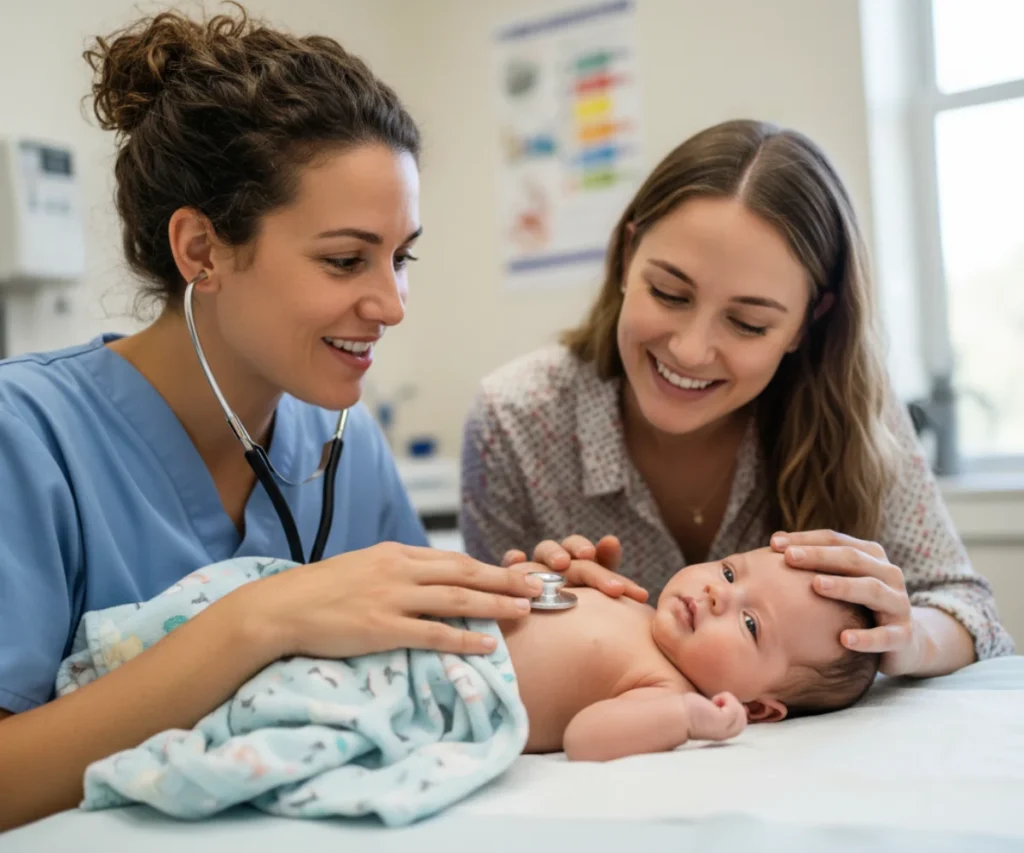
Every baby is unique, and some parents may have specific concerns or receive different advice based on their baby’s health. Here are a few common considerations:
- Premature Babies and Low Birth Weight: These babies are at a higher risk of SIDS. Strict adherence to safe sleep guidelines is even more critical. Your healthcare provider might offer specific guidance based on your baby’s medical needs.
- Reflux (GERD): Many babies experience reflux. It’s a common misconception that babies with reflux should sleep on their stomach or with an elevated mattress. The safest position for babies with reflux is still on their back. Elevating the head of the crib is not recommended as it can cause the baby to slide to the foot of the crib into an unsafe position. Consult your pediatrician for management strategies, which may include feeding adjustments or medication, but never compromise on back sleeping.
- Flat Spots (Plagiocephaly): Consistently sleeping on their back can sometimes lead to flat spots on a baby’s head. This is usually mild and temporary and can be managed with simple strategies:
- Vary Head Position: When your baby is awake and supervised, encourage them to look in different directions.
- Tummy Time: Essential for strengthening neck muscles and taking pressure off the back of the head.
- Hold Your Baby: More time being held upright can reduce pressure on the head.
- Sleep Aids: Avoid using any commercial sleep aids, positioners, or wedges. These products are often marketed to keep babies in a specific position but are not proven to prevent SIDS and can actually be dangerous, posing suffocation risks.
Common Sleeping Position Mistakes to Avoid
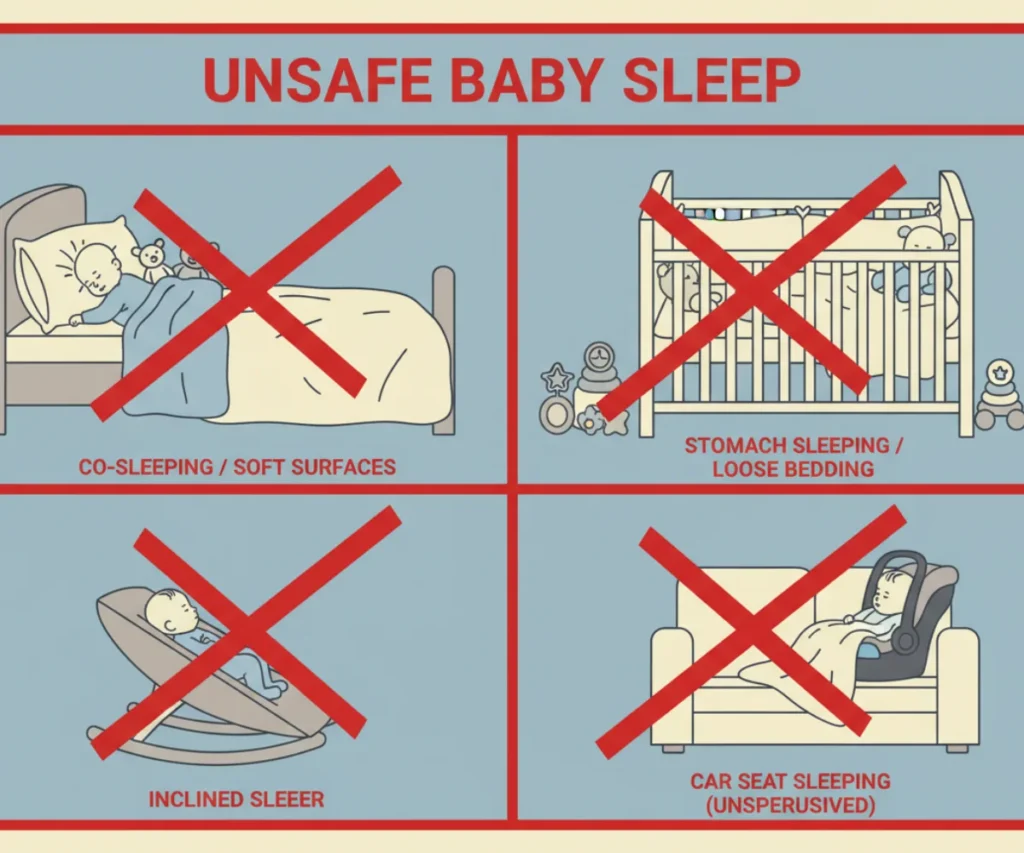
Understanding what to avoid is just as important as knowing what to do. Here’s a list of common mistakes that can jeopardize your baby’s sleep safety:
- Tummy Sleeping: Unless explicitly advised by a medical professional for very rare, specific medical conditions, never place your baby to sleep on their stomach.
- Side Sleeping: This position is unstable and can easily lead to your baby rolling onto their stomach. It is not considered a safe alternative to back sleeping.
- Sleeping on Adult Beds or Couches: These surfaces are too soft and can pose suffocation risks. There’s also the danger of your baby falling off or getting trapped between cushions.
- Using Soft Bedding or Toys in the Crib: Pillows, blankets, comforters, bumper pads, and stuffed animals should never be in the crib with a sleeping baby. They are suffocation hazards.
- Using Sleep Positioners or Wedges: These products are not safe and can trap or suffocate a baby. The American Academy of Pediatrics strongly advises against their use.
- Overdressing Your Baby: Overheating is a SIDS risk factor. Dress your baby in appropriate sleepwear for the room temperature, typically one more layer than what an adult would comfortably wear. Check for signs of overheating, like sweating or a hot chest.
- Letting Babies Sleep in Car Seats or Swings for Extended Periods: While convenient for travel, car seats and swings are not designed for safe sleep outside of supervised transport. The semi-reclined position can compromise a baby’s airway, especially for newborns. If your baby falls asleep in one, transfer them to a safe crib or bassinet as soon as possible.
Myths and Misconceptions About Baby Sleep
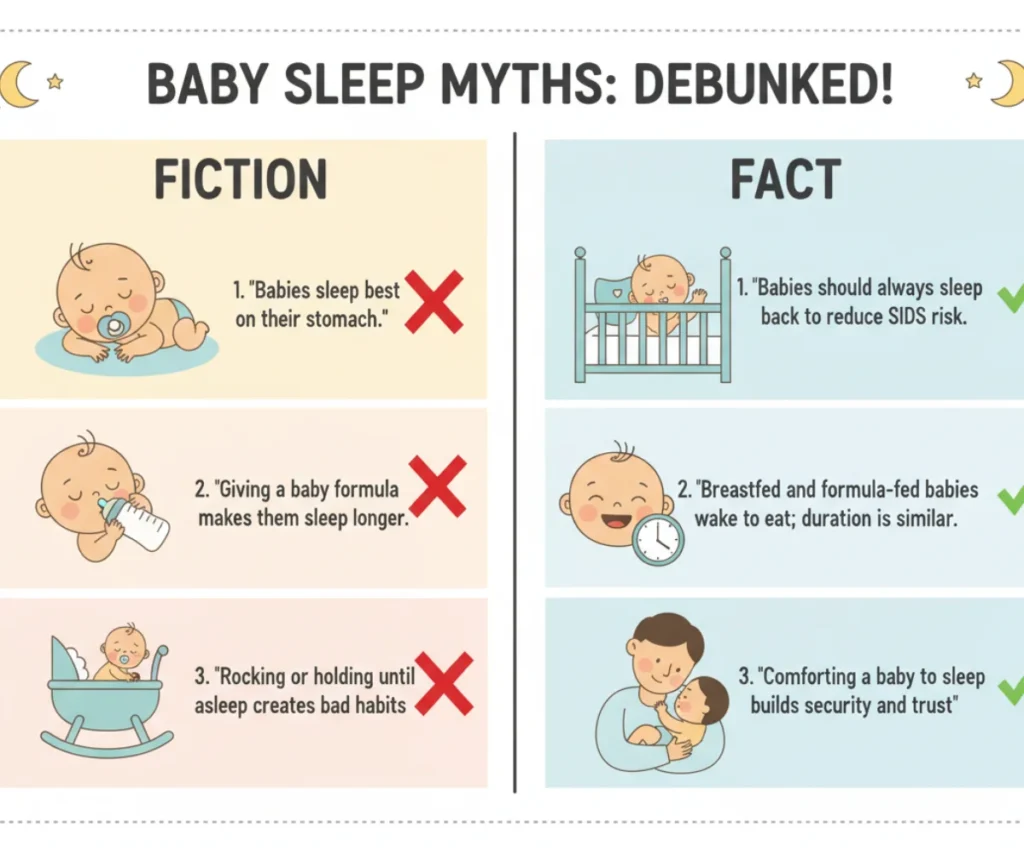
There’s a lot of advice out there about baby sleep, and not all of it is accurate or safe. Let’s clear up some common myths:
- Myth: Babies will choke on their spit-up if they sleep on their back.
Fact: This is one of the most persistent myths, but it’s false. A baby’s anatomy prevents them from choking more easily on their back. In fact, on their stomach, gravity works against them, making choking more likely. - Myth: Side sleeping is a safe compromise if my baby doesn’t like back sleeping.
Fact: Side sleeping is not safe. Babies can easily roll from their side onto their stomach, increasing SIDS risk. Always place them on their back. - Myth: Putting a baby to sleep on their stomach helps them sleep longer.
Fact: While some babies might seem to sleep more deeply on their stomach, this deep sleep is thought to be a risk factor for SIDS because it may make it harder for the baby to arouse themselves if they are in distress. Prioritize safety over perceived longer sleep. - Myth: Elevating a mattress for reflux is safe and helps.
Fact: The American Academy of Pediatrics does not recommend elevating the head of the crib for reflux, as it can be unsafe. Gravity doesn’t work effectively at the slight incline, and babies can slide into a crumpled position, compromising their airway. Consult your pediatrician for reflux management. - Myth: Sleep positioners are helpful for keeping babies safe.
Fact: Sleep positioners are extremely dangerous and have been linked to infant deaths. They should never be used.
Building Healthy Sleep Habits for Your Baby

Beyond safe sleeping positions, establishing healthy sleep habits from an early age can contribute to a more peaceful household and better sleep for everyone. Consistency is key, even with newborns.
- Consistent Bedtime Routine: Start a simple, calming bedtime routine early on. This could include a warm bath, a gentle massage, reading a book, or singing a lullaby. This signals to your baby that it’s time to wind down.
- Differentiate Day and Night: During the day, keep things bright and noisy. For night sleep, dim the lights, keep interactions quiet, and avoid overstimulation. This helps your baby learn the difference between day and night.
- Put Baby Down Drowsy But Awake: This is a golden rule for fostering independent sleep. Place your baby in their crib when they are sleepy but still awake. This helps them learn to fall asleep on their own without needing to be rocked or fed to sleep.
- Respond to Night Wakings: Newborns need to wake frequently for feedings. As they get older, you can gradually help them learn to self-soothe back to sleep, but always respond to their needs.
- Patience and Consistency: Building healthy sleep habits takes time and patience. There will be good nights and challenging nights. Stay consistent with your routine and safe sleep practices, and trust that you are providing the best foundation for your baby’s sleep and well-being.
Remember, you are doing an amazing job, and prioritizing safe sleep is one of the most loving things you can do for your baby.