Simple Ways Parents Can Teach Math Skills to Kids at Home
As parents, we want to equip our children with the best tools for success, and math is undoubtedly one of the most fundamental. Yet, the idea of ‘teaching math’ at home can sometimes feel daunting, conjuring images of flashcards and rigorous drills. But what if we told you it doesn’t have to be that way? Teaching math skills can be a natural, joyful part of your daily family life, woven into everyday activities and play.
This guide is designed to empower you with simple, practical, and gentle strategies to foster a love for numbers and problem-solving in your children, right in the comfort of your home. Forget the pressure; let’s explore how to make math an exciting adventure for your little ones!
Everyday Math is Everywhere
One of the most powerful ways to introduce math is by highlighting its presence in our daily routines. Math isn’t just in textbooks; it’s in the world around us, and pointing this out makes it real and relevant for kids.
Counting and Sorting Fun
From the moment they wake up, children can engage with numbers. Counting is the foundation, and it’s easy to practice:
- Morning Routines: Count socks as you get dressed, count pieces of fruit for breakfast, or count steps to the car.
- Toy Organization: Ask your child to sort toys by color, size, or type. This introduces concepts of classification and sets. You can also count how many toys are in each group.
- Nature Walks: Count how many birds you see, how many flowers are red, or how many stones you collect.
Baking and Cooking Adventures

The kitchen is a fantastic math laboratory! Cooking and baking involve measuring, fractions, time, and sequencing.
- Measuring Ingredients: Let your child help measure flour, sugar, or water. Talk about ‘half a cup’ or ‘two teaspoons’. This is a hands-on introduction to fractions and units of measurement.
- Telling Time: Set a timer for baking cookies and discuss how long it will take, or how many minutes until dinner is ready.
- Counting Servings: Ask, ‘If we have four people eating and each gets two cookies, how many cookies do we need?’
Shopping Smart
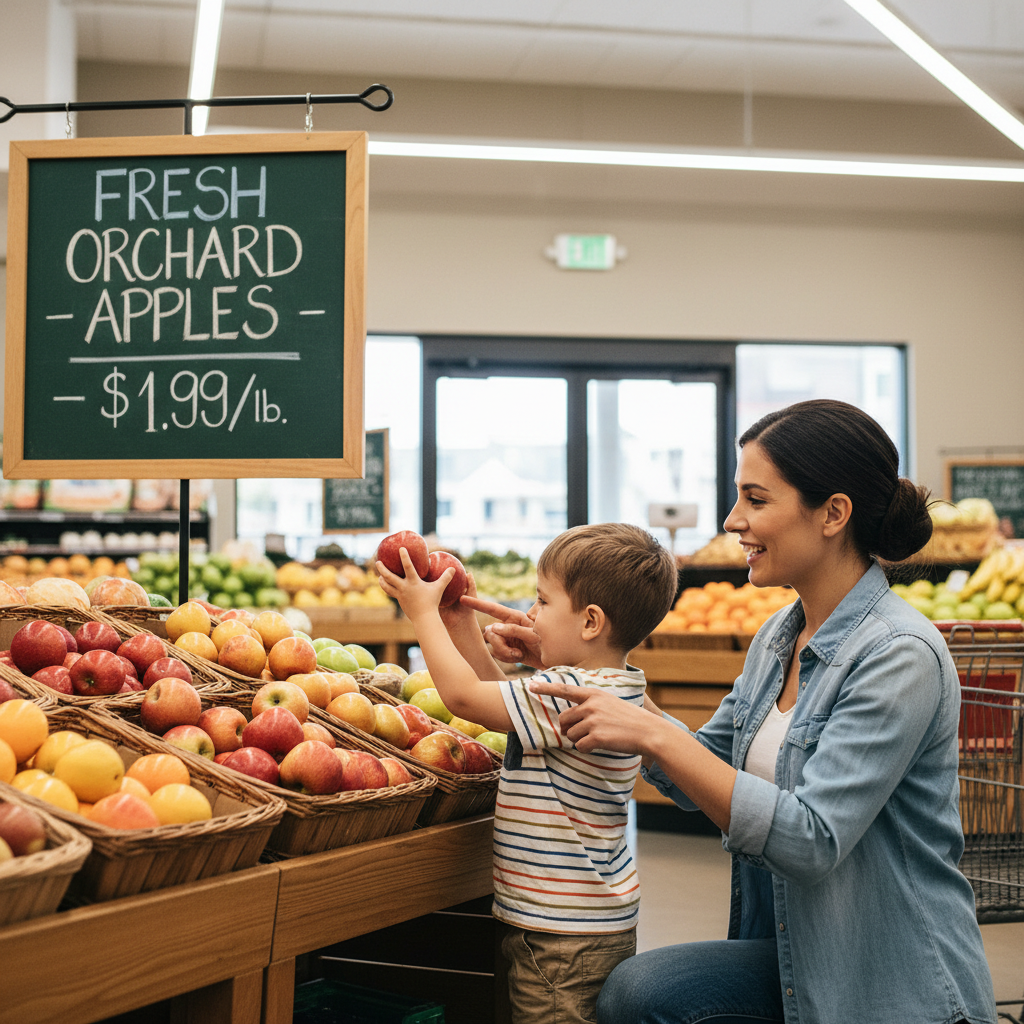
A trip to the grocery store or even online shopping offers countless math opportunities.
- Budgeting Basics: Involve older kids in simple budget decisions. ‘We have $5 for snacks; what can we buy?’
- Comparing Prices: Look at two different brands of cereal and ask, ‘Which one is bigger? Which one costs more?’
- Estimating: ‘How many apples do you think are in this bag?’
Playful Learning Activities
Image generation failedRegenerate
Play is a child’s natural language, and integrating math into games makes learning enjoyable and effective. These activities build critical thinking and problem-solving skills without feeling like a chore.
Board Games and Card Games
Many classic games are secretly math lessons in disguise.
- Dice Games: Games involving dice (like Snakes and Ladders or Yahtzee for older kids) reinforce counting, addition, and probability.
- Card Games: Simple games like ‘War’ teach number comparison. ‘Go Fish’ involves matching sets.
- Dominoes: Matching numbers and counting dots is excellent for number recognition and subitizing (recognizing quantities instantly).
Building Blocks and Puzzles
Construction toys and puzzles are fantastic for spatial reasoning, geometry, and problem-solving.
- Building Structures: Encourage children to build towers, bridges, or houses. Talk about shapes (squares, triangles, rectangles), symmetry, and balance. ‘How many blocks tall is your tower?’
- Puzzles: Jigsaw puzzles help develop spatial awareness, pattern recognition, and problem-solving strategies.
Story Time with Numbers
Books can be a wonderful gateway to math concepts.
- Counting Books: Read books that involve counting, like ‘Ten Little Monkeys Jumping on the Bed.’
- Pattern Books: Look for stories that feature repeating patterns or sequences.
- Problem-Solving Narratives: Choose books where characters have to use logic or numbers to solve a dilemma.
Practical Tips for Parents
Image generation failedRegenerate
Beyond specific activities, your approach and attitude toward math can significantly impact your child’s perspective.
Keep it Positive and Patient
Your enthusiasm is contagious! If you approach math with a positive attitude, your child is more likely to mirror that. Be patient, especially when they struggle. Celebrate effort, not just correct answers.
- Avoid Pressure: Learning should be low-stress. If a child is frustrated, take a break.
- Praise Effort: Instead of ‘You’re so smart!’ try ‘I love how you kept trying even when it was tricky!’
Focus on Understanding, Not Just Answers
It’s more important for a child to understand why an answer is correct than to just get the right answer. Encourage them to explain their thinking.
- Ask ‘How did you get that?’: This opens a dialogue and helps you understand their thought process.
- Use Manipulatives: Physical objects (blocks, beads, even snacks) help make abstract math concepts concrete.
Make it a Habit, Not a Chore
Integrate math naturally into your daily conversations and activities. A few minutes here and there throughout the day are often more effective than long, structured lessons.
- Casual Conversations: ‘We have 10 minutes until we leave,’ ‘You have 3 blue cars and 2 red cars; how many cars total?’
- Lead by Example: Let your child see you using math in your own life, whether it’s calculating a tip or planning a route.
Teaching math at home doesn’t require a special degree or fancy materials. It simply requires a willingness to see the math in everyday life and a desire to share that wonder with your child. By infusing patience, playfulness, and positivity into your interactions, you’re not just teaching numbers; you’re nurturing a curious mind, a confident problem-solver, and a lifelong learner. Embrace these simple ways, and watch your child’s mathematical confidence blossom!