Baby Play Ideas for Fun, Safe, Everyday Activities
Play is how babies learn — about their bodies, their world, and the people around them. Even simple activities help them build strong muscles, develop early language skills, boost brain growth, and feel safe and connected. The best part? Baby play doesn’t need fancy toys. Everyday objects, gentle interactions, and simple routines make the best learning moments.
Here are fun, safe, and development-friendly baby play ideas you can enjoy every day.
Tummy Time Adventures
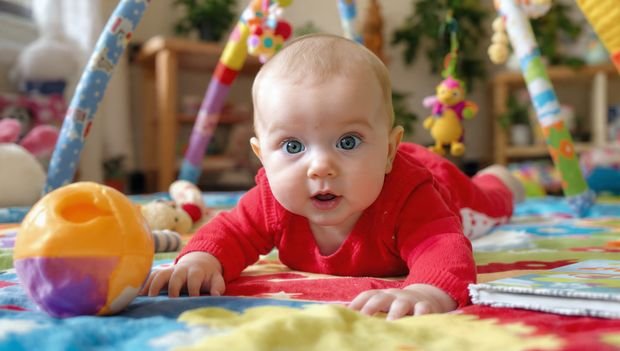
Tummy time strengthens your baby’s neck, shoulders, arms, and core.
Make it enjoyable by adding fun elements:
- Soft toys placed in front
- Mirrors to encourage lifting their head
- Gentle songs while they lift and move
- Rolling a small towel under their chest for support
Short sessions throughout the day work best.
Soft Sensory Play

Babies explore through touch, sight, and sound.
Try safe sensory activities like:
- Soft fabric squares (silk, cotton, fleece)
- Crinkly paper
- Baby-safe rattles
- Smooth wooden spoons
- Soft brushes on hands and feet
These experiences build brain connections.
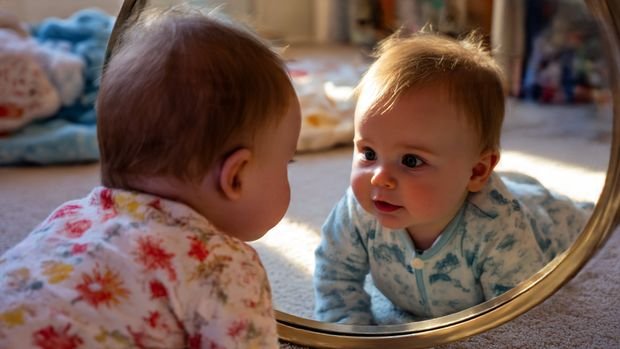
Mirror Play for Self-Recognition

Babies love looking at faces — especially their own.
Place a baby-safe mirror during playtime and encourage:
- Smiling
- Tongue movements
- Watching expressions
- Reaching out to touch the reflection
Mirror play supports social-emotional development.
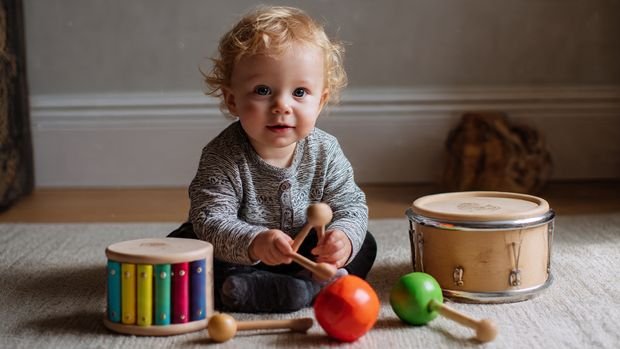
Music & Rhythm Time
Music helps babies develop early listening skills, memory, and movement awareness.
Try:
- Singing nursery rhymes
- Gentle tapping on their tummy
- Clapping their hands together
- Playing soft music during playtime
- Dancing with them in your arms
Music is a beautiful bonding tool.
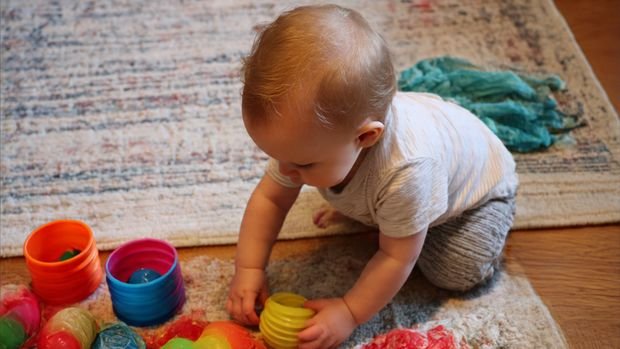
Everyday Object Exploration
Babies don’t need expensive toys — simple objects fascinate them.
Safe everyday items include:
- Plastic cups
- Wooden spoons
- Silicone kitchen tools
- Soft cloths
- Baby-safe containers
Exploring everyday objects boosts curiosity and hand coordination.
Reading Time With Colorful Books
Even newborns enjoy books.
Use:
- High-contrast black-and-white books (0–3 months)
- Soft cloth books
- Books with textures
- Simple board books
Reading builds language skills from the beginning.
Gentle Movement Play
Movement helps babies understand their body.
Try:
- Bicycle leg movements
- Lifting arms gently
- Rolling from side to side
- Supported sitting with pillows
- Slow rocking and swaying
Movement improves coordination and flexibility.
Outdoor Sensory Moments
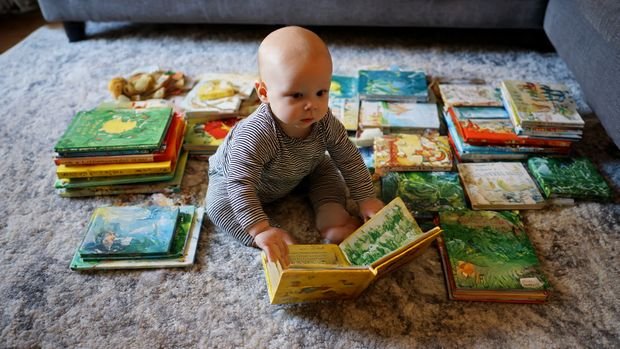
Nature offers calming sensory experiences for babies.
Try:
- Sitting under a tree for shade
- Feeling soft grass on feet
- Listening to birds
- Watching leaves move
- Short stroller walks
Fresh air relaxes babies and supports healthy sleep.
Peek-a-Boo & Simple Face Games
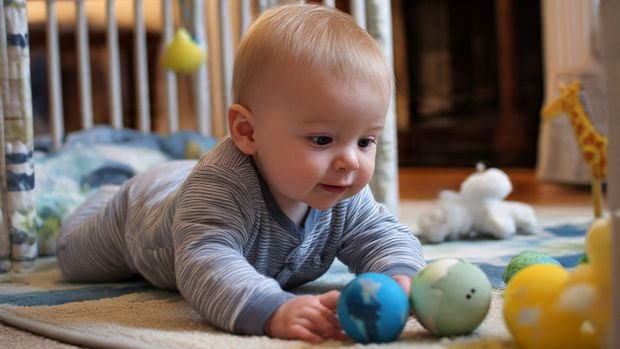
Babies love predictable, playful surprises.
Play:
- Classic peek-a-boo
- Hiding behind a blanket
- Making silly faces
- Whispering soft sounds
These games teach social interaction and emotional bonding.
Safe Water Play

Water play is soothing and great for sensory development.
Try:
- Warm bath with cups and soft toys
- Splashing hands in a shallow basin
- Floating toys in water
Always stay close — never leave a baby unattended near water.
Texture Mats or Towel Paths
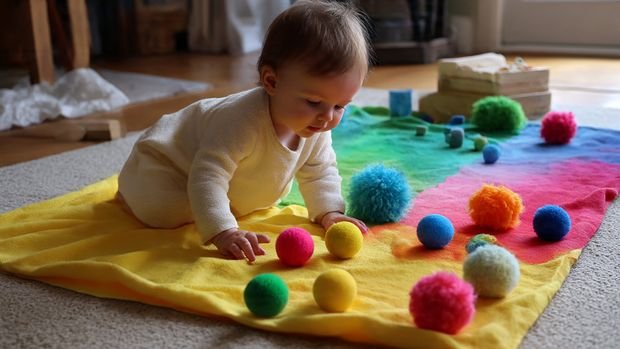
Create a simple tactile experience using:
- A soft blanket
- A textured mat
- A slightly rough towel
Let baby kick, wiggle, and touch with hands and feet.
This builds sensory awareness.
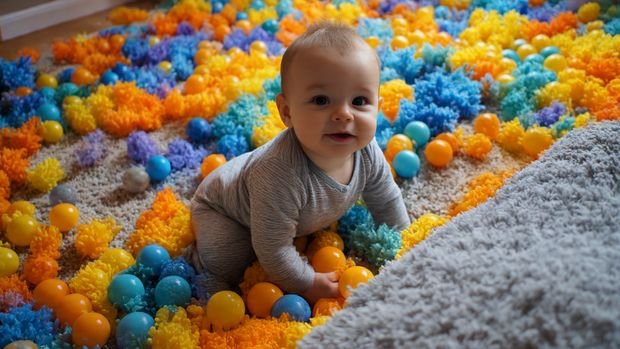
Ball Play for Motor Skills
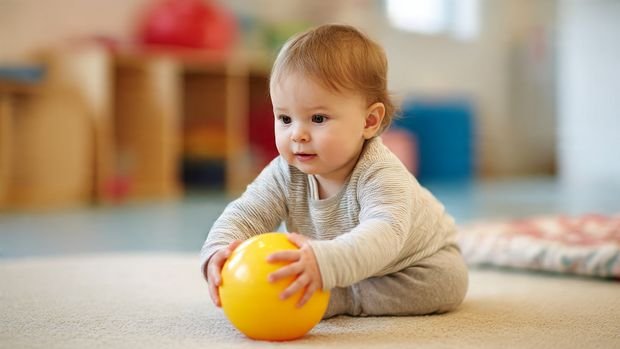
Soft, lightweight baby balls encourage movement.
Help your baby:
- Reach for the ball
- Roll it gently toward them
- Hold or squeeze the soft ball
- Follow it with their eyes
Great for visual tracking and hand coordination.
Name & Object Identifying Games

Talk often — babies learn language through repetition.
Try:
- Pointing to objects and naming them
- Saying baby’s name
- Repeating simple words
- Using short sentences (“Here’s your toy!”)
Talking boosts early communication skills.
Playtime on Your Lap
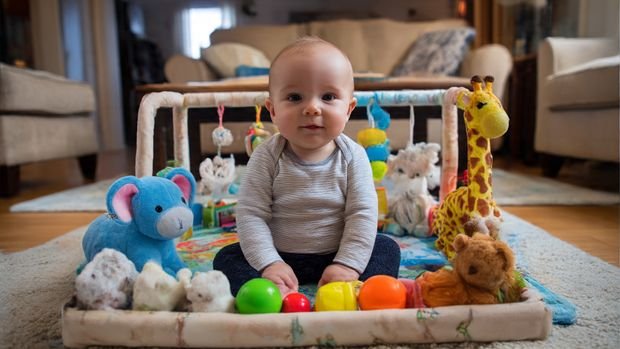
For younger babies, lap play can be soothing and fun.
Try:
- Bouncing gently
- Singing songs
- Letting baby look around from a new angle
- Soft massages
It’s a safe position with great bonding moments.
Final Thoughts
Baby play doesn’t need special equipment — your voice, your touch, and a safe space are enough. With simple, everyday activities, you help your baby build strong foundations for physical, emotional, and cognitive growth. Consistent, loving play strengthens your bond and supports your baby’s development in the most natural way.