
Colic and Crying: A Simple Guide to Understanding Your Baby’s Needs
Crying is a baby’s first language — it’s how they communicate hunger, discomfort, sleepiness, or the simple need to be held. But when crying becomes intense, long-lasting, and difficult to soothe, many parents wonder if it might be colic. Understanding what’s normal and what needs extra attention can make early parenting less stressful and more confident.
This simple guide will help you understand colic, why babies cry, and how you can comfort your little one with gentle, effective strategies.
What Is Colic?

Colic is when an otherwise healthy baby cries intensely for no clear reason.
It often follows the “rule of threes”:
- Crying 3 hours a day
- 3 or more days a week
- For 3 weeks or longer
Colic usually appears around 2–3 weeks of age and improves by 3–4 months.
Though exhausting, colic is temporary and not a sign of bad health.
Why Do Babies Cry? Normal Reasons You Should Know

Before assuming colic, check for common needs:
- Hunger
- Sleepiness or overtiredness
- Wet or dirty diaper
- Gas or tummy discomfort
- Wanting to be held
- Feeling too hot or cold
- Sudden loud noises or overstimulation
Crying is normal — babies use it to express whatever they feel.
Possible Causes of Colic
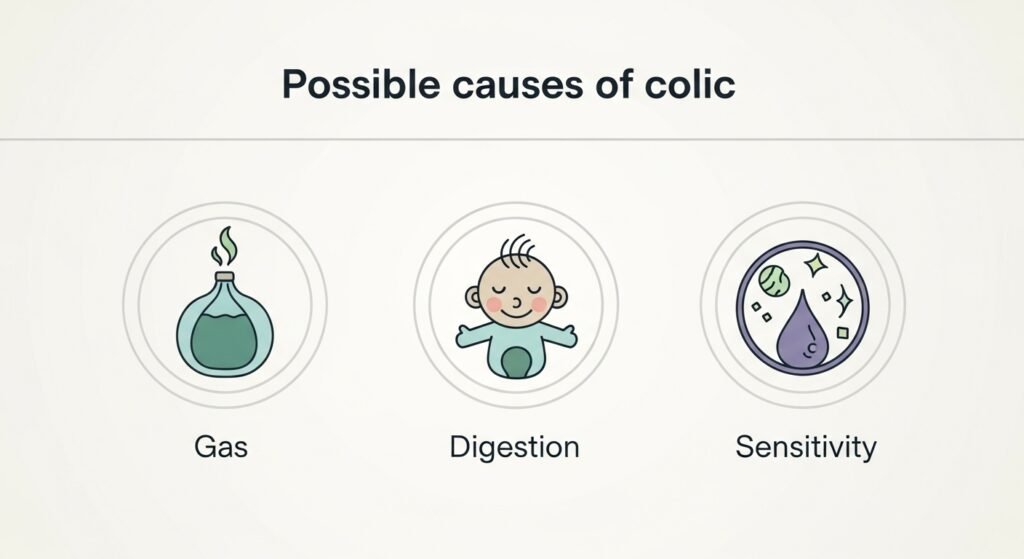
Experts don’t know exactly why colic happens, but several factors may contribute:
- Immature digestive system
- Sensitivity to milk proteins
- Gas buildup
- Overstimulation
- A growing nervous system
- Normal adjustment to life outside the womb
Colic is not caused by poor parenting or anything you did wrong.
Signs That Crying May Be Colic

Colic crying often has a distinct pattern:
- Happens at the same time daily (often evening)
- Baby pulls knees to chest
- Face becomes red
- Fists clenched
- Cry sounds intense and high-pitched
- Comfort measures only help briefly
If your baby fits this pattern and is otherwise healthy, it may be colic.
Soothing Techniques That Often Help

Every baby is different, but these calming methods work for many families:
Try the “5 S’s” Soothing Method

- Swaddling – helps baby feel secure
- Side/Stomach position – only for holding, not sleeping
- Shushing – steady “shhh” mimics womb sounds
- Swinging or gentle rocking
- Sucking – pacifier, clean finger, or breastfeeding
The combination creates a calming, womb-like environment.
Warm Bath or Tummy Massage

Warm water relaxes muscles, while gentle circular belly massage helps relieve trapped gas.
Always massage clockwise around the belly.
White Noise for Calmness

Try:
- Fan noise
- Vacuum sound
- White-noise machine
- Soft rainfall audio
White noise reminds babies of womb comfort.
Burping Frequently During Feeding

If gas worsens crying, burping can help.
Try burping:
- Mid-feed
- After every ounce (bottle-fed)
- After switching breasts (breastfeeding)
Gentle upright positions also reduce gas buildup.
Check Feeding Routine

Sometimes adjustments help:
- Ensure a good latch (breastfeeding)
- Use slow-flow nipples (bottle-feeding)
- Hold baby upright for 15–20 mins after feeding
Small changes create big comfort.
Reduce Overstimulation

Too much noise, bright lights, or activity can overwhelm babies.
Try calm environments:
- Dimmed lights
- Soft voices
- Slow movements
- Quiet room
Overstimulation often triggers evening fussiness.
Give Baby Safe Outdoor Time

Fresh air helps many babies relax.
A short walk in a stroller or baby carrier often soothes crying quickly.
Take Turns & Care for Yourself Too

Colic is hard on parents.
Rotate soothing responsibilities and take short breaks when needed.
Remember:
A calm parent = a calmer baby.
When to Call the Doctor

Seek medical guidance if your baby has:
- Fever
- Vomiting (forceful)
- Rash
- Trouble feeding
- Diarrhea or less wet diapers
- Crying that sounds unusual
- Crying that worries your instinct
Doctors can rule out allergies, reflux, or illness.
Reassurance for Parents

Colic is temporary.
It doesn’t mean your baby is unhealthy — just extra sensitive during early development.
With time, patience, and gentle care, the crying episodes ease and your baby becomes calmer.
Your love, comfort, and presence matter more than anything.
Final Thoughts
Understanding your baby’s needs makes early parenthood much easier. Colic can be challenging, but knowing what it is — and what helps — brings comfort and confidence. With soothing techniques, mindful feeding, and lots of patience, you can support your baby through this phase.
You’re doing a wonderful job, even on the hard days. This season will pass, and brighter, calmer moments are on the way.